
**Book a custom demo, be live in days →
80% of facilities in India still run on fragmented workflows (MedCore, 2026). For chains like yours, the only setup that works is a unified, real‑time system for opd queue management and appointment scheduling across branches and departments.
Here’s the short answer you need in 2026: pick a platform that shows the live token state across all OPDs, merges online and walk‑in slots, routes by urgency and specialty, and shares a single EHR with billing, lab, and pharmacy. Anything less adds new silos.
India’s hospital market is valued at about $200B, but 75% of it remains underserved by existing tech (MedCore, 2026). That gap shows up in queues first: cardiology tokens stall while orthopedics sits idle; walk‑ins clog pre‑booked clinics; and front desks drown in calls. You don’t have months to fix it. You need a plan that improves day‑one metrics like wait time, no‑shows, and doctor use, while also meeting DPDP Act 2023 and ABDM/ABHA requirements.
Why Multi-Specialty Hospital Chains Still Struggle with OPD Queues
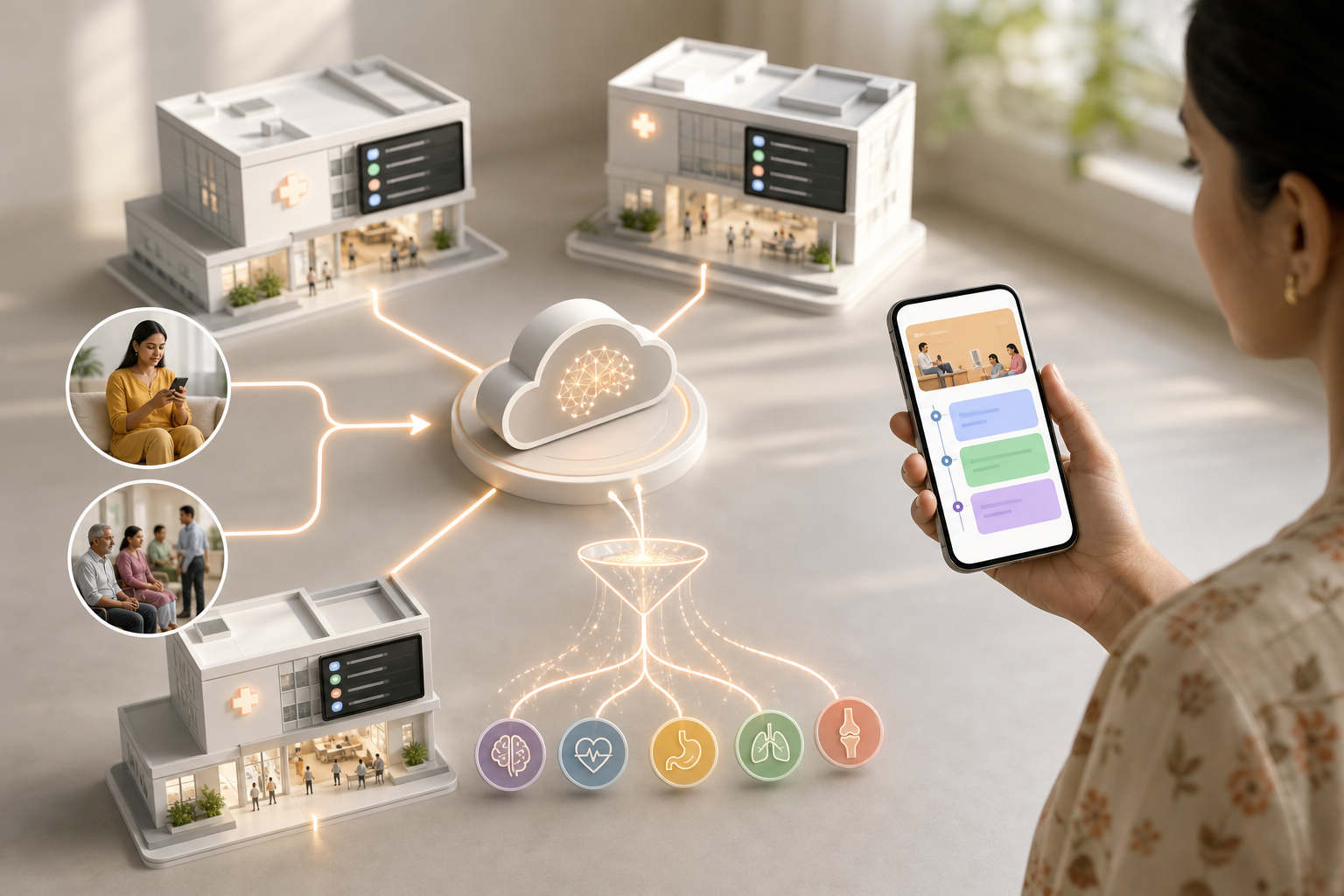
India’s OPD reality is messy. One patient starts in cardiology, bounces to ophthalmology for fundoscopy, then ends up in ortho when dizziness turns out to be a fall. At chain scale, this “multi-hop” care breaks down when each department and branch runs a different token system. As a result, the same patient can exist in three queues at once.
Moreover, walk‑ins collide with pre‑booked slots. In practice, you see a 10 am clinic that is “full” on paper but half empty in chairs because no‑shows weren’t forecast and walk‑ins weren’t routed to fill gaps. Meanwhile, another clinic is overwhelmed by a surge that no one saw coming.
Front desks become bottlenecks. Without a patient app or voice receptionist, your staff fields hundreds of “Where is my token?” calls every day. Phones win over on‑site patients, so the live queue suffers. This is more than inconvenience: it pushes doctors to shorten consults, which affects quality and revenue per visit.
- Each branch invents its own token logic and room displays, so cross‑department routing is guesswork.
- Vulnerable patients — elderly, high‑risk pregnancies — wait without a priority flag, which can escalate risk.
- No unified view means you cannot rebalance load across floors or sites in real time.
- Labs and pharmacy don’t see OPD movement, so you lose minutes at every handoff.
Specifically, India’s $200B hospital market still leaves 75% of providers underserved by current tech (MedCore, 2026). That’s why 80% of facilities run fragmented workflows today. If you manage 3–15 branches, you feel this daily. You see idle doctors in one wing and hour‑long delays next door. Worse, the lack of a single queue source of truth inflates staff costs because you need people to chase patients across floors.
The multi‑specialty edge case: routing by urgency, not by hallway
In a chain, “queue” is not a line. It’s a dynamic network. A chest‑pain walk‑in may need to jump ortho’s queue, while a stable follow‑up can shift to a satellite clinic to keep the main site clear. Without system‑wide visibility and routing, that logic stays on paper. And paper does not move tokens.
“We see wait time as clinical risk, not just a bad experience. Priority flags for vulnerable patients should be built into the queue, not added later.” — Chain Operations Director, 7-branch network
If you fix one department at one site, you will not fix the chain. The real win is a single, real‑time queue brain that spans OPD, lab, pharmacy, and billing, and respects local rules per branch.
What to Look for in OPD Queue Management for Hospital Chains
Buying OPD software as a chain CIO or IT head means you must plan for “day one” operations and “year three” growth. Here’s a vendor‑neutral checklist you can use to score options before you sign anything. Keep it tight. Map each item to a real operational win, not a slide.
-
Real‑time queue visibility across departments
You need live token displays that update in seconds across cardiology, ortho, ophthalmology, and triage. Look for visible priority flags and per‑doctor status. -
Unified scheduling for online + walk‑in across all branches
The system must merge pre‑booked and walk‑in flows into one ledger. Cross‑fill no‑show gaps without manual calls. -
AI‑powered triage that routes by urgency and specialty
Ask how the triage model ranks urgency and maps symptoms to departments. SNOMED‑anchored routing is a plus for auditability. -
Multi‑language support for diverse patient groups
India is multilingual. Eight Indian languages covers the bulk of OPD calls and kiosk chats. This reduces mis‑routing and speeds intake. -
Vulnerability flagging for priority patients
Elderly, pregnant, and high‑risk profiles should auto‑flag with simple visual cues and rules in the queue. -
Multi‑branch analytics with a single dashboard
You want branch‑level and doctor‑level wait times, token throughput, and no‑show rates. A single view lets you copy playbooks from your best site. -
Integration with EHR, billing, lab, and pharmacy
Queues without EHR context cause rework. The EHR should share state with billing, lab, and pharmacy so the token brings the patient record with it. -
Compliance with Indian regulations
Confirm DPDP Act 2023 alignment, ABDM/ABHA linking, and India data residency. For ABDM background, see the Ayushman Bharat Digital Mission program. -
Flat, predictable pricing
Avoid per‑bed or per‑user traps. Flat monthly pricing scales better for chains that add sites or expand OPD hours. -
Patient‑facing app with live queue status
Patients should see their token, lab reports, and bills on their phone. This alone can cut front‑desk calls by half.
Bonus: Test operational “musts” before you commit
- Can you enforce per‑branch token rules without code changes?
- Does the audit trail show who advanced or paused a token?
- Can you export branch analytics to your BI tool?
If you want a deeper dive on flows at non‑tertiary hospitals, this mid‑size hospital guide breaks down setup patterns you can adapt to chains. For medical tourism branches, see this step‑by‑step setup article.
Also Read!
How to Set Up Lab, Pharmacy, and Blood Bank Management for Medical Tourism Hospitals in India
How MedCore Solves OPD Queue Chaos Across Multi-Specialty Branches
Real‑time queue and unified scheduling
Start with the queue itself. MedCore shows a real‑time OPD token board across departments and sites, with clear vulnerability flags. Front desks, nurses, and doctors see the same live truth. Tokens carry the patient’s EHR context as they move, so lab, pharmacy, and billing always see the latest note, vitals, and orders.
Next, unify booking. Online slots and walk‑ins feed a single schedule per branch. The system auto‑fills no‑show gaps and throttles new tokens when a clinic peaks. This reduces idle time without creating hallway crowding. In chains with 150+ OPD patients per day, that balance is the difference between 40‑minute queues and 12‑minute waits.
AI triage speaks eight Indian languages and uses SNOMED‑anchored routing to send patients to the right specialty. A patient who texts in Hindi or calls in Kannada gets the same triage logic as an English chat user. Urgent cases jump the line with an audit‑logged priority change. Stable follow‑ups can shift to a satellite site if you choose.
“Our OPD wait time dropped from 40 minutes to 12. The live token display alone was worth the switch.” — Dr. Meera Rao, Medical Director, Asha Hospital
Patient communications and no‑show control
Phones stop being the choke point. MedCore’s AI Voice Receptionist handles calls 24/7, books or reschedules visits, and runs the same triage. This frees your front desk to focus on in‑person patients.
On the patient side, a branded Android/iOS app shows live token position, lab reports, prescription QR codes, and bill pay. It’s not a gimmick, it changes behavior. Patients check the app instead of calling.
Moreover, WhatsApp reminders (DLT‑compliant) reduce no‑shows. A predictions agent scores likely no‑shows and nudges them with the right channel. Pharmacy demand forecasts help your stores staff for the late‑day spike after OPD closes, not during the lull.
“We replaced three tools with MedCore. Billing, pharmacy and lab now talk to each other without exports.” — Ravi Prasad, Administrator, Sunrise Clinic
Unified EHR, analytics, and growth
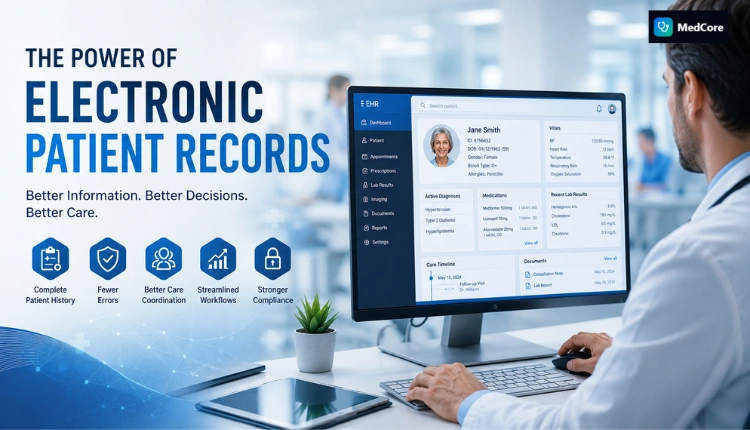
Unlike legacy HMS modules that bolt together, MedCore runs a single tenant‑scoped EHR shared across billing, lab, and pharmacy. Notes, orders, and invoices update in one place. Multi‑branch analytics and audit trails give you a chain‑wide view: token throughput by department, doctor use, and SLA breach alerts. This turns your best branch into a template.
MedCore is built for growth. Chains use 55+ integrated modules, from GST‑aware billing with Razorpay and UPI, to controlled substance tracking, to OT scheduling and ambulance dispatch. Yet the OPD core stays fast. Most sites go live within days using the self‑serve onboarding wizard and then add modules on their own timeline.
**Get a custom demo, see live tokens today →
Also Read!
How to Choose and Implement Lab, Pharmacy, and Radiology Management for Mid-Size Hospitals
How to Set Up OPD Queue Management and Appointment Scheduling for Your Small Clinic in India
MedCore vs. Legacy HMS and Generic Queue Systems: An Honest Comparison
You will likely evaluate two archetypes alongside MedCore. First, legacy on‑premise HMS platforms found in many Indian hospitals. Second, standalone token/queue kiosks that sit in lobbies. Both have real gaps for multi‑specialty chains.
Legacy HMS usually charge per‑bed or per‑user, which punishes growth. Their implementations take months, with long change requests for each branch rule. AI triage is rare, and patient‑facing apps are missing or bolt‑ons. Modules don’t share a real‑time EHR state, so labs and pharmacy get stale data.
Standalone queue kiosks do one thing: print or display tokens. They don’t integrate with your EHR, billing, or pharmacy. They cannot route patients across departments, nor do they provide a chain‑wide dashboard. They might go live in a day, but they solve only one piece and create yet another silo.
“The patient mobile app reduced our front-desk calls by half in the first month.” — Shalini Kumar, Operations Head, Greenleaf Care
| Feature/Criteria | MedCore | Legacy On‑Prem HMS | Standalone Queue Kiosk |
|---|---|---|---|
| Real‑time token display across departments | Yes (chain‑wide) | Partial (site‑bound) | Yes (single site) |
| AI triage | Yes (8 Indian languages, SNOMED‑anchored) | Rare | No |
| Multi‑language support | 8 Indian languages | Limited | No |
| Patient mobile app | Branded Android/iOS with live queue, reports, bill pay | Rare/missing | No |
| EHR, billing, lab, pharmacy integration | Unified EHR with shared state | Siloed modules | None |
| Multi‑branch dashboard | Yes (single view) | Limited roll‑ups | No |
| Pricing model | Flat per‑month (no per‑bed/per‑user) | Per‑bed/user (scales poorly) | Device + add‑ons |
| Onboarding time | Days (self‑serve wizard) | Months (3–6 months typical) | Hours (limited scope) |
| Compliance (DPDP, ABDM) | DPDP aligned, ABDM/ABHA linking | Varies by vendor | Not applicable |
Be candid about fit. MedCore targets non‑corporate hospitals and multi‑specialty chains that want integrated workflows and a unified EHR. Complex, corporate mega‑-nets with heavy bespoke demands may still need a custom HIS stack. Multi‑specialty pricing is custom, you should contact the team for a quote.

Trust, Compliance, and Credentials for Hospital Chain Deployments
Trust is earned in OPD through uptime, auditability, and rules that match care. MedCore is DPDP Act 2023 compliant and keeps India data residency. For context on the law, see the Digital Personal Data Protection Act, 2023. Chains with strict data governance can choose on‑premise or dedicated cloud hosting. SLA and uptime credits put money behind availability targets.
Interoperability matters for chains with existing lab equipment or government programs. MedCore supports FHIR R4 and HL7 v2 inbound to exchange orders, results, and patient updates. For a quick primer on the standard, see FHIR on Wikipedia. ABDM/ABHA linking keeps you aligned with India’s national health ID push and eases insurance and claims workflows.
Role‑based access controls who can view or change queues and records across branches. A detailed audit trail logs every action: who advanced a token, who edited a note, who printed a prescription. DLT‑compliant SMS ensures your reminder texts meet Indian telecom rules. HIPAA alignment is underway for chains that work with international partners and patients.
Furthermore, inclusivity is built in. Eight Indian language support for AI triage means fewer intake errors and faster routing, wherever your patients live. MedCore’s 45 modules were developed with input from doctors, nurses, and administrators. That co‑design shows in small details, like delta‑flag alerts on lab orders or per‑branch token rules, that matter in day‑to‑day OPD work.
Operational proof points you can ask for
- Chain‑wide analytics with doctor‑level wait time and throughput
- SLA language with uptime credits spelled out
- Hosting architecture diagrams for on‑premise or dedicated cloud
- ABDM/ABHA integration demo on a test branch
Getting Started: Deploying OPD Queue Management Across Your Hospital Chain
Rollouts fail when you skip the baseline. Start with your busiest site and map what exists now. Then roll out the fixes in a tight loop, not a big‑bang switch.
- Step 1: Audit current OPD flow at your busiest branch. Map peak hours, average wait times, and handoffs between departments. Note where walk‑ins clash with pre‑booked slots. If you need a reference model, our mid‑size hospital guide shows sample schedules you can adapt. 2) Step 2: Contact MedCore for a multi‑specialty assessment.
Share your branch list, specialties, and volumes. For chains, multi‑specialty pricing is custom. You’ll get a deployment plan that balances speed and change risk. Use the contact route to align stakeholders early. 3) Step 3: Use the self‑serve onboarding wizard, go live in days.
Configure departments, doctor schedules, and token rules per branch. Set vulnerability flags and triage prompts. MedCore’s self‑serve onboarding wizard is built to get you live in days, not months. 4) Step 4: Roll out the patient app and WhatsApp reminders. Launch the branded app and DLT‑compliant reminders first.
This cuts front‑desk calls right away and reduces no‑shows before deeper change lands. For tourism‑heavy sites, this medical tourism setup article covers extra steps. 5) Step 5: Turn on multi‑branch analytics and audit trail. Use the single dashboard to spot bottlenecks and copy best‑performing branch workflows. The audit trail will show where tokens slow down so you can fix the rules.
- Step 6: Enable AI triage and the 24/7 voice receptionist. Once the base queue is stable, switch on triage in 8 Indian languages and the AI Voice Receptionist. Expect fewer mis‑routes and a lighter load on your front desks. Enterprise tier chains get dedicated onboarding support.
As you deploy, restate your goal in plain numbers: wait time targets, no‑show ceilings, and doctor use. Then check them weekly. That’s how you sustain gains in 2026.

Also Read!
How to Handle Hospital Billing, Insurance Claims, and GST for Multi-Specialty Hospital Chains
Medical Tourism Hospital’s Guide to Hospital Billing, Insurance Claims, and GST in India
Frequently Asked Questions
How much does OPD queue management software cost for a multi-specialty hospital chain?
MedCore's mid‑size hospital plan starts at ₹24,999/mo with flat per‑month pricing and no per‑bed or per‑user fees. Multi‑specialty and chain deployments use custom pricing, contact MedCore directly. This flat model is far more predictable than legacy systems that charge per bed or per concurrent user, which can balloon costs for 200+ bed chains. Budget control matters most when you add branches or extend OPD hours.
Can MedCore handle OPD queues across multiple branches with different specialties?
Yes. MedCore provides multi‑branch analytics with a unified dashboard, so administrators can monitor token flow, wait times, and doctor use across all locations in real time. Each branch can configure its own specialty departments, doctor schedules, and token rules independently while reporting to a central view. This keeps local control without losing chain‑wide insight.
How does AI triage work for OPD queue routing in a multi-specialty hospital?
MedCore’s triage agent uses SNOMED‑anchored symptom assessment in 8 Indian languages. When a patient calls or uses the chatbot, the AI evaluates symptoms, assigns urgency, and routes them to the correct specialty department. This reduces mis‑routing and flags emergency cases with vulnerability priority before they arrive. Every decision is logged for audit.
How long does it take to deploy MedCore across a hospital chain?
MedCore's self‑serve onboarding wizard enables go‑live in days, not the typical 3–6 months of legacy HMS deployments. Enterprise‑tier chains get dedicated onboarding support. Most chains start with their highest‑volume branch, stabilize workflows, then replicate configuration to other locations. That “one‑branch‑first” pattern reduces risk.
Does MedCore integrate with our existing HIS, lab machines, or government health systems?
MedCore supports FHIR R4 and HL7 v2 inbound for interoperability with existing lab equipment and HIS platforms. It also links with ABDM/ABHA for national health ID compatibility, which is increasingly required for insurance claims and government compliance in India. You can phase integrations by site or go chain‑wide once the first branch is stable.
What about data security and compliance for patient records?
MedCore is DPDP Act 2023 compliant with India data residency. It offers on‑premise or dedicated cloud hosting for chains with strict data governance. DLT‑compliant SMS ensures messaging rules are met. Role‑based access controls who sees what across branches, and a full audit trail logs every action.
How does MedCore compare to standalone token/kiosk systems?
Standalone kiosk systems only manage the physical queue, they don’t integrate with EHR, billing, pharmacy, or lab. MedCore’s OPD queue is part of a unified platform with 55+ modules, so when a patient's token is called, the doctor already has their vitals, history, and prior prescriptions on screen. This removes duplicate data entry and cross‑department friction. You get real gains on day one.
Is there a patient-facing app, and does it actually reduce front-desk load?
Yes. MedCore offers a branded Android/iOS patient app with live token position, lab reports, prescription QR codes, appointment booking, and bill pay. One hospital chain reported a 50% reduction in front‑desk calls within the first month of deploying the patient app, as patients could self‑serve queue status and reports. That frees staff to help people in the building.
What This Means for Your OPD in 2026
If you run a 3–15 branch chain, your OPD fix is clear. First, unify queues and schedules chain‑wide so online and walk‑ins share one ledger. Second, use AI triage with vulnerability flags to route by urgency and specialty. Third, close the loop with a patient app and a shared EHR so labs, pharmacy, and billing move with the token.
You do not need months‑long projects or per‑bed surprises. You need predictable pricing, India‑ready compliance, and proof you can be live in days. The result is simple: shorter waits, fewer calls, and better use of every clinic hour.
**Get pricing clarity, flat monthly model →
Moreover, if you want more operational context for non‑tertiary sites, this complementary how‑to for mid‑size hospitals includes setup checklists you can adapt to your busiest branch.