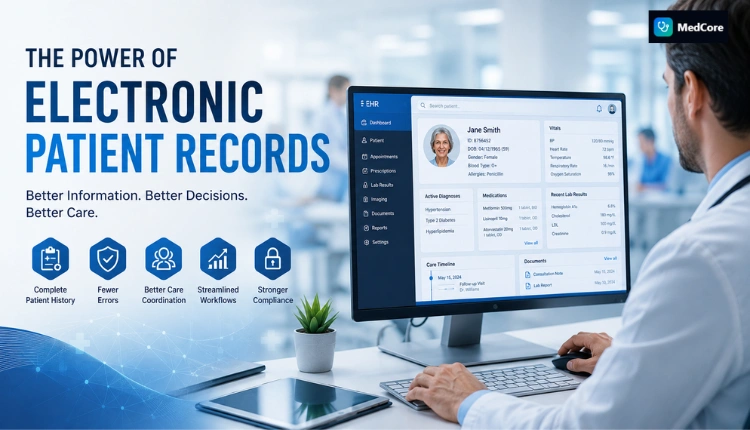
A physician scans a patient’s chart, only to realize a critical allergy note is missing. The information exists, but it’s buried in another file across the building. In that moment, decisions still have to be made. Treatment can’t wait.
Now imagine the pressure. Do you proceed without full context, or delay care while someone searches for the missing record? Neither option feels safe. These are the kinds of gaps that quietly exist in paper-based or fragmented systems, and they show up more often than most teams would like to admit.
This is where an electronic patient record becomes more than a digital upgrade. It acts as a single, reliable source of truth that clinicians can access instantly. Instead of piecing together a patient’s history, everything is already there. Clear, structured, and ready when it matters most.
The impact goes beyond convenience. When clinicians have complete information in front of them, decisions become faster and more accurate. Risks like drug interactions, missed diagnoses, or duplicated tests start to decline. Over time, that consistency builds a safer care environment for both patients and providers.
There’s also a shift in how teams work. Nurses, specialists, and administrative staff all rely on the same updated record. Communication becomes smoother because everyone is looking at the same information: fewer calls, fewer clarifications, fewer delays.
So the real question isn’t whether digital records are useful. It’s what kind of care becomes possible when information is always available, always accurate, and never out of reach.
Here are five benefits that go beyond convenience and explain why this shift matters more than ever.
In a hurry? Here’s your 60-second summary.
- Instant, secure access to complete patient histories
- Fewer clinical errors through real-time alerts
- Streamlined workflows that reduce administrative burden
- Better care coordination across providers
- Stronger compliance with healthcare regulations
Before We Talk Benefits – What Makes an EPR Different From an EMR or EHR?
The terms often get mixed up, which leads to confusion when evaluating systems.
| System | Scope | Maintained By | Data Sharing | Best For |
| EPR | Single organization | Hospital or clinic | Limited | Internal patient management |
| EMR | Single practice | Individual provider | Minimal | Digital chart replacement |
| EHR | Cross-provider | Multiple organizations | High | Coordinated care networks |
An electronic patient record system usually focuses on a single organization. That scope matters because it shapes how data is used and shared.
Benefit 1: Every Clinician Sees the Full Picture, Every Time
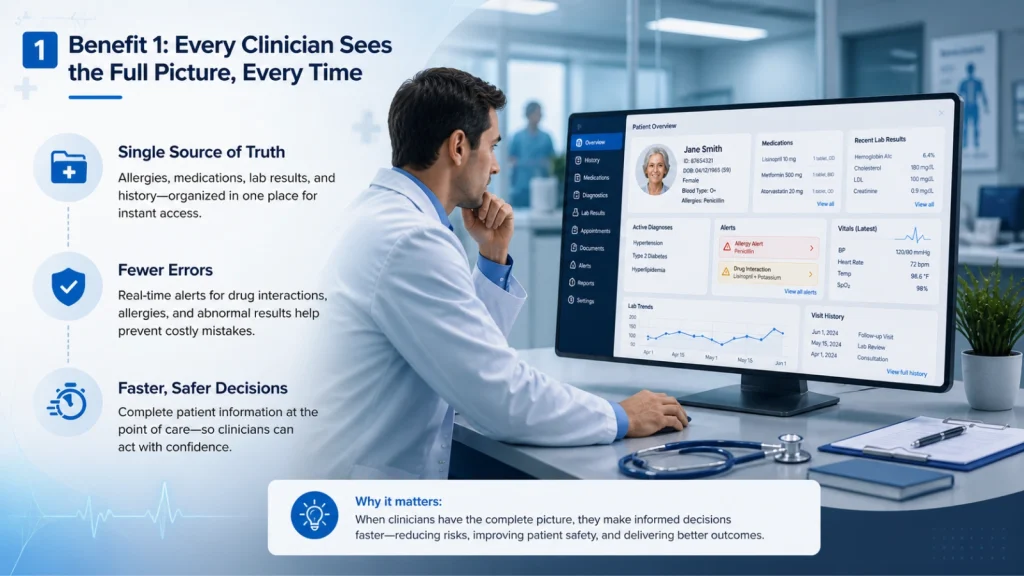
From Fragmented Files to a Single Source of Truth
An electronic patient record pulls together diagnoses, medications, allergies, lab results, and history into one place.
Picture an emergency scenario. A patient arrives unconscious. Within seconds, the clinician can review critical data instead of searching through files.
That speed changes decisions. And in many cases, it prevents mistakes.
Why This Directly Reduces Diagnostic Errors
Incomplete information often leads to incorrect assumptions. A missing medication history or an overlooked lab result can easily steer a diagnosis in the wrong direction. When records are unified within an electronic patient record, clinicians spend less time filling in gaps and more time making informed decisions.
Think about routine cases that suddenly become complex. A patient may not remember every medication they take, or they might skip details they don’t think matter. With a complete record in front of them, clinicians don’t have to rely on memory or partial information. The data speaks for itself.
Many systems also include built-in alerts for drug interactions, allergies, and abnormal results. These aren’t just helpful features tucked in the background. They actively monitor patient data and flag risks in real time.
During high-pressure moments, that kind of support matters. A quick alert can prevent a harmful prescription or highlight a critical detail that might otherwise be missed. Over time, these small interventions add up, reducing avoidable errors and improving overall patient safety.
Benefit 2: Administrative Work Shrinks, Patient Time Expands
How EPRs Give Clinicians Back Hours They Didn’t Know They Were Losing
Documentation, prescriptions, referrals, and billing. These tasks quietly consume hours each day.
Modern electronic patient record software automates much of this. E-prescriptions, appointment reminders, and structured notes reduce manual work.
Some systems now even capture consultation notes through voice input. That means less typing and more focus on patients.
The Ripple Effect on Revenue Cycle Management
When documentation improves, billing accuracy improves too. Within an electronic patient record, structured data entry and automated coding reduce the chances of missed or incorrect information.
Fewer coding errors mean fewer rejected claims. Payments arrive faster, and staff spend less time correcting mistakes or resubmitting paperwork.
It’s not just about saving time. It’s about creating a more predictable revenue flow and keeping the practice financially stable.
Benefit 3: Care Doesn’t Stop at Your Front Door
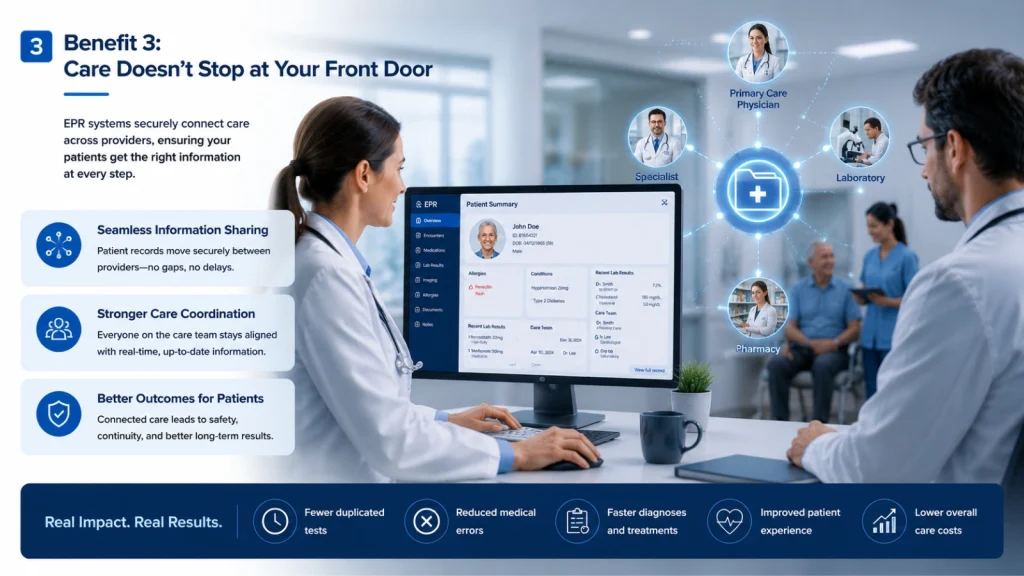
What Interoperability Actually Means for Your Patients
Interoperability sounds technical, but the idea is simple. Systems can share patient data securely.
Imagine a patient moving from a general physician to a specialist. With connected systems, records transfer instantly.
Without that connection, the patient repeats tests or relies on memory. That slows care and increases risk.
Coordinating Chronic Condition Management Across Teams
Patients with long-term conditions often see multiple providers.
An electronic patient record allows everyone involved to view the same updated information. That includes medications, progress notes, and treatment plans.
This shared visibility reduces conflicting advice and missed follow-ups. It keeps care consistent.
Benefit 4: Security That Paper Records Simply Cannot Match
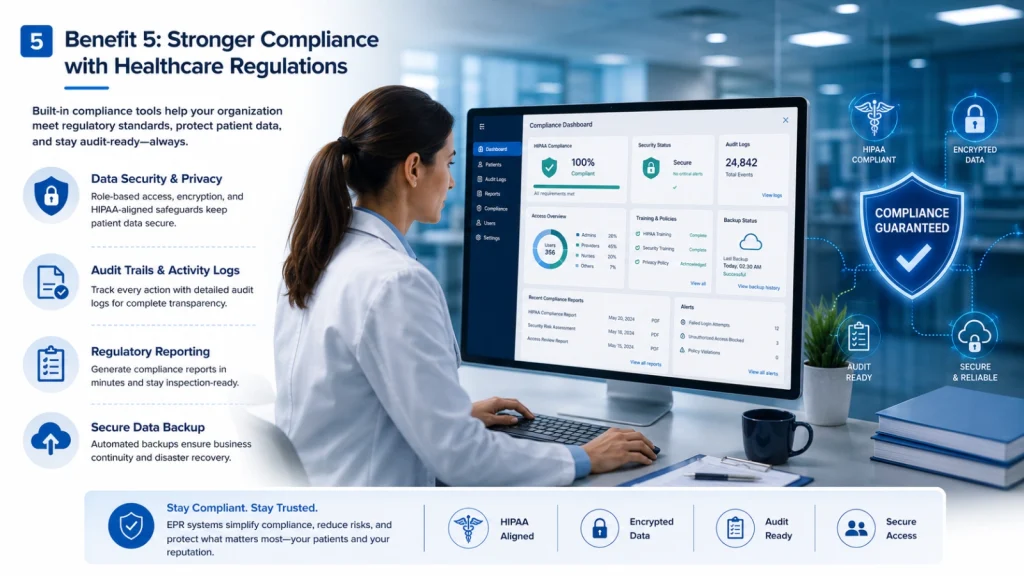
Why “Lost Files” Are Now a Serious Risk
Paper records can be misplaced or accessed without tracking. That’s not just inconvenient. It’s a compliance issue.
Digital systems log every access point. They restrict who can view or edit data.
Encryption and secure storage protect sensitive information in ways paper never could.
What Administrators Should Ask Before Choosing a System
Not all systems offer the same level of protection. It’s worth asking:
- Who can access patient data, and how is that controlled?
- Is data encrypted both in storage and during transfer?
- What happens if there’s a breach?
- Where is the data physically stored?
A reliable electronic patient record system should answer these clearly.
Benefit 5: Patients Become Active Participants in Their Own Care
The Shift From Passive Patient to Informed Partner
Patients no longer need to wait for updates.
Through portals connected to an electronic patient record, they can view test results, book appointments, and manage prescriptions.
This access encourages engagement. And engaged patients tend to follow treatment plans more closely.
What This Means for Patient Trust
Transparency builds confidence. When patients can access their information through an electronic patient record, the experience feels more open and less one-sided.
When patients can see their own records, they feel more involved in decisions. That strengthens trust in the provider and encourages better communication during consultations.
It also reduces routine calls to staff, since patients can check results or appointment details on their own. That frees up time for more critical tasks.
The Mistakes That Cancel Out Every Benefit
The advantages of an electronic patient record only appear when implementation is handled carefully. The technology alone isn’t enough.
Common issues include:
- Choosing a system without clinician input
- Underestimating training time
- Selecting software that doesn’t integrate with existing tools
- Skipping backup plans during rollout
- Over-customizing the system
A thoughtful approach matters just as much as the technology itself.
Big Bang vs. Phased Rollout
A full rollout works faster but carries a higher risk. A phased approach takes longer but allows teams to adjust gradually.
For most practices, a phased rollout reduces disruption and improves adoption.
Read More!
How To Choose The Best Ehr Systems For Your Hospital ?
Top 10 Benefits of Hospital Information Systems (HIS)
How Medcore Supports a Smarter Transition to Electronic Patient Records
Medcore is designed to address the exact challenges discussed above.
- Complete patient record management supports better clinical decisions
- Automated workflows reduce administrative burden
- Interoperability-ready design improves care coordination
- Built-in compliance features strengthen data security
- Integrated patient portal enhances engagement
Instead of forcing practices to adapt, it aligns with how they already work.
Advanced Insight – Where EPRs Are Heading in the Next 3 Years
The current benefits are only the starting point.
A modern electronic patient record system is evolving quickly:
- AI-assisted documentation that captures notes during consultations
- Predictive analytics that flag patient risks early
- Integration with wearable health devices
- Population-level insights for public health monitoring
These developments shift EPRs from record-keeping tools to decision-support systems.
The Records You Keep Today Shape the Care You Deliver Tomorrow
Go back to that earlier scenario. A missing detail, a delayed decision, an avoidable risk.
Now imagine the same moment with a complete electronic patient record in front of the clinician. The outcome changes.
These benefits aren’t theoretical. They show up in daily workflows, patient interactions, and clinical decisions.
If you’re evaluating your current system, the real question is simple. Does it support the level of care you aim to deliver?
Better records don’t just store information. They support better care.
FAQ – Questions Healthcare Administrators Actually Ask
What is electronic patient record?
An electronic patient record is a digital version of a patient’s medical history used within a single healthcare organization. It stores information like diagnoses, medications, and test results in one place, making it easier for clinicians to access accurate data and make informed decisions.
What’s the difference between an electronic patient record and an electronic health record?
An EPR typically stays within one organization, while an EHR is designed for sharing across multiple providers.
How long does implementation take?
Cloud-based systems may take weeks to months. Larger setups can take longer depending on complexity.
Is it secure enough for compliance?
Yes, if the system includes encryption, access controls, and audit tracking.
Can small clinics afford it?
Many systems offer subscription pricing, making them accessible without high upfront costs.
What happens when switching vendors?
Data can be transferred if the system supports open standards. Contracts should include export rights.Do patients get access?
Most systems provide portals where patients can view their records and manage appointments.