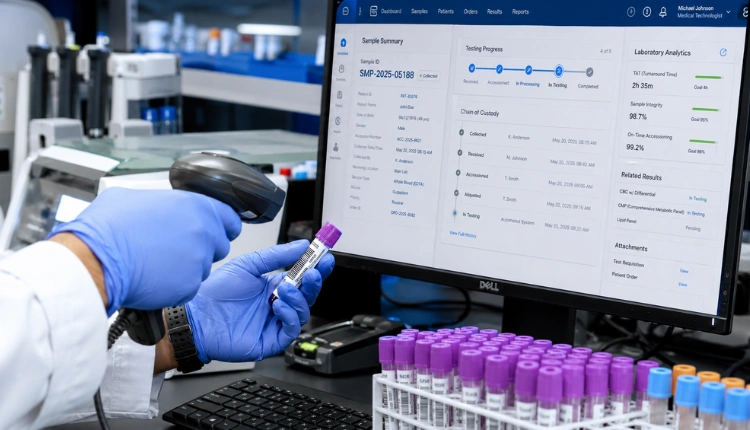
LIMS software is the backbone of modern lab operations, automating the collection, tracking, and management of data across every workflow stage. It eliminates the need for manual documentation, streamlining everything from sample intake to final reporting.
Originally developed in the 1980s to track physical samples, LIMS has evolved into a cloud-based, instrument-integrated platform that ensures compliance and reduces human error.
While lab management tools are helpful, true LIMS systems offer end-to-end sample lifecycle management, audit trails, and regulatory compliance, critical features for labs in regulated industries.
Key Features of LIMS Software
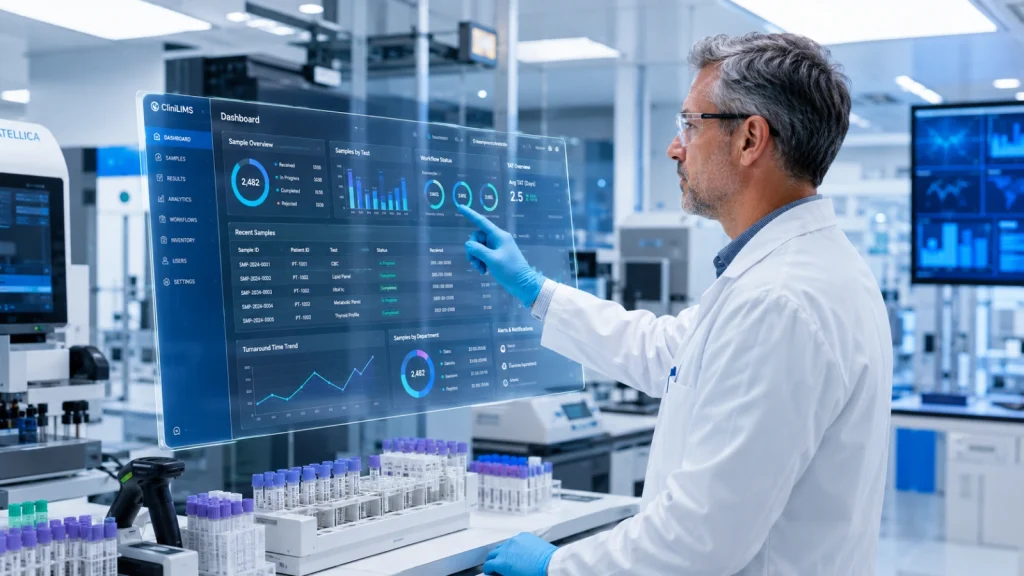
The features of LIMS software are interconnected capabilities that fundamentally change how a lab operates. Here’s a breakdown of key features and why they matter:
1. Sample Tracking: Each sample that enters the lab is assigned a unique identifier, which allows the system to track its entire journey from receipt to processing, testing, storage, and disposal. This automated tracking eliminates the need for paper logs, reducing the risk of mix-ups and ensuring better traceability. In high-throughput environments, this level of traceability is essential to maintaining order and accuracy.
2. Instrument Integration: LIMS software integrates seamlessly with laboratory instruments such as analyzers or mass spectrometers, allowing data to flow directly into the system. This removes the need for manual data entry, preventing transcription errors and delays. Results are available in real time, and the system can automatically flag any out-of-range values, ensuring greater precision and speed.
3. Workflow Automation: Workflow automation takes over the procedural side of lab operations. When a sample reaches a particular stage, the system automatically triggers the next step, whether that’s assigning it to a technician, scheduling a test, or generating a report. Labs that switch from manual workflows to automated processes often experience a significant drop in turnaround time within just a few months.
In addition to these core features, LIMS systems offer several other key functionalities that enhance lab management. Inventory management tracks reagents, consumables, and equipment in real time, with low-stock alerts to ensure nothing is overlooked. Audit trails provide a detailed log of every action taken within the system, who performed it, when, and why, helping labs stay prepared for regulatory inspections. Reporting and dashboards make it easy to generate compliance-ready reports and visualize lab performance metrics at a glance. Finally, role-based access controls ensure data integrity by limiting what different users can view or edit, protecting sensitive information from unauthorized access.
5 Benefits of Electronic Patient Records That Are Reshaping How Healthcare Works
Complete Guide To Pharmacy Software in India 2026: Automation, Compliance and Growth
LIMS Software in Pharma and Other Industries
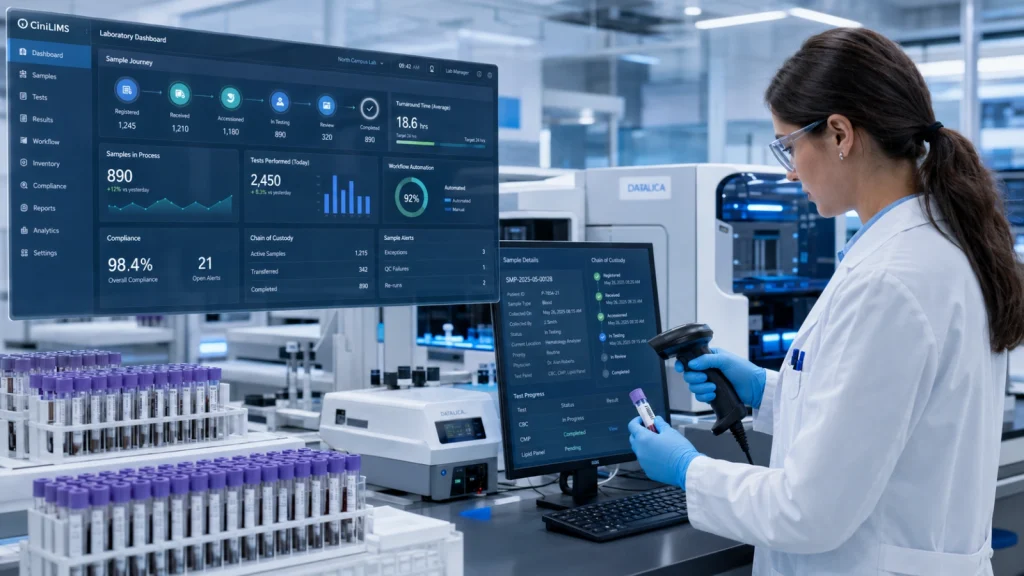
LIMS software is crucial in pharma, where it ensures compliance with FDA regulations by maintaining trustworthy electronic records with audit trails, timestamps, and electronic signatures. It helps prevent costly data integrity failures, reducing the risk of failed audits and product recalls.
Outside pharma, LIMS is widely used across industries. Environmental labs track sample custody, food and beverage companies manage pathogen testing, and clinical labs ensure accurate patient sample processing. Even petrochemical labs benefit from the efficiency LIMS provides.
In all industries, LIMS ensures defensible data and improves audit readiness, boosting client confidence and saving valuable staff time.
How Medcore Enhances Lab and Hospital Operations
For hospitals seeking to improve lab efficiency and ensure seamless regulatory compliance, Medcore provides an ideal solution. By integrating with LIMS workflows, Medcore streamlines clinical, operational, and financial processes, making hospital management smoother and more efficient.
- Clinical Integration:
- Automated lab orders with delta-flag alerts ensure abnormal results are promptly flagged.
- Controlled substance tracking supports regulatory compliance.
- One-click discharge summaries simplify the discharge process.
- Workflow Automation:
- Real-time patient and bed management improves hospital flow, reducing delays.
- Automated workflow routing accelerates lab processes, eliminating manual steps.
- Compliance & Data Integrity:
- Audit trails and electronic signatures provide complete traceability for regulatory needs.
- FHIR and ABDM compatibility ensure smooth data exchange and compliance with national standards.
Medcore helps optimize lab operations, ensuring accuracy, efficiency, and compliance while enhancing patient care.
Benefits of Using LIMS Software in Your Lab
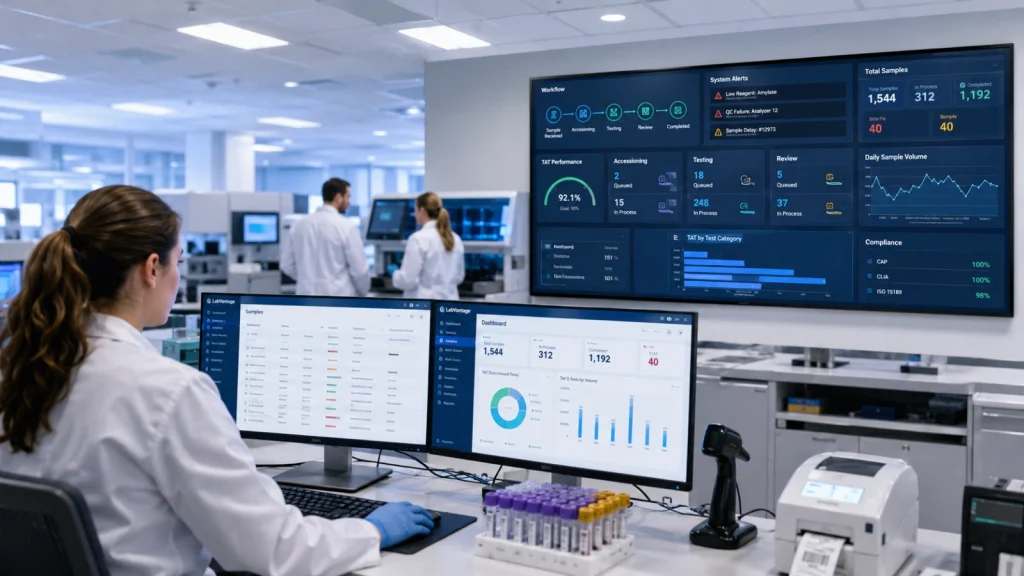
LIMS software streamlines laboratory operations by automating key processes like sample tracking, data management, and compliance. With its ability to reduce errors, improve efficiency, and ensure regulatory readiness, it’s a game-changer for labs across industries.
- Error Reduction:
Manual data entry is a known weak point in lab operations, often leading to issues such as transposition errors, mislabeled samples, and lost records. By automating this process and having instruments write directly into the LIMS, the system significantly reduces the chances of human error. Many labs report error reductions of 50–70% after implementing LIMS, leading to more accurate and reliable data. - Improved Throughput:
LIMS automates workflows, ensuring that the next step is triggered automatically once a test is complete. In high-volume labs, this reduces bottlenecks and can lead to a 20% increase in throughput without additional staffing. - Compliance Readiness:
Preparing for audits becomes faster and more efficient as LIMS automatically organizes and timestamps records. What used to take weeks can now be completed in days or even hours, ensuring quicker audit readiness. - Staff Satisfaction:
Scientists spend less time on paperwork and manual tasks, leading to increased engagement and fewer mistakes. With better tools, staff experience less frustration, resulting in higher quality work and greater job satisfaction.
Case Studies and Customer Testimonials
Real-world outcomes are often more convincing than feature lists, as they demonstrate how the system works under actual conditions.
- A mid-sized contract research organization replaced its spreadsheet-based system with a LIMS and saw a 40% reduction in sample processing time within six months. The main improvements came from automated workflow routing and direct instrument integration, which eliminated manual data transfer bottlenecks.
- In an environmental testing lab handling water quality compliance, LIMS automated chain-of-custody documentation. A process that previously took three analysts most of a day now takes under two hours, freeing up time to take on additional clients without increasing staff.
- A pharmaceutical formulation testing lab struggling with audit inconsistencies deployed a LIMS with 21 CFR Part 11 compliance features. Their next FDA audit saw zero data integrity observations, with the LIMS’s automatic audit trail and electronic signature enforcement credited for the improvement.
When evaluating vendors, ask for case studies from labs similar to yours in size and industry. Generic success stories are helpful, but those that mirror your specific situation are far more useful.
Conclusion
Implementing a LIMS system software transforms lab operations, improving error rates, throughput, staff efficiency, and regulatory compliance. These changes are tangible, reflected in performance metrics and inspection results.
Start by identifying your biggest operational pain points and documenting current workflows. This will make vendor discussions more effective. If you’re comparing platforms, request references from labs similar to yours.
For demos, focus on how the system handles your specific processes, instruments, and regulatory requirements. The decision doesn’t need to be rushed, but breaking the adoption into phases, starting with sample tracking and gradually adding automation, makes the transition manageable and delivers early value.
Explore leading LIMS laboratory software, talk to labs with experience, and choose the one that fits your needs and growth plans. The technology is proven, and the benefits are clear.
Frequently Asked Questions
What is the difference between LIMS and Laboratory Management Software?
The terms overlap but aren’t interchangeable. LIMS specifically focuses on sample management, data tracking, and regulatory compliance across the full sample lifecycle. Broader laboratory management software may handle scheduling, billing, or equipment maintenance but lacks the sample-centric data integrity features that define a true LIMS. If regulatory compliance is a requirement, you almost certainly need a dedicated LIMS rather than a general lab management tool.
How secure is LIMS software for sensitive data?
Modern LIMS platforms are built with data security as a foundational requirement. Role-based access controls limit who can view or modify data. Encryption protects data in transit and at rest. Audit trails log every action. Cloud-based systems from reputable vendors typically hold SOC 2 Type II certifications, and regulated industry versions are validated for compliance with FDA and ISO standards. That said, security is also an implementation responsibility. Proper configuration, user training, and access governance are critical.
Can LIMS software integrate with my existing laboratory equipment?
Most established LIMS platforms support integration with a wide range of laboratory instruments through standard data protocols (such as HL7, ASTM, or direct API connections). Common instruments like liquid chromatography systems, mass spectrometers, and automated analyzers are frequently supported out of the box. Less common or older equipment may require custom middleware. During vendor evaluation, provide a list of your instruments and ask specifically which connections are pre-built versus custom-built.
Is LIMS software expensive for small labs?
Not necessarily. The market now includes purpose-built solutions for smaller labs at significantly lower price points than enterprise platforms. Cloud-based systems with modular pricing allow small labs to pay only for the features they need. Some vendors offer starter tiers specifically for single-site labs or those under a certain sample volume threshold. The realistic entry point for a functional small-lab LIMS is closer to $5,000 per year than the six-figure sums associated with large enterprise deployments.
What industries use LIMS software besides pharma?
LIMS is used across a wider range of industries than most people expect. Environmental testing, food and beverage quality control, clinical and diagnostic laboratories, oil and gas, agriculture, and materials science all rely on LIMS. Any sector where sample traceability, regulated testing, or high data volume creates operational challenges is a candidate for LIMS adoption.