80% of facilities run on fragmented workflows, which delays care and hides key patient facts. Here’s your guide understanding pds so you can see how data should move, what “PDS Health” really means, and what to fix first in 2026.
The short answer: PDS Health is not a single brand or app. It’s the set of patient data systems that capture, share, and protect clinical and billing records across your facility. In 2026, a sound setup means an EHR that speaks FHIR R4 and HL7 v2, links to ABDM/ABHA, and follows the DPDP Act 2023, so your data travels with the patient, not in a paper file.

What Does PDS Health Actually Mean?
“PDS” shows up in three real-world ways. First, Patient Data Systems: the tools that store and move clinical records, notes, orders, images, and bills. Second, Practice Data Solutions: tools that track schedules, stock, payroll, and claims. Third, a broader idea: your health data infrastructure, the people, standards, and policies that make these parts work as one.
In plain terms, think of PDS as your hospital’s “nervous system.” The EHR is the brain. Lab, pharmacy, billing, and queues are the nerves. As a result, the “body” only works well when signals move fast and in the right format.
Standards help. FHIR R4 defines how to structure and exchange health data; you can read the overview on Fast Healthcare Interoperability Resources (FHIR). HL7 v2 is how many machines and labs still send messages; see the background on Health Level Seven.
Moreover, in India, policy links the tech to the patient. ABDM/ABHA identifiers let you connect visits across clinics while keeping data tied to the right person. For context, see the Ayushman Bharat Digital Mission at abdm.gov.in.
Therefore, a modern “PDS Health” setup usually includes a clinical EHR with FHIR R4 and HL7 v2 support, ABDM/ABHA linking, and a privacy plan that meets the Digital Personal Data Protection (DPDP) Act 2023. The DPDP Act focuses on lawful use, consent, and accountability. For details, review the summary at India’s Ministry of Electronics and IT (MeitY) site (search “Digital Personal Data Protection Act 2023” on meity.gov.in).
Understanding PDS vs. daily operations
- Patient Data Systems: clinical source of truth (vitals, allergies, problem list, orders).
- Practice Data Solutions: the business side (appointments, billing, payroll).
- Health data infrastructure: the glue—standards, consent, identity, and audits.
Finally, remember this line: your guide understanding pds starts with a clean map of “where data lives” and “who needs it when.
How Patient Data Systems Work: A Step-by-Step Breakdown
You don’t need to be an IT admin to follow the flow. Picture one shared, single-tenant EHR that keeps clinical data in one place and shares state with billing, lab, and pharmacy. That means each update only needs to be typed once, not re-entered at the counter.
- Step 1: Patient registration — Front desk creates a record or finds an existing one. ABHA can be captured here to link future care.
- Step 2: Real-time OPD queue — A live token system shows who’s next, reducing crowding and nudging wait times down for 150+ OPD patients per day. Vulnerable patients can be flagged to go first.
- Step 3: Triage and vitals — Nurse records vitals (BP, pulse, temp, SpO₂) into a structured EHR. Allergies and the problem list update at the same time, so the doctor sees key risks at a glance.
- Step 4: Consultation and notes — Doctor adds a SOAP note. Because the EHR is structured, orders, diagnoses, and advice link to the same visit. As a result, coding and claims pull from the record without retyping.
- Step 5: Orders, lab and radiology — Tests are placed from the chart. HL7 v2 or FHIR messages reach the lab. When results return, they attach to the right patient and visit, with delta flags if values shift from prior results.
- Step 6: Pharmacy and prescriptions — Digital prescriptions with QR codes reduce errors and speed dispensary checks. Controlled substances log to both the chart and stock.
- Step 7: Billing and payments — OPD and IPD services post as they happen. GST-aware invoicing, Razorpay/UPI, and insurance pre-auth flow from the same source record. Therefore, finance doesn’t chase missing notes.
- Step 8: Discharge and follow-up — Discharge summaries pull from the chart. Follow-up reminders go by WhatsApp or voice. A patient app can show live tokens, lab reports, and bills.
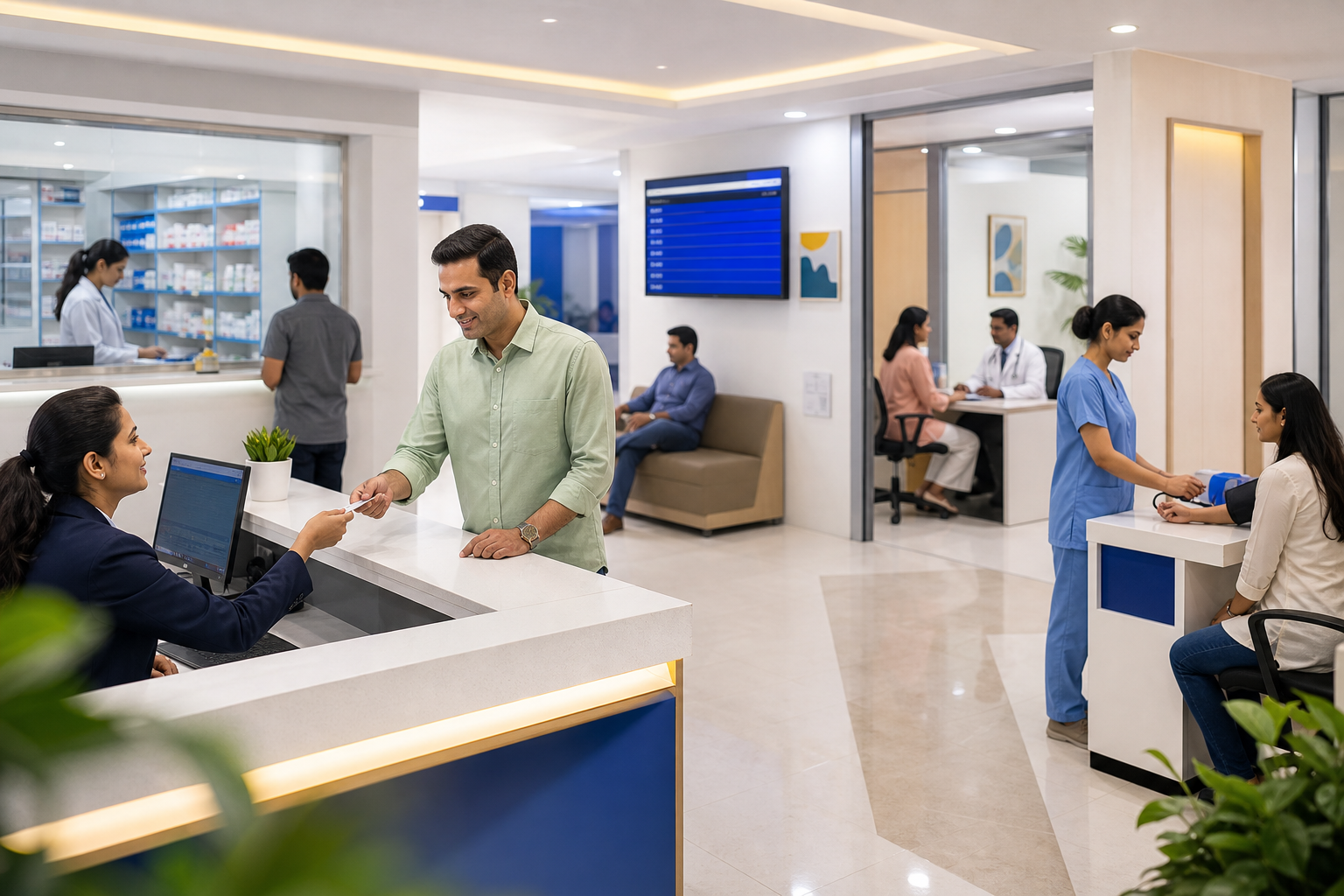
“Our OPD wait time dropped from 40 minutes to 12. The live token display alone was worth the switch.” — Dr. Meera Rao, Medical Director, Asha Hospital
Because data lives in one record, change happens once and flows everywhere. That is the core of your guide understanding pds in practice, one record, shared state, and no double entry.
Common Misconceptions About Health Data Systems
First, “Paper works fine.” It doesn’t scale. With 80% of facilities running on fragmented workflows, even a small clinic loses time to hunting charts, missed allergies, and duplicate tests. Paper hides risk. Digital makes risk visible.
Second, “These systems are only for big hospitals.” In reality, 75% of the market is underserved by current tech. Small and mid-size setups benefit most from basics like a structured EHR, live OPD queues, and one-click prescriptions. A one-doctor clinic can start small and add modules over time.
Interoperability and privacy: not optional
Third, “Interoperability can wait.” It can’t. Labs, devices, and referrals still depend on HL7 v2 messages, while new projects call for FHIR R4 resources. If you skip standards now, you’ll pay more later to glue parts together.
Fourth, “Privacy is a checkbox.” It’s a daily habit. The DPDP Act 2023 expects lawful grounds, consent where needed, and proof of safe handling. In 2026, clinics that build privacy into workflows (role-based access, audit trails, India data residency) spend less time in reactive clean-up.
Understanding risks you can avoid
- No standards, no sharing: Without FHIR/HL7, results don’t auto-attach.
- No structure, no speed: Without vitals/allergies/problem lists, doctors re-enter facts.
- No queue, no calm: Without a live OPD view, waits spike and tempers rise.
As you weigh upgrades, keep your guide understanding pds in mind: choose clarity (standards), safety (privacy), and speed (shared state) as non-negotiables.
**See flat pricing upfront →
Also Read!
Your Guide to Using MyThedaCare Patient Portal
Your Guide to Appointment Plus: What It Is, How It Works, and the Best Alternatives
Tools and Platforms That Support PDS Health
You’ll see three types of tools on the market. The right fit depends on your size, mix of services, and how fast you want to go live.
Standalone EHRs (Understanding the core record)
These focus on clinical notes, orders, and results. They do the “patient record” job well but may need extra tools for billing, claims, or pharmacy. If you go this route, insist on FHIR R4 and HL7 v2 support, plus role-based access and audit logs.
Integrated HMS platforms (PDS plus operations)
These add billing, stock, HR, and analytics to the EHR. As a result, one login covers most of your day. Look for a single-tenant EHR design with shared state across billing, lab, and pharmacy. Moreover, confirm ABDM/ABHA linking and DPDP Act 2023 alignment so you don’t bolt on compliance later.
AI-augmented systems (Understanding what to automate)
These build in agents for triage, drafting notes, follow-ups, and claims support. The goal is to reduce clicks and bring risk alerts to the front of the queue.
Tools like MedCore are one example in this category: AI-native with integrated workflows and a unified EHR, 45 modules shaped with input from doctors, nurses, and administrators, flat per-month pricing (no per-bed or per-user fees), self-serve onboarding to go live in days, and compliance features covering Indian medical data rules, FHIR-native interoperability, and ABDM/ABHA linking.
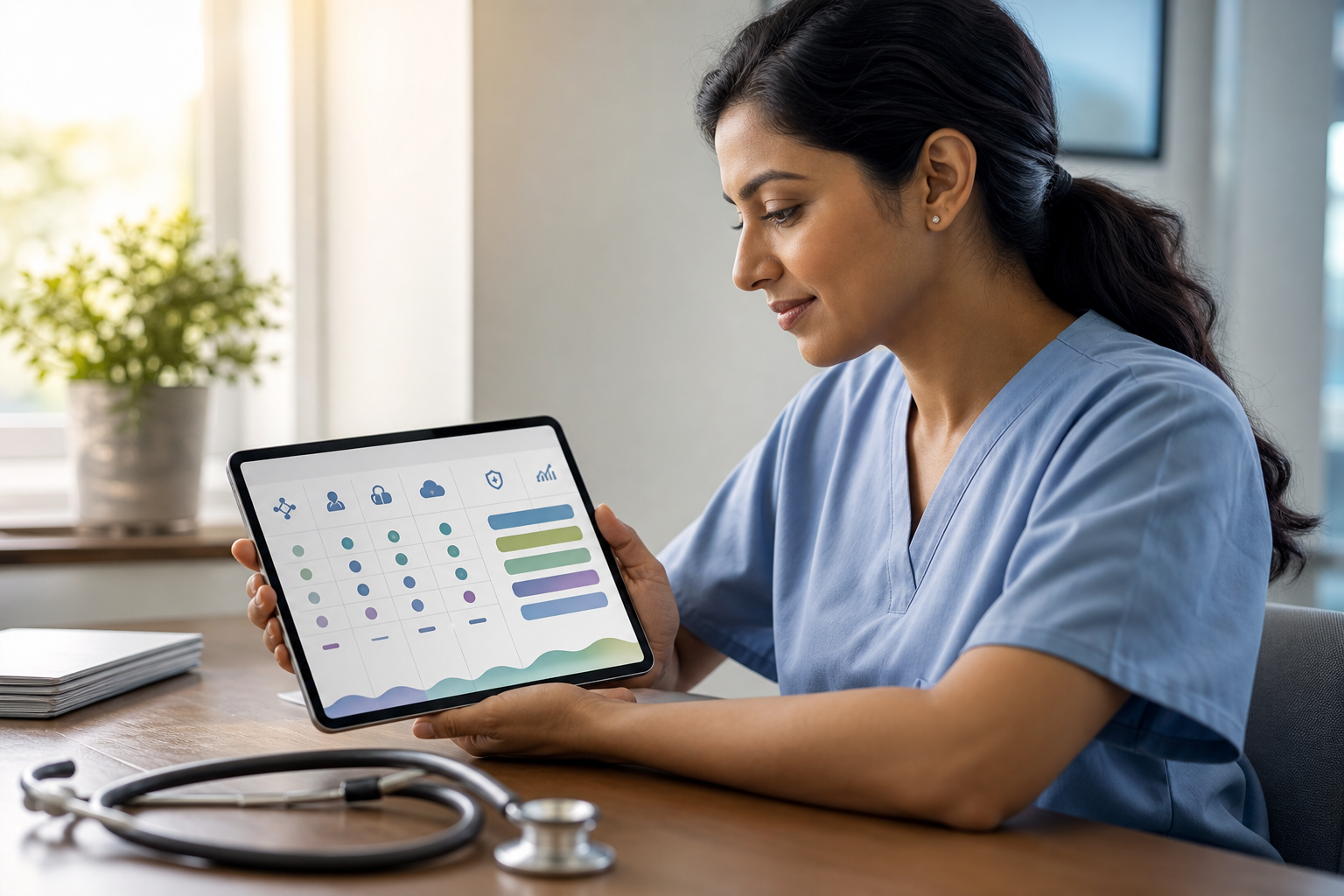
As you compare, ask one question first: “Will this system make our next Monday easier?” If the answer isn’t a quick yes, keep looking.
What to Do Next: Evaluating Your Own Health Data Setup
You don’t need a huge budget to improve. Start with a short self-assessment and one change per month. By the end of a quarter, your queue will feel lighter, and your team will have fewer copy-paste tasks.
Your 10-minute checklist (Understanding gaps fast)
- Interoperability: Can you send and receive FHIR R4 resources and accept HL7 v2 inbound from labs and devices?
- Identity: Do you capture ABHA to link care across visits and facilities?
- Structure: Are vitals, allergies, and the problem list structured (not free text)?
- OPD flow: Do you have real-time token/queue displays that match how your team works?
- Privacy: Are you aligned to the DPDP Act 2023 with role-based access, consent logs, and audit trails?
- Integration: Do billing, lab, pharmacy, and claims pull from one EHR source of truth?
- Speed to value: Could you go live in days with a self-serve onboarding wizard?
- Local rules: Are you in step with Indian medical data regulations and India data residency?
- Patient app: Can patients see tokens, lab reports, and bills without calling your desk?
- Reporting: Do you have branch-level analytics and a clear audit trail?
Moreover, write down one friction point per area and pick the top two to tackle first. For small clinics, that might be OPD queues and e-prescriptions. For mid-sized hospitals, it may be lab integration and claims auto-draft. Keep your plan simple, and keep your guide understanding pds in mind as you decide what to fix this quarter versus next.
**Get started in minutes, no card →

Key Takeaways
- PDS Health is a set of systems, not a brand. It covers the EHR, lab, pharmacy, billing, queues, and the rules that keep data safe. If it touches patient data, it’s part of your PDS.
- Interoperability is table stakes in 2026. FHIR R4 and HL7 v2 keep results tied to the right chart without retyping. Skipping standards now means higher costs later.
- Structure beats scramble. Vitals, allergies, and a problem list must be structured fields. This unlocks safer orders, faster claims, and clearer discharge summaries.
- One record, shared state. A single-tenant EHR with shared state across billing, lab, and pharmacy removes duplicate work. It also makes audits and privacy checks simpler.
- Start small, move fast. A self-serve onboarding wizard helps you go live in days. Tackle quick wins like OPD queue displays and e-prescriptions, then add labs, claims, and patient apps.
- Privacy is practice, not paperwork. DPDP Act 2023 alignment should show up in daily workflows—role-based access, consent logs, audit trails, and India data residency.
As you weigh tools, remember the human test: will Monday feel easier for your front desk and your nurses? If the answer is yes, and your compliance and standards boxes are ticked, you’re on the right track.
What to Do This Week
First, map your current flow on one page: registration → queue → triage → consult → orders → billing → follow-up. Second, highlight repeats and delays in red. Third, pick two fixes you can ship in seven days, like turning on a live OPD queue and switching to digital prescriptions with QR codes. Fourth, schedule a standards check: confirm FHIR R4 and HL7 v2 paths with your lab and device vendors. Fifth, run a 30-minute DPDP Act 2023 drill: list who can see what, and make sure access matches roles.
By Friday, share the map with your team. Ask, “What slows you down the most?” Then make one change and measure wait times the next week. Small steps compound. And if you want a guided walkthrough of an AI-native, unified EHR built for Indian facilities outside corporate hospital chains, you can explore tools like MedCore, education first, adoption second.