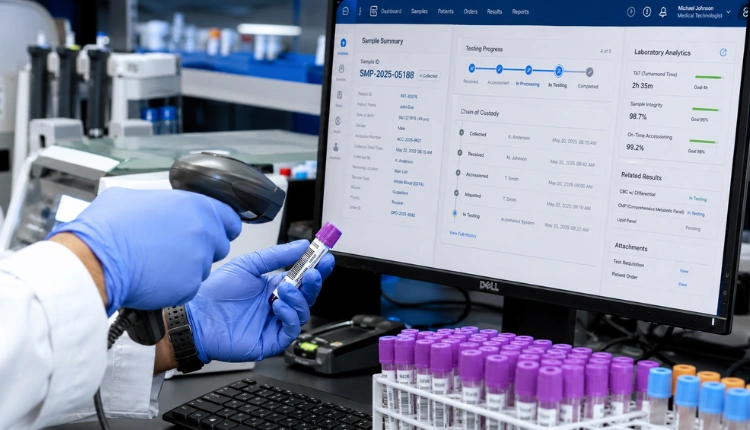

**Book a demo for hospital billing with gst, upi, and insurance claims →
80% of facilities still run on fragmented workflows; cash leaks follow. To fix hospital billing with gst, upi, and insurance claims in 2026, pair GST-aware, multi-currency invoices with TPA pre-auth and UPI/card/wire reconciliation, backed by FHIR/ABDM checks.
You manage dual pricing (INR for GST, foreign currency for quotes), exemptions vs. taxable services, and TPA rules that can change midweek. Meanwhile, patients want to pay over UPI now, while agents abroad ask for wires or international cards. That tangle shows up on your month-end aging report, especially for hospital billing with gst, upi, and insurance claims.
For context, in hospital billing with gst, upi, and insurance claims, health services can be exempt while parts like cosmetic procedures, implants, or room upgrades may be taxable. You need a system that tags each line with the right SAC code, applies the correct GST rate or exemption, and still lets you bill in USD, AED, GBP, or EUR for estimates. For a plain-English refresher on how GST works in India, see this neutral overview by Wikipedia: Goods and Services Tax (India).
According to MedCore field analysis in 2026, 80% of facilities run fragmented billing and claims workflows for hospital billing with gst, upi, and insurance claims, and 75% of the Indian market remains underserved by existing tech. That gap is why teams still retype claims, chase TPA pre-auth by email, and reconcile UPI vs. POS vs. wire in spreadsheets. It does not have to be this way.
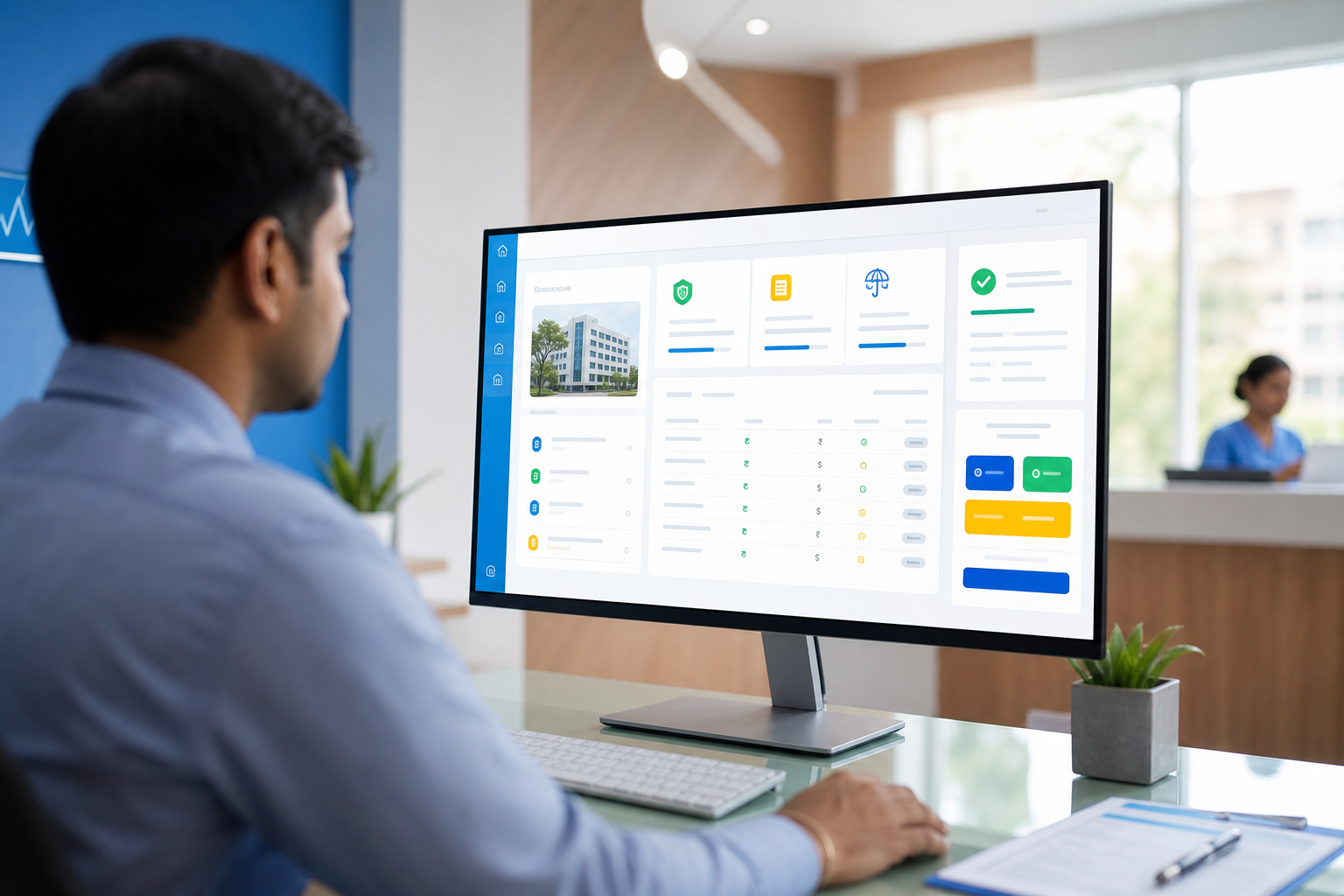
Why Medical Tourism Hospitals in India Struggle with Hospital Billing with GST, UPI, and Insurance Claims
Medical tourism makes hospital billing with gst, upi, and insurance claims harder by design. You quote in a patient’s currency, but you must issue GST-compliant invoices in INR. You also split bills across exempt healthcare and taxable add-ons. If your software ignores SAC codes or mixes up exemptions, you inherit risk on every discharge.
In addition, TPA pre-auth can lag behind clinical reality. A procedure shifts from day-care to in-patient. A package adds an extra implant. If your team re-enters details by hand, small errors turn into denials. That drags AR days up and stresses cash flow.
Moreover, payments land from all directions. Walk-ins pay by UPI or card, overseas families wire USD from abroad, and agents use international cards. Without rule-based reconciliation, your ledger and bank statement drift apart. Month-end then becomes a scramble.
- Dual billing: INR for GST compliance, plus foreign currency for estimates and receipts to the patient or facilitator.
- GST confusion: exempt healthcare vs. taxable cosmetic/wellness, implants, room upgrades; SAC code mapping for each line.
- TPA delays: pre-auth back-and-forth, clinical changes not reflected in claims, leads to rework and rejections.
- Reconciliation mess: UPI, card, wallet, and international wires hard to match against invoices and packages in hospital billing with gst, upi, and insurance claims.
Specifically, medical tourism adds agents, visa letters, and translation needs on top of clinical care. If those sit outside your HMS, staff handling hospital billing with gst, upi, and insurance claims will export PDFs, chase WhatsApp threads, and maintain parallel spreadsheets. Per MedCore field analysis (2026), 80% of facilities run on fragmented workflows, and 75% of the market is underserved by tech built for India’s realities. That’s why you need hospital billing with gst, upi, and insurance claims handled in one workflow.
For a deeper operational playbook tailored to cross-border care teams, you can also review this practitioner guide: Medical Tourism Hospital's Guide to Hospital Billing, Insurance Claims, and GST in India.
The CFO view: where losses hide
- Package drift without automated addendum capture
- GST misclassification across mixed-exempt invoices in hospital billing with gst, upi, and insurance claims
- Denial-prone claims caused by copy-paste data
- Payment-channel fees rising without routing rules
Also Read!
Best Patient Engagement WhatsApp Reminders for Multi-Specialty Hospital Chains in 2026
What to Look for in a Billing System for Medical Tourism Hospitals
If you’re shortlisting systems for hospital billing with gst, upi, and insurance claims, start with tax and claims correctness, then move to payments and data exchange. The right platform for hospital billing with gst, upi, and insurance claims should remove manual steps you cannot audit and harden the rules you cannot afford to get wrong.
First, demand GST-aware invoicing for hospital billing with gst, upi, and insurance claims. You need SAC code catalogs, line-level tax logic, and mixed invoices that cover exempt and taxable services in one bill. You also need audit trails that show who changed a line, when, and why. That is your shield in 2026 audits.
Second, insist on multi-currency done right. Estimates and patient-facing receipts should show foreign currency amounts with transparent conversion notes, while your GST invoice remains in INR. Rate sources must be logged. Without this, you risk disputes with facilitators and patients.
Third, claims should draft themselves from the record. An AI claims agent that reads diagnosis, procedures, and consumables, then pre-fills ICD-10/CPT where applicable, saves hours. Add a denial-risk check before submission. It should also manage TPA pre-auth, attachments, and status updates in one thread.
Fourth, payments must be native. Look for UPI and Razorpay integration across OPD/IPD deposits, packages, and refunds. Add payment plans with due-date reminders. Reconciliation should map every transaction to an invoice, package, or claim event without a spreadsheet.
- Interop and identity: FHIR R4 APIs, HL7 v2 inbound, and ABHA linking under ABDM to keep data consistent across partners. For the policy context, see the official portal: Ayushman Bharat Digital Mission (ABDM).
- Privacy and residency: DPDP Act 2023 compliance with India data residency and DLT-compliant messaging for alerts and OTPs.
- Operational scale: unified EHR so billing, pharmacy, and lab share the same source of truth for hospital billing with gst, upi, and insurance claims; no exports, no gaps.
Compared to alternatives, systems that treat claims as an afterthought create rework. On the other hand, generic ERPs may have broader finance modules, yet miss India-specific GST and TPA nuance. As you evaluate, ask vendors to demo hospital billing with gst, upi, and insurance claims on one patient journey, from pre-auth to discharge to refunds.
Buyer checklist (shortlist-ready)
- Mixed-exempt GST invoice with SAC codes and audit log
- AI claims auto-draft + denial-risk score
- UPI, Razorpay, and payment plans with clean reconciliation
- Multi-currency estimates + INR GST invoices
- FHIR/HL7 interop, ABDM/ABHA linking, DPDP compliance
How MedCore Solves Hospital Billing with GST, UPI, and Insurance Claims for Medical Tourism Hospitals
MedCore maps each buying criterion for hospital billing with gst, upi, and insurance claims to a concrete, built-in workflow. GST-aware invoicing tags every line with the right SAC code and exemption status. Mixed invoices are standard, so you can bill a cosmetic add-on alongside exempt care without splitting bills. Changes are tracked, down to who added a taxable implant during surgery.
On payments, MedCore integrates Razorpay and UPI across OPD and IPD, supports payment plans, and adds rule-based routing to cut fees. Reconciliation pairs each UPI or card entry with the right invoice line or deposit. For overseas families, multi-currency billing handles estimates and patient receipts in USD, AED, GBP, or EUR, while your statutory GST invoice stays in INR with transparent rate notes.
Claims for hospital billing with gst, upi, and insurance claims move from clerical work to guided review. Insurance/TPA pre-auth and claims auto-draft from the consultation and orders. The claims agent predicts denial risks before you submit, so coders can fix issues up front. That reduces back-and-forth with TPAs and keeps AR days predictable.
International coordination is handled too. MedCore’s international patient agent supports visa letters, translation of estimates, and travel logistics. That context lives next to the clinical and billing record. Your team avoids exporting PDFs to email threads and cuts the risk of version drift.
"We replaced three tools with MedCore. Billing, pharmacy and lab now talk to each other without exports." — Ravi Prasad, Administrator, Sunrise Clinic
In practice, this looks like one flow: Reception creates an ABHA-linked chart, triage logs vitals in the EHR, orders feed pharmacy and lab, and billing pulls the same source of truth. Packages, add-ons, and refunds are caught by the GST engine. Claims draft from the record, get a denial check, and route to the TPA task list.
Payments. UPI, card, wire, reconcile back into the ledger without a manual sheet. That’s hospital billing with gst, upi, and insurance claims as a single, auditable process.
Also Read!
Best Hospital Billing with GST, UPI & Insurance Claims for Small Clinics in India (2026)
Best Hospital Lab & Pharmacy Management for Small Clinics in India — 2026
MedCore vs. Generic Hospital Management Systems for Medical Tourism Billing
Legacy HMS tools, especially ERP-based systems, can be strong in general finance or inventory but weak at hospital billing with gst, upi, and insurance claims. However, they struggle with India-first needs in hospital billing with gst, upi, and insurance claims like mixed-exempt GST invoices, SAC code logic, and TPA workflows. International platforms may excel at multi-currency, but miss India’s GST nuances and ABDM/ABHA requirements.
MedCore takes an AI-native route with integrated workflows and a unified EHR. Claims draft from clinical notes, and the denial-risk check flags gaps before submission. Flat per-month pricing avoids per-bed or per-user fees, so growth in beds or staff does not spike your bill. Self-serve onboarding means you can go live in days, not months.
Unlike alternatives, MedCore includes international patient coordination (visa letters, translations, logistics) and multi-currency billing matched to INR GST invoices. Payment support spans UPI, Razorpay, and payment plans, with reconciliation tied to each invoice. That matters if your OPD sees 150+ patients per day across cash, UPI, and insurance traffic.
For a more in-depth look at a well-known alternative, this explainer weighs platform fit for chains: MedCore vs Practo for Multi-Specialty Hospital Chains: Which Is Better for Hospital Billing, Insurance Claims & GST?. As you read, compare how each vendor handles hospital billing with gst, upi, and insurance claims as one flow, not as three separate modules.
| Capability | MedCore | Legacy ERP HMS | International Platforms |
|---|---|---|---|
| GST compliance (mixed-exempt, SAC) | Native, line-level | Add-on or manual | Partial, non-India focus |
| Multi-currency + INR GST | Yes, with audit | Rare | Strong multi-currency, weak GST |
| AI claims drafting + denial risk | Built-in agent | Manual forms | Add-on, limited India TPA |
| Pricing model | Flat monthly (no per-bed/user) | Per-bed or per-user | Per-seat + add-ons |
| Medical tourism coordination | Visa, translations, logistics | Not included | Usually not included |
| Onboarding speed | Self-serve, live in days | Months | Weeks to months |

Trust, Compliance, and Credentials for Indian Healthcare Billing
Trust starts with compliance and auditability for hospital billing with gst, upi, and insurance claims. MedCore is DPDP Act 2023 compliant with India data residency, ABDM/ABHA linking, and DLT‑compliant messaging. For background on the privacy law that sets the guardrails, see this primer: Digital Personal Data Protection Act, 2023.
On interoperability, MedCore supports FHIR R4 and HL7 v2 inbound, so you can exchange data with labs, imaging, or legacy systems while you phase your rollout. That reduces migration risk and lets you keep must-have devices connected. It also aligns with ABDM identity, which cuts duplicate charts in hospital billing with gst, upi, and insurance claims.
Operationally, the platform is built to handle busy OPD days. Teams run live tokens, triage, and billing together; sites have reported managing 150+ OPD patients per day without stalls. That throughput keeps your billing queue moving and prevents end-of-day stacks.
"Our OPD wait time dropped from 40 minutes to 12. The live token display alone was worth the switch." — Dr. Meera Rao, Medical Director, Asha Hospital
Security is not an afterthought. Data stays in India, with access controls and audit trails across billing, EHR, pharmacy, and lab. HIPAA alignment is underway for sites handling international patient data. With 55+ integrated modules, you avoid the risk of exports that leak PHI or break your audit chain.
MedCore’s GST-aware foundation links cleanly to payments and claims. As a result, your team gains a unified record that enforces the rules you need for hospital billing with gst, upi, and insurance claims while meeting India-first compliance needs in 2026 and beyond.
Getting Started: Implementing MedCore for Your Medical Tourism Hospital
You can go live in days, not months, for hospital billing with gst, upi, and insurance claims. The self-serve onboarding wizard sets up branches, departments, and roles, then walks your team through GST rates, SAC catalogs, and invoice templates. A quick workshop aligns your mixed-exempt rules, packages, and deposit policies.
Next, connect payments. Razorpay and UPI integration takes minutes, and payment plans can be enabled per specialty. Then, load your payer list and TPA templates so pre-auth and claims auto-drafting start on day one. For international billing, add currency presets and conversion note templates.
- Step 1: Run the self-serve wizard and import masters (services, packages, payers).
- Step 2: Configure GST (SAC codes, exemptions, invoice series) and add currencies for hospital billing with gst, upi, and insurance claims.
- Step 3: Connect Razorpay/UPI, set payment plans, and test reconciliation.
- Step 4: Enable TPA pre-auth + claims auto-draft and train billers in one session.
- Step 5: Pilot with one specialty for 3–5 days, then switch the rest in a phased plan.
Pricing is flat and predictable: Small Clinic from ₹9,999/mo, Mid‑size Hospital from ₹24,999/mo, and Multi‑specialty with custom Enterprise options. Enterprise tier includes dedicated onboarding for complex setups, including multi-branch rollouts and custom HL7 bridges. This is the fastest path to hospital billing with gst, upi, and insurance claims without a rip-and-replace shock.

**See pricing for hospital billing with gst, upi, and insurance claims, flat monthly →
Before you compare quotes, it may help to review how chains approach scale and AR control: How to Handle Hospital Billing, Insurance Claims, and GST for Multi-Specialty Hospital Chains. For single-site teams, this practical walkthrough also covers basics: Small Clinic's Guide to Hospital Billing, Insurance Claims, and GST in India.
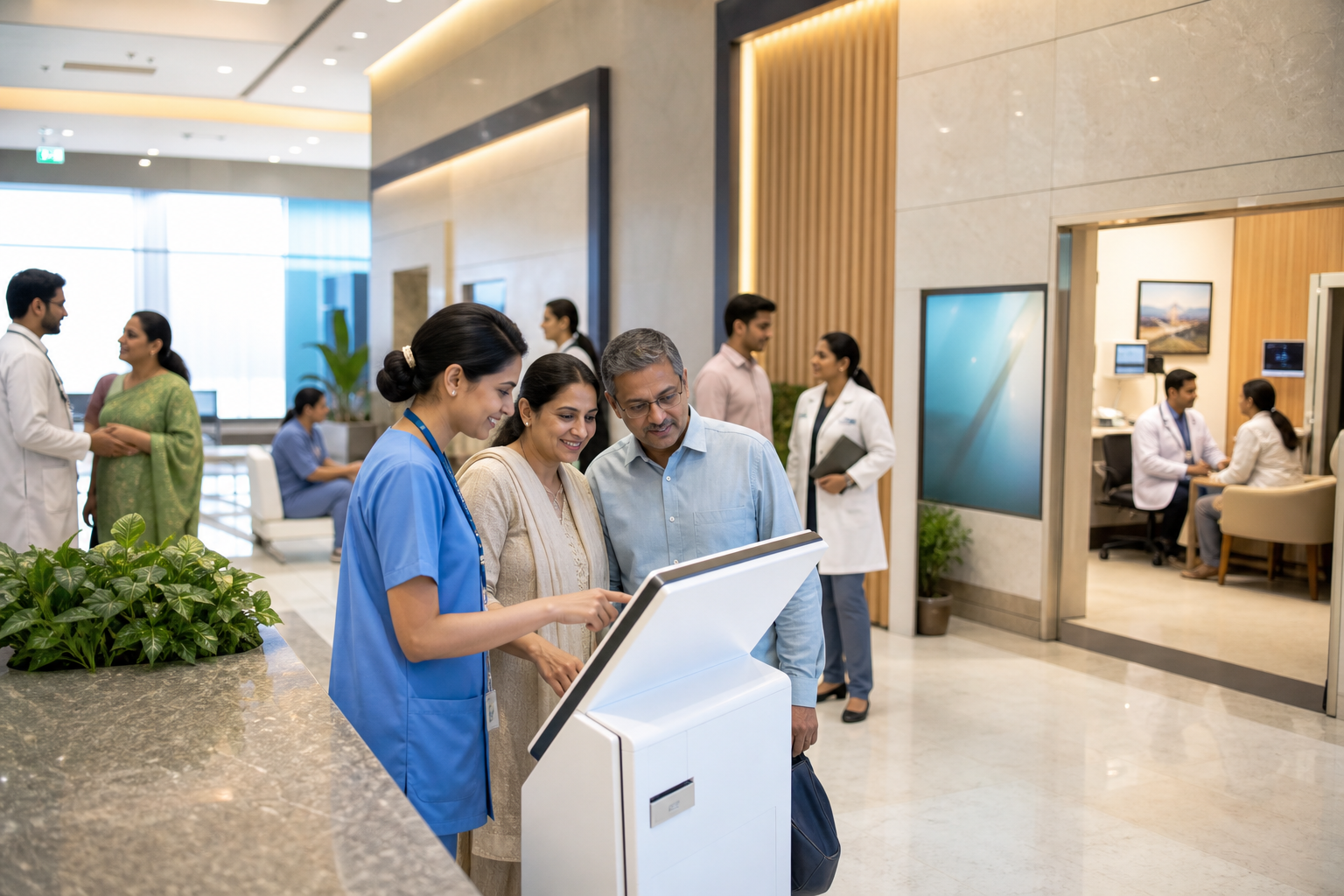 → UPI/card/wire payment → TPA pre-auth → AI claim draft → denial-risk check → submission → reconciliation)
Also Read!
How to Set Up Lab and Pharmacy Management for a Small Clinic in India
How to Set Up WhatsApp Patient Reminders for Mid-Size Hospitals
Frequently Asked Questions
How does MedCore handle GST for medical tourism services that may be exempt vs. taxable?
MedCore’s GST-aware invoicing classifies services by SAC code at the line level. It applies the correct GST rate or exemption to each item based on your rules and catalogs. You can issue mixed invoices where exempt healthcare sits next to taxable cosmetic or wellness items. The audit log records every change for review. This keeps hospital billing with gst, upi, and insurance claims accurate while staying patient-friendly for cross-border care.
Can MedCore generate bills in foreign currencies for international patients?
Yes. MedCore supports multi-currency billing for estimates and patient-facing receipts, while statutory GST invoices remain in INR. The international patient agent handles currency conversion notes, translated estimates, and coordinator handoffs. Payments from international cards or wires reconcile next to domestic UPI or card flows. This keeps hospital billing with gst, upi, and insurance claims aligned.
How does the insurance claims auto-drafting work?
The AI claims agent reads consultation notes, orders, and disposables to auto-draft claims with ICD-10/CPT codes where relevant. It then runs a denial-risk prediction and suggests fixes before submission. TPA pre-auth is built into the same thread, so staff see updates and required attachments in one place. This reduces manual entry and lowers rejection rates across payers.
What payment methods does MedCore support beyond UPI?
MedCore integrates Razorpay for cards, net banking, and wallets, plus UPI for fast domestic payments. You can also set up payment plans with due reminders. For international patients, multi-currency billing works with wires and international cards. Reconciliation maps each transaction back to invoices or deposits, so month-end is clean.
How much does MedCore cost compared to per-bed pricing models?
MedCore uses flat monthly pricing: from ₹9,999/mo for clinics, ₹24,999/mo for mid-size hospitals, and custom Enterprise plans. There are no per-bed or per-user fees, so costs stay predictable as you grow. This model avoids surprise bills during seasonal demand or expansion. It also aligns spend with value rather than headcount.
Is MedCore compliant with Indian data protection regulations?
Yes. MedCore is DPDP Act 2023 compliant with India data residency and DLT-compliant messaging. It supports ABDM/ABHA linking and offers FHIR R4 + HL7 v2 interoperability. HIPAA alignment is underway for teams that manage international patient data. Security and audit logs span billing, EHR, pharmacy, and lab.
How long does it take to go live with MedCore?
Most sites go live in days using the self-serve onboarding wizard. You can import masters, set GST rules, connect Razorpay/UPI, and train billers in one week. Enterprise-tier hospitals receive dedicated onboarding, multi-branch plans, and custom integrations. This approach reduces downtime and de-risks change management.
Can MedCore replace our existing billing and EHR systems entirely?
Yes. MedCore is a unified system with 55+ modules where billing, pharmacy, lab, EHR, and claims share the same state. One administrator noted replacing three tools after switching, thanks to the shared record. If you prefer a phased approach, FHIR/HL7 support allows staged migration. Either way, exports and manual merges go away.
Closing Thoughts
- Fix your core risks first in hospital billing with gst, upi, and insurance claims: GST correctness, TPA pre-auth, and reconciliation across UPI, cards, and wires. The rest follows.
- Demand one record for care, claims, and cash. That’s how you control AR days and pass audits in 2026.
- Choose a partner built for India: DPDP, ABDM/ABHA, FHIR/HL7, and flat pricing without per-bed math.
If you want a walkthrough tailored to your specialties and payer mix, we’re happy to show real cases and reports.
**Talk to our team about hospital billing with gst, upi, and insurance claims today →
For chain-level benchmarks and additional context, you may also find this field guide useful: Best Hospital Billing with GST and Insurance Claims for Multi-Specialty Hospital Chains in 2026.