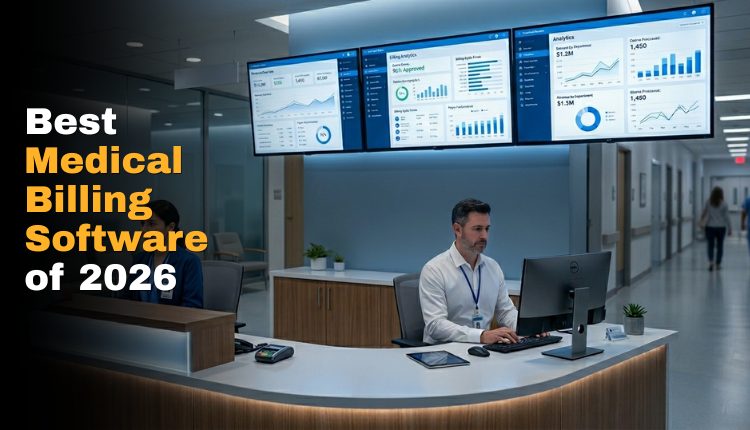
Does your hospital billing take more time than your treatment? This could be just the right time for the hospital to automate manual billing.
Managing medical billing efficiently is essential for maintaining a healthy revenue cycle and delivering an excellent patient experience.
However, with so many medical billing software solutions available, choosing the right one can be challenging. The ideal platform should do more than just generate invoices—it should automate claims processing, reduce billing errors, and integrate seamlessly with your existing healthcare systems.
The Rise Of Medical Billing Softwares

There has been a sudden rise in the use of medical software with the rise of AI automation. The need for efficiency, accuracy, and compliance in healthcare billing processes drives this rise. Key trends include the integration of digital healthcare solutions, the surge in telemedicine, and the growing emphasis on patient-centric billing. These trends are supported by the increasing adoption of cloud-based solutions, which offer scalability, security, and regulatory compliance.
Like every other industry, medicine needs business and managerial automation too. Thus, it is resulting in newer and newer options in functional domains like billing and accounting.
Benefits Of Medical Billing Software
Medical billing software helps significantly increase efficiency, reliability, and accountability, which eventually leads to easier payment management. Here are the top 5 benefits of having AI-embedded medical software for billing.
Increased Efficiency: As medical practitioners tend to lose a lot of time in manual billing work, medical billing software instantly performs all the necessary tasks in minutes, allowing them to give more time to the patients. It simplifies technical work and reduces the stress of manual work for doctors and nurses.
Faster Payments: Easy claim submissions via billing software help in fast processing, resulting in quick payments. This accelerates cash flow for healthcare practices, reducing accounts receivable tasks and improving overall financial health.
Enhanced Revenue Cycle Management: Medical billing software provides complex tools for tracking claims, identifying denials, and generating financial reports, resulting in optimized revenue collection and pinpointing areas for improvement.
Improved Patient Experience: Integrated patient portals allow patients to view and pay their bills conveniently, which enhances their overall experience with the healthcare provider. This transparency assures patient satisfaction.
Cost Savings: By reducing the need for manual billing processes and minimizing errors, medical billing software can save a significant amount of money compared to traditional billing methods.

Why Are Existing Medical Apps Not Able To Serve The Purpose?
While the best medical billing software provides an easy and smooth functioning that benefits both, it also comes with challenges. Modern-day billing sites are facing these challenges that are hindering efficiency. Some of them are –
- Lack of user-centric design – Many healthcare apps are designed in a way that feels too technical for doctors, nurses, and other medical professionals. A good app should have a simple layout, easy navigation, and clear features so users can perform their tasks without confusion.
- Technical glitches and compliance issues – Poor video or audio quality, slow loading times, app crashes, and connection problems can interrupt patient care and reduce user trust. Healthcare apps must also follow industry regulations to ensure safe and reliable service.
- Imperfect user engagement and inaccessibility – The success of a healthcare app depends on how user-friendly it is. Simple navigation, quick access to features, support for different devices, and an easy learning process encourage both healthcare providers and patients to use the app regularly.
- Data privacy and interoperability – Healthcare apps handle sensitive patient information, so they must protect data with strong security measures and follow privacy regulations. They should also work smoothly with other healthcare systems, such as Electronic Health Records (EHR), laboratory software, and hospital management systems, allowing information to be shared safely and efficiently.
5 Factors That Help You Choose The Best Medical Billing Software

- Claim scrubbing –
Software that offers real-time claim accessibility and also catches errors before submission is capable of becoming great software for billing. It can reduce the risk of claim denials and offer seamless service.
- Eligibility verification –
Ensure the software can verify patient eligibility and insurance coverage efficiently, which is crucial for accurate billing.
- Denial management –
Choose a system that provides robust denial management features, including tracking and reporting on denied claims, to improve reimbursement rates.
- Reporting and analytics –
Select software with advanced reporting capabilities to analyze revenue cycle performance, identify trends, and make informed decisions.
- Integration with EHR –
Ensure the software integrates seamlessly with your Electronic Health Record (EHR) system, allowing for streamlined workflow and improved data management.
Also Read—
Hospital Management Software India Best HMS Solutions (2026) – Medcore Software
Why Medcore?
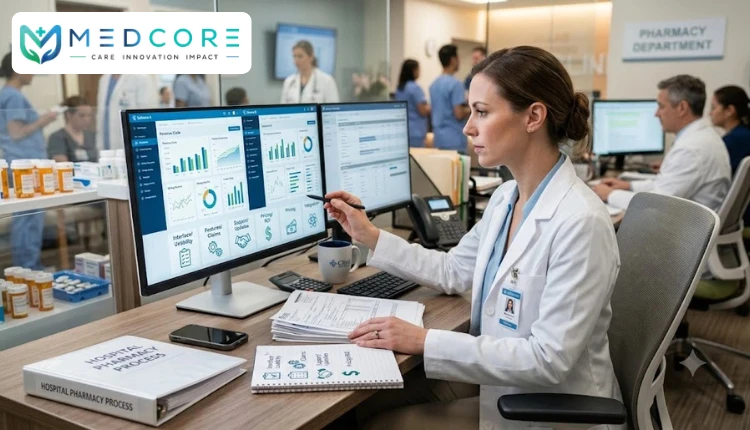
MedCore is an AI-native hospital management platform designed specifically for Indian clinics and hospitals, offering a unified solution for managing the entire patient journey. From appointment booking and patient registration to clinical care, billing, pharmacy, laboratory, and post-treatment engagement, the platform streamlines healthcare operations through intelligent automation. Built with input from doctors, nurses, and hospital administrators, MedCore combines electronic health records (EHR), AI-powered clinical tools, financial management, HR, and patient engagement into a single integrated system. With support for Indian healthcare standards such as GST-compliant billing, UPI payments, ABDM integration, and multilingual AI capabilities, MedCore helps healthcare providers improve operational efficiency, reduce administrative workload, and deliver a better patient experience.
What Makes It Better Than Others?
AI-Powered Hospital Management
It can automate routine hospital operations with artificial intelligence to improve workflow efficiency, reduce administrative workload, and enhance clinical decision-making across departments.
Electronic Health Records (EHR)
It also maintains secure digital patient records, including medical history, diagnoses, prescriptions, laboratory reports, and treatment plans, ensuring quick access to accurate patient information.
Smart Appointment Scheduling
It helps in simplifying patient appointment booking, doctor scheduling, and calendar management with an intelligent system that minimizes no-shows and reduces patient waiting times.
AI Voice Receptionist
Medcore provides 24/7 patient support with an AI-powered virtual receptionist that manages appointment bookings, answers common queries, and improves patient communication.
AI Clinical Assistance
The software is responsible for supporting healthcare professionals with AI-driven symptom assessment, automated medical documentation, and intelligent clinical insights, helping improve productivity and patient outcomes.
Laboratory Management System
Digitized laboratory workflows via managing test requests, sample tracking, diagnostic reports, and result distribution from a centralized platform are among its functional features.
Billing & Revenue Management
Automating hospital billing, GST-compliant invoicing, insurance claim processing, payment collection, and financial reporting that ensure accurate and transparent revenue management.
Patient Engagement Platform
It strengthens patient relationships with automated appointment reminders, digital prescriptions, medical reports, follow-up notifications, and multi-channel communication via SMS, email, and WhatsApp.
Hospital Administration Management
Efficiently manages admissions, bed allocation, operating theaters, emergency services, discharge planning, and other hospital workflows through a unified management system.
Human Resource Management
Streamline employee administration, shift scheduling, payroll processing, leave management, and staff performance monitoring.
Healthcare Analytics & Reporting
Gain actionable insights with real-time dashboards, operational reports, and AI-powered analytics that support informed decision-making and improve hospital performance.
Patient Mobile App
Empower patients with a dedicated mobile application that enables online appointment booking, access to medical records, digital prescriptions, laboratory reports, and personalized healthcare updates.
Conclusion
Choosing the best medical billing software is an important investment that directly impacts your healthcare organization’s financial performance, operational efficiency, and patient satisfaction.
By evaluating key factors such as automation, compliance, integration capabilities, reporting features, and scalability, you can select a solution that meets your current needs while supporting future growth.
The right medical billing software not only simplifies claims processing and reduces billing errors but also helps improve revenue cycle management and ensures faster reimbursements. Investing in a reliable, feature-rich platform empowers healthcare providers to streamline administrative tasks, stay compliant with industry regulations, and focus on delivering exceptional patient care.
Frequently Asked Questions (FAQs)
1. What is medical billing software?
Medical billing software is a digital solution that helps healthcare providers manage patient billing, generate invoices, process insurance claims, track payments, and streamline revenue cycle management. It reduces manual work, improves billing accuracy, and speeds up reimbursements.
2. What factors should I consider when choosing medical billing software?
When selecting medical billing software, focus on key factors such as automation
capabilities, ease of use, integration with Electronic Health Records (EHR), compliance with healthcare regulations, reporting and analytics, customer support, and scalability to meet your organization’s future needs.
3. Why is integration with EHR systems important?
Integration with Electronic Health Records (EHR) allows patient information, diagnoses, and treatment details to flow directly into the billing system. This minimizes manual data entry, reduces billing errors, and improves the overall efficiency of healthcare operations.
4. How does medical billing software improve revenue cycle management?
Medical billing software automates claim submission, tracks claim status, identifies billing errors, manages payment collections, and generates financial reports. These features help reduce claim denials, speed up reimbursements, and improve cash flow for healthcare organizations.
5. Is medical billing software suitable for small clinics as well as large hospitals?
Yes. Most modern medical billing software is designed to support healthcare organizations of all sizes. Whether you run a small clinic, multi-specialty practice, diagnostic center, or large hospital, you can choose a scalable solution that fits your current requirements and grows with your business.