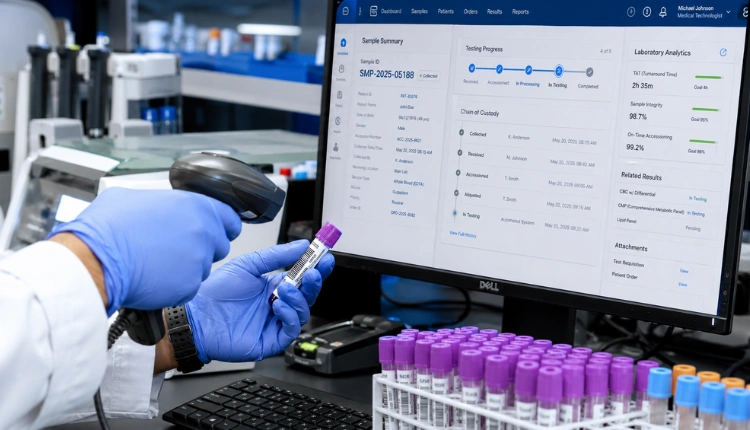

80% of facilities still juggle separate tools for scheduling, EHR, billing, and patient calls. If you want to choose right clinic management this year, pick one system that unifies those moving parts and removes handoffs.
The short answer: map your workflows, demand FHIR R4/HL7 v2 interoperability, verify GST-aware billing and insurance claims, check DPDP Act 2023 and ABDM/ABHA readiness, test patient-facing features, compare flat vs per-user pricing, and run a two-week pilot with real data. Do this, and you’ll cut queue time, reduce errors, and give patients a clear, modern experience.
In 2026, you don’t need “more features.” You need fewer logins, fewer exports, and one shared source of truth. That’s how you speed up OPD, keep pharmacy and lab aligned, and bill right the first time. I’ve helped clinics that see 150+ OPD patients per day make this move. The gains are real when you align software to the way care actually flows.

What Does Clinic Management Software Actually Need to Do?
Most clinics start with point tools. One for appointments, one for EHR, another for billing, plus WhatsApp on the side. It works, until it doesn’t. Missed updates, manual exports, and double entry creep in. Across India, 80% of facilities are still on these fragmented workflows, and 75% of the market is underserved by tech that doesn’t fit real-life clinic needs.
A unified system should do three simple things. First, be your system of record: one EHR that staff trust, with vitals, medications, allergies, and problems in sync across OPD, IPD, lab, and pharmacy. Second, be your system of action: queues, triage, orders, and tasks that reflect how your team actually works. Third, be your system of transaction: GST-aware invoices, UPI/Razorpay payments, insurance pre-auth, and claims, all tied back to care delivered.
In practice, that means scheduling feeds the queue, the queue feeds the consultation, the consult creates orders and prescriptions, and those drive billing and pharmacy dispense. You should not export CSVs to make this happen. Data moves with the patient.
Moreover, a strong platform reduces the need for “glue work” at the front desk. For example, a patient app with live tokens, lab results, and bills cuts calls and keeps people informed without staff chasing them. As a result, clinicians spend time on care, not on chasing files.
- Must cover: appointments (online + walk-in), OPD queues, EHR (with FHIR R4 and HL7 v2 support), orders and results, pharmacy, and discharge
- Must transact: GST-aware billing, UPI/Razorpay, insurance pre-auth, and claims tied to clinical events
- Must engage patients: reminders on WhatsApp/SMS (DLT), a mobile app, and follow-ups
- Must secure data: DPDP Act 2023 compliance, India data residency, and ABDM/ABHA linking
"Our OPD wait time dropped from 40 minutes to 12. The live token display alone was worth the switch." — Dr. Meera Rao, Medical Director, Asha Hospital
A Step-by-Step Framework to Choose Right Clinic Management Software
You can choose right clinic management without guesswork. Follow this sequence and you’ll see weak spots fast.
Step 1: Map Your Daily Workflows
Start on paper. Trace patient flow from first call to discharge. Note handoffs: reception → triage → consult → lab/pharmacy → billing. Mark every place you retype data or wait for an export. Bring frontline staff into this step; they know the hidden steps. Your goal is a shortlist of must-fix friction points.
Step 2: Check EHR Interoperability (FHIR/HL7)
Ask vendors to show native Fast Healthcare Interoperability Resources (FHIR) R4 and HL7 v2 support in a live demo. Specifically, see patient, encounter, observation, medication, order, and claim resources moving end to end. If lab or radiology needs HL7 v2, verify real messages, not a slide.
Step 3: Verify Billing Compliance (GST and Insurance)
Open an invoice in the demo. Confirm GST rates, HSN/SAC handling, and UPI/Razorpay flows. Then walk an insurance case: pre-auth, package rates, consumables, and claims auto-drafted from the consultation. If a denial risk score or claims checklist exists, check how staff see and fix issues before submission.
Step 4: Assess Patient-Facing Features
Patients decide how your front desk feels. Test a branded patient app and WhatsApp reminders. Can people see live tokens, prescriptions with QR, lab reports, and bills? If you serve diverse communities, ask for AI triage in 8 Indian languages and a 24/7 voice receptionist for first calls. Measure drop in inbound calls during pilot.
Step 5: Compare Pricing Models
Per-user or per-bed pricing looks cheap, then grows with headcount. Flat per-month pricing avoids that trap and makes budgets predictable. List every add-on: SMS/WhatsApp blocks, custom integrations, and hosting options. Tally total monthly cost at your real volume, not a “starter” tier.
Step 6: Test Onboarding Speed
Speed matters. Ask for a self-serve onboarding wizard and time it: create departments, add services, import masters, and go live in days, not months. Then run a two-week pilot on one department with real patients and audit logs on. Track setup time, staff adoption, and error rates.

Furthermore, lock in compliance early. Confirm DPDP Act 2023 terms and India data residency in writing, and ask how ABDM/ABHA linking works across your OPD/IPD flows. For staff, ensure role-based access and an audit trail that shows who did what, when, and why.
Also Read!
Common Mistakes When Choosing Clinic Management Software
Under pressure, teams chase features and miss fit. You can choose right clinic management by avoiding these five traps I see again and again.
Mistake 1: Choosing by Feature Count, Not Workflow Fit
A 45-module brochure is impressive. But if your queue, consult, orders, and billing don’t share one EHR state, staff will still copy data. Bring your workflow map to demos and ask vendors to run that path, end to end, with no exports.
Mistake 2: Ignoring Per-User/Per-Bed Pricing Traps
Per-user fees balloon as you grow. Flat per-month pricing without per-bed or per-user fees protects margins and lets you staff up during flu season or outreach drives without surprise bills. Price the same month under both models to see the gap.
Mistake 3: Overlooking Indian Regulatory Needs
Compliance is not a footnote. Demand DPDP Act 2023 alignment, DLT-compliant messaging, and ABDM/ABHA linking. If your patients claim insurance, check that GST-aware billing and claims are built in. For reference on DPDP, see the Digital Personal Data Protection Act, 2023.
Mistake 4: Skipping Staff Training and Handoffs
If your nurses and front desk can’t use it, it won’t stick. During the pilot, rotate all shifts through key tasks. Watch where clicks pile up. A self-serve onboarding wizard is a strong signal that setup is sane for busy teams.
Mistake 5: Not Testing Multi-Language Support
In clinics serving mixed-language communities, triage and reminders must meet patients where they are. Ask for AI triage in 8 Indian languages and test it with real cases. For clinics seeing 150+ OPD patients per day, this alone can keep the queue moving.
"We replaced three tools with one. Billing, pharmacy, and lab now talk without exports." — Ravi Prasad, Administrator, Sunrise Clinic
Tools and Platforms to Choose Right Clinic Management
The right tool depends on your mix of services, staffing, and growth plans. So compare by use case, not brand hype.
For therapy practices, ClinicSource is a long-standing name. If you run speech therapy or behavioral health programs with session-based billing, its templates can fit well. However, if you also run OPD queues, lab, and pharmacy, check how those connect to your core record and billing rules.
For AI-native, integrated workflows with a unified EHR, tools like MedCore bring one shared record across OPD, lab, pharmacy, and billing. The system includes FHIR R4 and HL7 v2 support, GST-aware billing with Razorpay and UPI, AI Voice Receptionist, WhatsApp follow-up agents, and ABDM/ABHA linking. Pricing is transparent too: Small Clinic plans start from ₹9,999/mo, and 45 modules were developed with input from doctors, nurses, and administrators. Mentioned once here because it fits clinics that want one system of record, action, and transaction.
General HMS suites can be a fit for multi-specialty hospitals with IPD, OT scheduling, ambulance dispatch, and blood bank needs. Ask vendors in this group to show bed census, OT blocks, blood bank (ABO checks), and discharge summaries inside one patient journey. Then push on GST and claims to ensure finance and care teams stay aligned.
Finally, EHR-focused systems excel at documentation, order sets, and prescribing. If you pick an EHR-first product, confirm how billing, insurance, and patient app features attach and whether you’ll need custom interfaces to close the loop.

What to Do Next: Your Evaluation Checklist
You can choose right clinic management with a clear, fair process your team trusts. Keep it simple and time-boxed.
- Audit your current tools and exports. List where data is retyped, missed, or delayed.
- Define must-haves vs nice-to-haves from your workflow map. Cap must-haves to 10.
- Shortlist 2–3 vendors. Share the same scripted demo path with each.
- Run a two-week pilot in one department with real patients and an audit trail on.
- Get structured feedback from frontline staff after week one and week two.
- Score vendors on workflow fit, compliance (FHIR R4/HL7 v2, DPDP, ABDM/ABHA), patient experience, total cost, and onboarding speed.
Moreover, capture hard numbers during the pilot: OPD wait time, reschedules, claim denials caught before submission, and front-desk call volume. If a tool can’t show improvements on at least two of these in two weeks, it’s not the right fit.
**Compare pricing, flat monthly →
Key Takeaways
- To choose right clinic management in 2026, pick one system that unifies record, action, and transaction.
- Demand FHIR R4/HL7 v2, GST-aware billing, DPDP compliance, and ABDM/ABHA linking in a live demo.
- Price real usage. Flat per-month beats per-user/per-bed as your team grows.
- Pilot for two weeks with real patients and staff feedback before you commit.
- Patient-facing features like AI triage in 8 Indian languages can cut calls and speed queues.
What to Do This Week to Choose Right Clinic Management
Block two hours with your leads to map the real workflow, shortlist three must-fix bottlenecks, and send a scripted demo path to two vendors. Book your pilots for the next fortnight, line up staff champions on each shift, and decide with data rather than slides.