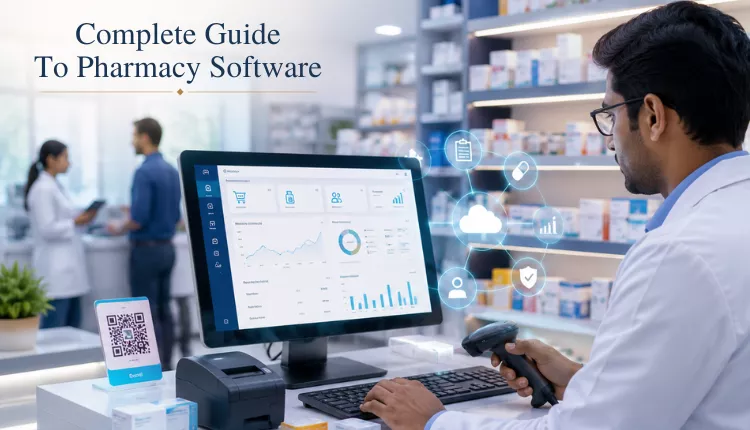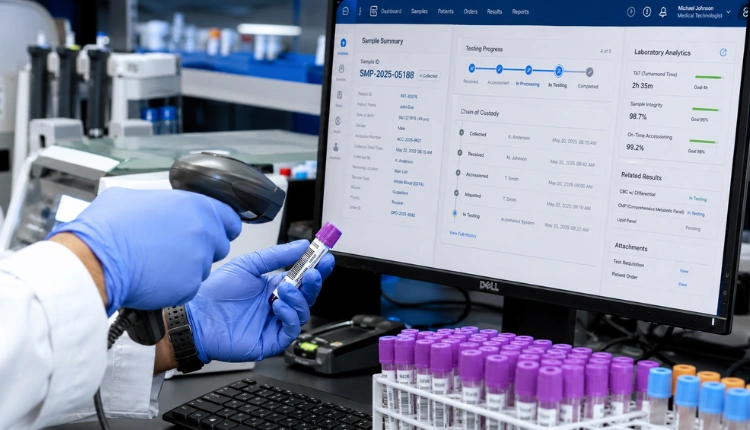

Choosing an EHR in 2026 can feel noisy. If you’re trying to choose ai clinical documentation that actually shortens consult time, improves billing accuracy, and fits a small Indian clinic’s budget, this guide lays out what matters. It also shows what to test live and how to roll out with minimal disruption. The goal is not to chase buzzwords.
The goal is to match real workflows with tools that remove duplicate entry, reduce patient wait time, and capture clean data the first time. With the right system, your OPD can feel calmer within a week. Your team can finally stop moving between paper notes, phone calls, and separate apps. When you anchor your decision to day-to-day realities, patient language, billing rules, and front-desk load, you give your staff technology that supports care rather than distracts from it.
What Does an AI Clinical Documentation EHR Actually Do for a Small Indian Clinic?
For a 1–3 room clinic seeing 50–150 OPD patients a day, “AI documentation” means the note writes itself while you talk. The ambient SOAP scribe listens to the consult. It drafts Subjective, Objective, Assessment, and Plan. It also pre-fills ICD-10 (and CPT where used) so charges and claims don’t get missed. You stay heads-up with the patient instead of typing.
In addition, AI can handle triage before the consult starts. Think of a WhatsApp or kiosk chatbot that speaks 8 Indian languages. It asks a few symptom questions and summarizes key points in your EHR. A short, structured pre-visit handoff gives the doctor context before the first hello and reduces the back-and-forth that usually eats into a five-minute OPD slot.
It flags red flags for emergency routing. It also sets a likely ICD-10 shortlist tied to SNOMED terms. This makes a 3-minute first pass feel like a trained nurse brief. Because the triage summary arrives inside the encounter, doctors don’t have to hunt for details across screens, and the visit begins with higher confidence that nothing critical was skipped.
Now, compare that to “basic billing” software. A billing-only app prints invoices and maybe tracks stock. It doesn’t capture history, symptoms, exam, or plan. It can’t turn your words into notes or codes. Even if it prints a bill quickly, the lack of clinical context means more rework later and an ongoing risk that you under-code or miss charges tied to procedures and follow-ups.
It also can’t issue digital prescriptions with QR codes that pharmacies can verify. As a result, you still use paper, Excel, and WhatsApp to stitch the day together. That is the classic fragmented workflow that 80% of facilities live with. It also leaves 75% of the market underserved by current tech. An AI clinical documentation EHR addresses this fragmentation by making clinical, billing, and pharmacy actions part of one continuous flow that is captured as it happens.
“Our OPD wait time dropped from 40 minutes to 12. The live token display alone was worth the switch.” — Dr. Meera Rao, Medical Director, Asha Hospital
What this looks like in your OPD
In a typical day, you might speak with the patient in Hindi. Meanwhile, the system drafts a bilingual SOAP note in English and Hindi. It comes with ICD-10 suggestions that feel on-target for your specialty. The prescription is issued digitally and arrives on the patient’s phone with a secure QR code. When needed, the note can include standardized vitals and common scores (like pain or peak flow) so follow-ups have a consistent structure.
A copy goes straight to your in-house or partner pharmacy so they can dispense without delays. Billing pulls the structured codes from the note automatically. It applies GST properly. It then sends out UPI or Razorpay payment links that patients can act on immediately without standing at the front desk. Because this billing flow is grounded in the clinical note and its codes, reconciliation between medical decisions and financial records becomes faster and less error-prone.
After the visit, the patient is placed into a follow-up flow with WhatsApp reminders using DLT-compliant templates. This reduces no-shows without inviting spam complaints. From the same consult screen, you can place lab orders that attach back to the encounter as soon as results arrive. That makes it easy to track status and discuss findings at follow-up. If a patient needs imaging or a specialist referral, the system can generate a clean referral package and, where supported, share it electronically via ABDM rails.
Pharmacy teams see e-Rx line items with dose, duration, and sensible refill logic. They never have to retype or guess. A concise, plain-language visit summary is auto-generated in your regional language to build patient trust and adherence. For chronic care, medication reminders or refill prompts can be scheduled with explicit consent, further improving continuity without depending on manual calls.
Finally, when connectivity blips, the app doesn’t freeze. It caches drafts locally and syncs quietly once the network returns. This combination of multilingual ambient SOAP, pre-visit triage, digital QR prescriptions, and integrated payments moves you from “records exist” to “the workflow runs itself.” Keep that ground truth in mind as you choose ai clinical documentation for your clinic. Select a system that supports your rhythm rather than interrupting it.
Pro tip: Ask to see one entire OPD hour simulated end to end. Include triage, consult, lab order, bill, and pharmacy. If the vendor can’t run that flow without jumping to slides, your team will struggle on day one. A real-time simulation reveals whether the tool handles accents, interruptions, and mixed-language consults with the same ease it displays in a controlled demo.
7-Step Framework to Evaluate AI EHR Systems for Your Clinic
If you’ve got one hour to short-list tools, use it well. This 7-step checklist fits a small clinic’s reality. It helps you choose ai clinical documentation that won’t break your week. By pushing vendors to demonstrate your exact flow, you’ll separate hype from working software in minutes rather than months.
Step 1: Map your current gaps
Write your flow on one sheet: registration, triage, consult, orders, billing, pharmacy, follow-up. Mark each duplicate entry and each handoff. Then ask the vendor, “Show me how your system removes these exact duplicate entries.” Time one real patient journey today from registration to bill. You now have a baseline metric for the demo and for your pilot week. Also document how you handle paper forms, lab slips, and external referrals. These analog steps often mask hidden rework you’ll want the tool to eliminate.
Go deeper with a quick value map by turning your notes into concrete questions that matter in daily work. Identify where a patient or staff member is forced to wait, and call out every moment when the same data is typed twice. Observe which step fails most often during peak rush, typically the handoff between consult and billing or pharmacy, and write an example. Capture any compliance step that remains manual and error-prone, such as consent or audit logging, and describe how it slows the team. Consolidate these answers in a simple grid so every vendor must speak to the same pain points.
Step 2: Confirm India compliance and readiness
You need DPDP Act 2023 controls, ABDM/ABHA linking readiness, and DLT-compliant messaging. ABHA linking is a must to plug into India’s health rails. See ABDM details on the National Health Authority site: https://abdm.gov.in/. Ask the vendor, “Please share your DPDP controls summary and ABDM/ABHA timelines in writing.” As you review, verify India data residency, consent capture flows, audit logs, role-based access, and retention policies that match your specialty’s record-keeping norms. If possible, prefer vendors already supporting FHIR R4 profiles used by ABDM. That future-proofs your referrals and data exchange.
Move past superficial claims and look for a built-in consent dashboard that shows status at a glance across encounters. It should be easy to confirm who consented to what, when, and for which purpose, and to withdraw that consent cleanly. Ask whether you can export complete audit logs on demand without raising a support ticket, because that single capability saves hours during audits and internal reviews. Clarify where the data is hosted in India and how backups are encrypted at rest and in transit. A firm answer on these small details is often a better predictor of operational maturity than a glossy brochure.
Step 3: Evaluate AI clinical documentation features
Test the ambient voice-to-SOAP scribe in your language with a real case. If your OPD is Marathi-first, English-only dictation won’t fly. You’ll see adoption drop after week one. Ask directly, “Can we test voice-to-SOAP in Hindi or Tamil with my live case today?” Examine whether the draft cleanly structures HPI, PMH, FH, SH, ROS, vitals, and exam. Also check whether it can learn your templates over time. Safety features like medication reconciliation and interaction checks should run inline during dictation. You must be able to accept, edit, or reject suggestions quickly without diving into confusing submenus.
While testing, score performance with a simple rubric you can explain to colleagues later. Consider the accuracy of transcription with your accent and room noise, the completeness of the SOAP structure, and how well suggested ICD-10 (and CPT, if used) align to your specialty’s common patterns. Pay attention to edit speed, availability of keyboard shortcuts, and whether the system remembers your favorite phrases or templates across sessions. Note whether specialty nuances, pediatrics dosing statements, OB/GYN obstetric history sections, ENT exam templates, are surfaced naturally or require extra clicks. Any metric that falls below a “3 out of 5” should come with a concrete improvement plan and timeframe rather than a vague roadmap.
Step 4: Verify billing and payments integration
Your AI-coded consult should flow into billing without retyping anything. Confirm GST-aware invoicing, UPI and Razorpay support, and if you accept insurance, practical TPA pre-auth steps. During the demo say, “Show me a consult auto-filling ICD-10 and flowing to a GST invoice with UPI pay.” Then validate that multiple GST slabs, HSN codes where needed, discounts, package rates, and split payments are handled without hacks or Excel. Collections should include automated reminders for unpaid bills. Those reminders must include links that deep-open popular UPI apps so patients can pay in seconds.
Also test reconciliation. Ask to see the settlement report that matches UPI payouts to the invoice. Confirm how refunds and partial refunds are issued.
For insurance, check if TPA documents and prior approvals sit inside the same encounter. You should not need to jump to email or WhatsApp threads to complete a claim. Press for examples where a corrected diagnosis updates the bill automatically, and verify whether the patient instantly receives an updated pay link or receipt, because those moments determine whether staff trusts the system under pressure.
Step 5: Assess total cost of ownership
Beware per-user or per-bed pricing that punishes growth or makes locum coverage expensive. For a solo clinic with rotating locum doctors, flat per-month pricing is cleaner and easier to budget. Ask bluntly, “Is your pricing flat per month with no per-user or per-bed fees?” Factor in hardware needs, SMS/WhatsApp DLT charges, any e-prescription QR issuance costs, and the training hours you’ll spend in week one. Request an all-in quote tied to your typical monthly OPD volume. Do this so there are no surprises when usage spikes during seasonal surges.
Turn the numbers into a story the whole team can understand. Suppose software is ₹9,999 per month on a flat plan and messaging runs ₹1,200–₹2,000 depending on the volume of reminders you send. Add modest hardware amortization of about ₹1,500 per month for a couple of tablets, a reliable mic, and a thermal printer, then account for 10 staff-hours of training in the first week at your local wage rate. If AI notes save even two minutes per consult and you see 80 patients a day, you recover roughly 160 minutes daily, about 2.5 hours of staff time that can be reallocated to care or additional slots. When you stack these savings against subscription and messaging costs, the return becomes concrete rather than theoretical.
Step 6: Test onboarding speed
You can’t afford weeks of downtime or an endless configuration project. Look for a self-serve onboarding wizard and a go-live measured in days, not quarters. Ask, “From signup, how many days to see my first real patient note?” Check whether they can import your master drugs list, fee schedule, and a patient CSV for continuity. Finally, clarify who answers WhatsApp support during your first week. Ask about the real response time during peak OPD hours. That is when you will truly need help.
A practical pilot plan should describe a clear march to go-live without swamping your staff. On Day 1, import masters, set roles and permissions, and run print tests for tokens and QR prescriptions. Day 2 focuses on training front desk and triage staff with live registrations and a couple of mock consults, followed on Day 3 by doctor training using two real cases each to validate AI notes and e-Rx flows. Across Days 4 and 5, operate in mixed mode while watching error patterns and staff questions, then use Day 6 to fix templates, confirm billing accuracy, and iron out pharmacy and lab handoffs. By Day 7, you should be able to flip OPD to full digital with confidence, having validated the most failure-prone steps under real load.
Step 7: Check patient-facing features
A branded app or link with live queue tokens, lab reports, prescription QR, and bill pay reduces front-desk chaos. Ask for a live tour: “Show me the patient app with live tokens and a QR prescription.” Patients should not be forced to install a heavy app on low-end phones. A lightweight PWA or WhatsApp-first approach is often best for adoption. Look for regional language messaging, large-text options for seniors, and a one-tap reschedule flow. These small choices reduce confusion and follow-up phone calls while keeping your OPD moving.
Small delight features can make a surprising difference to perceived care quality. A tap-to-call button right on the token screen saves patients from hunting for numbers and reduces missed connections. A simple medication reminder card in the patient’s language, delivered over WhatsApp with DLT-compliant templates, nudges adherence without overwhelming them with notifications. Even subtle touches, like showing expected wait time and whether the doctor is running ahead, calm the waiting area and lower the volume of “how much longer?” questions. Over time, these patient-facing details compound into smoother days and better reviews.
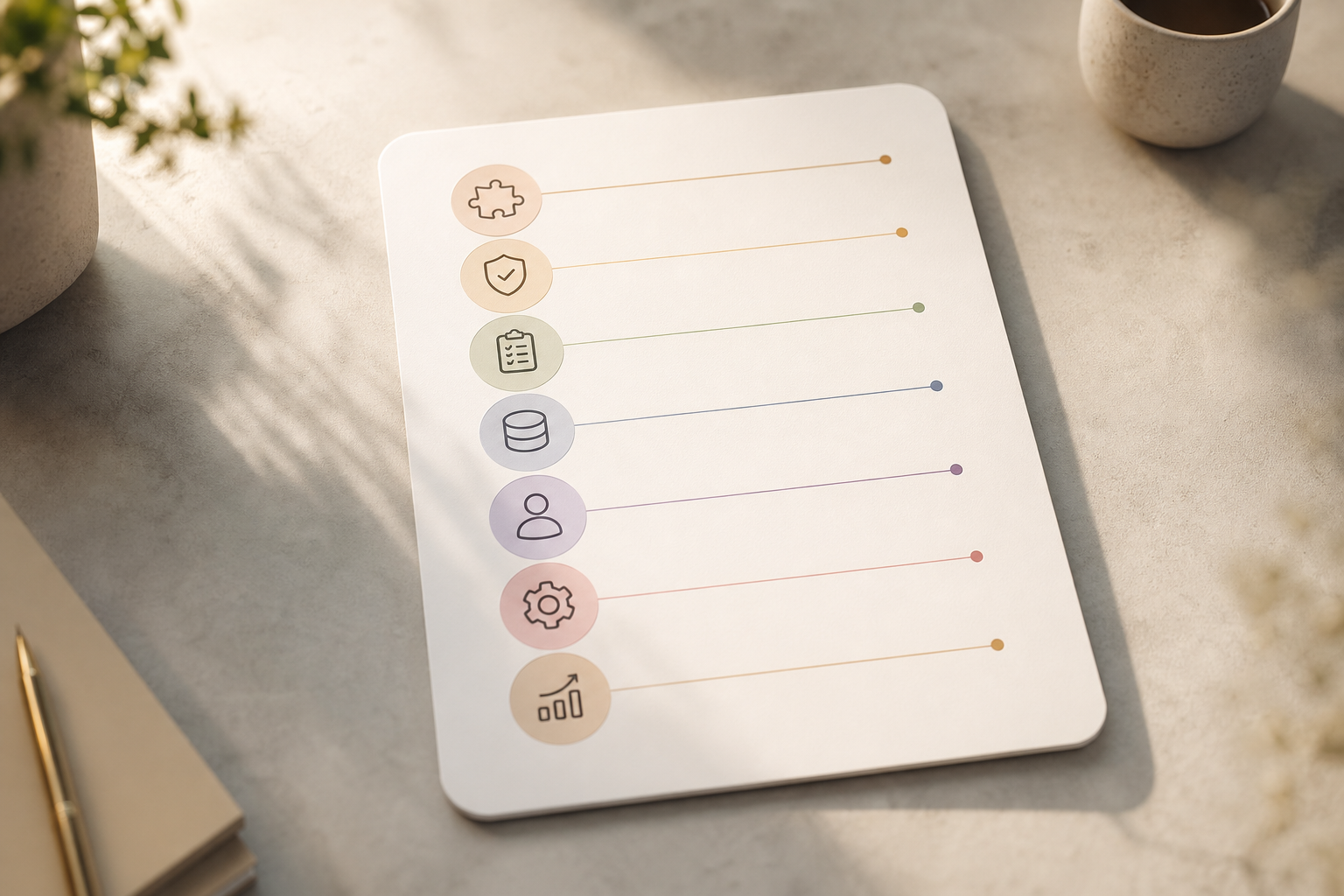 , AI documentation languages, billing/UPI, pricing model, onboarding speed, patient app/WhatsApp reminders; Indian motifs and rupee symbols.)
Moreover, run this exact flow during demos: triage in a regional language → doctor speaks → ambient SOAP drafts → ICD-10 appears → digital QR Rx → UPI invoice. If a vendor can’t show that in 15 minutes, they won’t fix your OPD next week. Use this to choose ai clinical documentation that’s real, not a promise slide. If they struggle to connect payments, or if ICD-10 suggestions fail in non-English speech, treat that as a preview of your daily frustration rather than an edge-case bug. Ask them to repeat the same flow with a pediatric and an elderly patient to see how age-specific prompts and dosing checks behave.
Hardware and network checklist for small clinics
- Headsets or room mics that work in a semi-noisy OPD; test with wall fans and ambient chatter.
- A tablet at triage for the AI intake; a small thermal printer for token slips if needed.
- Stable broadband with 4G/5G failover; set up auto-hotspot on a staff phone for outages.
- A barcode/QR scanner at pharmacy to ingest e-Rx quickly.
- A modest UPS to protect against brief power cuts during dictation and billing.
Quick validation tips are easy to run in under ten minutes and reveal whether your setup is truly OPD-ready. First, record 60 seconds of a typical consult, then replay it to check whether the mic captures your voice clearly over fan and corridor noise. Next, run an internet speed test at both 9 a. m.
and 6 p. , and compare jitter and latency to see if evening congestion will hurt sync or payments. Finally, print three QR prescriptions back-to-back, then scan each from a pharmacist’s perspective to check for smudging, readability, and scan speed. Keep a simple pass/fail sheet so you can fix bottlenecks before go-live.
Also Read!
Best OPD Queue Management & Appointment Scheduling for Mid-Size Hospitals in 2026
How to Choose an AI Clinical Documentation EHR for Mid-Size Hospitals
5 Mistakes Small Indian Clinics Make When Adopting AI EHR Software
You’re busy treating patients. These slips are common. Here’s how to spot and avoid them as you choose ai clinical documentation that fits your clinic. A small amount of forethought here prevents weeks of frustration later.
Mistake 1: Buying a hospital system for a 2-room clinic
A corporate HMS ships with 200+ modules, costs ₹50,000+/month, and needs an IT team. You’ll pay for wards, OT, and inventory you don’t use. Instead, pick a system built for the 75% of the market that is solo or small clinics, with flat monthly pricing and a focused clinical plus billing core. Be wary of “enterprise minimums” and long annual contracts that lock you in before you validate real fit and speed in your own OPD.
Reality check: If the vendor needs a three-week “requirements workshop,” you are buying the wrong tool. A clinic EHR should feel ready on day one. Templates should be close enough out of the gate that your doctors can edit a few lines and proceed, not wait for a project plan. For most clinics, faster starts beat deeper configurability that sits unused.
Mistake 2: Ignoring regional language support
If your patients speak Tamil or Marathi and the triage AI is English-only, staff won’t use it and adoption will crater. Demand an AI triage chatbot in English and Hindi at minimum, and prefer symptom assessment and routing in up to 10 Indian languages to reflect your catchment. As a reality check, ask the vendor to demonstrate a pediatric fever triage in your regional language and provide the exact transcript and SOAP output so you can judge clarity. When the system speaks your patient’s language, both the clinical interview and consent capture get smoother.
Also confirm mixed-language robustness. Many consults switch mid-sentence between Hindi and English. The model should handle that code-switching without breaking the note. Check that the e-Rx and visit summary can output in the patient’s language as well, because that one change often reduces phone follow-ups and improves adherence in ways that show up on your satisfaction surveys.
Mistake 3: Splitting billing, EHR, and pharmacy across tools
Fragmentation means duplicate entry, reconciliation errors, and lost lab reports, which is the pain most OPDs live with today. The better route is to choose a single tenant-scoped EHR where billing, lab, and pharmacy share the same live record and state. During evaluation, run an integration test from a single clinical note that generates an e-Rx, a lab order, and an invoice without CSV exports or screen toggling. When this unified flow clicks, you’ll feel the front-desk load lighten immediately.
Ask to see reversible actions too. Can a corrected diagnosis update the bill and e-Rx instantly? If not, your staff will pay the price in rework. Expect a visible audit trail of who changed what and when, because a clean trail is the fastest way to resolve disputes and train new staff. If the vendor hesitates here, assume that complexity will spill into your daily operations.
Mistake 4: Skipping ABDM/ABHA readiness
ABHA linking is moving from “nice-to-have” to required, and retrofitting later is both slow and pricey. Ask for DPDP Act 2023 controls and ABDM/ABHA timelines up front, and get them in writing before you sign any order form. Sustainability here also means consent workflows aligned with ABDM that can be shown easily during audits, so you aren’t scrambling to fix paper gaps later. Early readiness ensures referrals, lab networks, and pharmacy partners can connect through India’s health rails without manual patches.
Push for FHIR test cases. A quick referral exchange demo proves more than any compliance PDF. Ask the vendor to show how they handle patient identity matching, deduplication, and consented sharing in a live call. The more real the scenario, ideally with your own masked test data, the more confidence you’ll have in day-to-day usability.
Mistake 5: Forgetting the patient experience layer
No live tokens, no online booking, and no WhatsApp updates drive patients to the clinic down the road that offers them. Enable a real-time OPD queue with token displays and DLT-approved WhatsApp reminders on day one so patients know where they stand. For small wins that build trust, send a secure WhatsApp link when lab reports are ready and include an optional ABHA attach. These touches reduce lobby questions, shorten calls, and raise satisfaction without adding staff.
“We replaced three tools with MedCore. Billing, pharmacy and lab now talk to each other without exports.” — Ravi Prasad, Administrator, Sunrise Clinic
A small OPD runs on rhythm. The right setup keeps that rhythm, in Hindi, with QR prescriptions, integrated billing, and clear queues. Keep this front and center as you choose ai clinical documentation that your team will actually use. When your front desk can answer “where am I in line?” with a glance, and your doctors can finish notes as they talk, you’ve picked a platform that pays back every hour.
Also Read!
MedCore vs Practo for Mid-Size Hospitals: Which Is Better for AI Clinical Documentation EHR?
Tools and Platforms Worth Evaluating in 2026
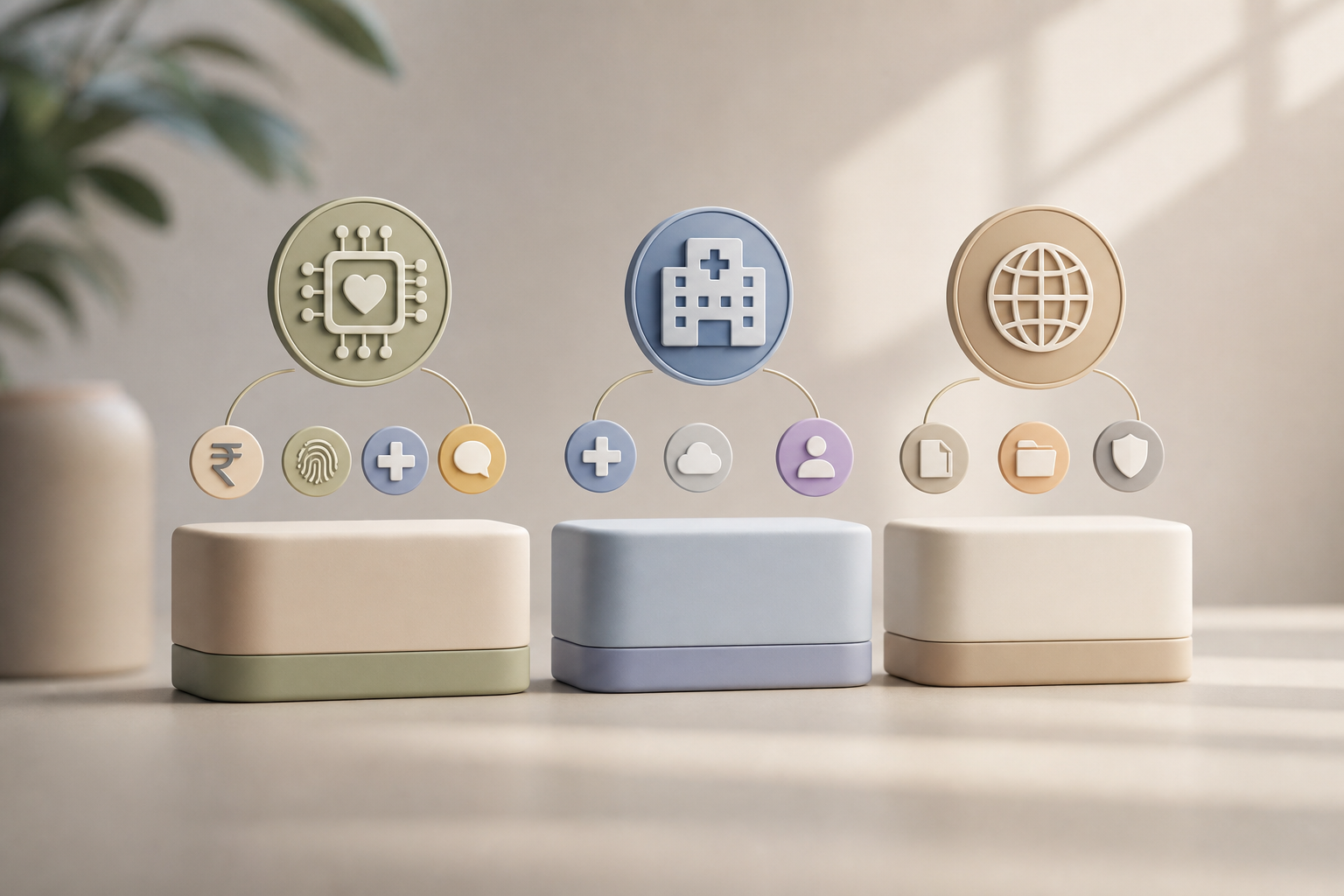
You’ll see three broad tiers. The “best” tool is the one that matches the gaps you mapped above. Use this lens to choose ai clinical documentation that serves your OPD, not the other way around. Prioritize what your clinic cannot compromise on, language support, integrated billing, pharmacy flow, over extras that look impressive but rarely get used.
Tier A: India-first, AI-native platforms for small/mid clinics
These ship with integrated AI documentation, multilingual triage, ABDM compliance, UPI, and flat pricing. Tools like MedCore are examples here, with Small Clinic plans from ₹9,999/mo, a self-serve onboarding wizard, AI agents for 8-language triage, an ambient SOAP scribe, drug-safety checks, and support for FHIR R4 and HL7 v2. You also get strengths like fast go-live, India-fit billing, ABHA readiness, and WhatsApp DLT workflows baked into the product. The main consideration is whether specialty-specific templates, pediatrics, OB/GYN, ENT, and more, are included or easily customizable for your practice so you don’t waste time building from scratch. The trade-off is fewer big-hospital modules you may never use, which in a small clinic is more help than harm.
When you assess a Tier A option, look for quick-enable specialty packs you can switch on in minutes without consulting support. Expect a shared drug master tuned to Indian brands and generics so you don’t waste time searching for local formulations. Confirm that e-Rx QR formats are already recognized by major pharmacy chains, because that instantly reduces back-and-forth on dose, duration, and brand substitutions. If these boxes are ticked, your go-live will feel smooth rather than like a drawn-out project.
Tier B: Established Indian HMS players adding AI
Names like Practo, HealthPlix, and DocPulse started in bookings or EMR and are adding AI notes and triage. Their strengths include mature appointment flows, patient engagement features, and broad brand recognition that can ease staff adoption. On the other hand, AI features may feel bolted on and not yet unified with billing or pharmacy, which creates a second step for coding and charge capture. When you evaluate, ask explicitly whether AI notes update billing automatically and whether pharmacy receives structured e-Rx data without retyping. A strong partner ecosystem helps, but daily OPD flow must still feel one-click simple.
Ask for a cross-module scenario that mirrors your busiest hour. In a single demonstration, have the AI note an acute pharyngitis diagnosis, pre-fill the correct ICD-10, and suggest a standard antibiotic plan that you can accept with one click. Watch whether the pharmacy receives a structured order immediately, and confirm that billing reflects the consult, any procedure, and medication charges without duplicate entry. Ensure the patient simultaneously receives a token update and a UPI pay link that opens in popular apps. If any leg of this chain breaks, you will feel that fray every day in your OPD.
Tier C: Global EHRs with an India presence
Some global systems run well in India, but gaps often appear around GST billing, UPI/Razorpay, ABDM/ABHA readiness, and DLT messaging. These platforms are strong on deep clinical content libraries and mature interoperability in their home regions, which can benefit complex specialties. However, clarify data residency and latency, and pin down the roadmap for India-specific payments and compliance so you don’t rely on workarounds. Support hours that mismatch your OPD timings can slow issue resolution, so confirm local support coverage. If they can demonstrate clean ICD-10 mapping plus UPI invoicing and ABHA linking in a live session, you’ll know they are serious about the India market.
| Comparison Criteria | Pricing Model | AI Documentation Features | Regional Language Support | ABDM/ABHA Compliance | Onboarding Time |
|---|---|---|---|---|---|
| Your Shortlist Tool A | Flat or per-user? | Ambient SOAP, ICD-10/CPT pre-fill? | How many Indian languages? | Ready or roadmap? | Days or weeks? |
| Your Shortlist Tool B | Flat or per-user? | Ambient SOAP, ICD-10/CPT pre-fill? | How many Indian languages? | Ready or roadmap? | Days or weeks? |
Remember: don’t rank vendors by slide decks. Prioritize those who can show a live Hindi or Marathi SOAP note in your clinic. Judge them by how clean their UPI billing is, from invoice to settlement and refunds. Weigh them by the number of days to go live in 2026, not the number of pages in an RFP. If the demo looks good but requires weeks of “setup,” expect the same friction after purchase.
[Get pricing, flat monthly fees →]
Data migration and continuity planning
For patient records, export CSVs from legacy tools with MRN or phone numbers, demographics, and any ABHA IDs already captured so you can link smoothly later. Confirm deduplication rules during import to avoid duplicate charts when patients register with different phone numbers or name spellings. Bring along your templates and forms as well, especially common clinical templates and certificate formats like fitness, sickness, and referral letters, so your team doesn’t revert to Word files. Prepare your drug masters by importing your formulary with dose units and common SIGs pre-set, which speeds up e-prescribing and reduces pharmacy calls for clarifications.
Plan a short transitional period where the old and new systems run in parallel for one to two weeks, and limit double-entry to only critical fields while you build confidence. Throughout the pilot, verify that nightly backups are enabled and that you have self-service data export in case you need to inspect or audit data. Your contract should spell out disaster recovery targets, both RTO (how fast you’re back up) and RPO (how much data you can afford to lose), so there are no surprises during a power cut or network interruption. A simple checklist for day zero includes testing logins for all roles, confirming that printers and scanners work, and sending a sample WhatsApp reminder to verify DLT registration is correctly configured.
Treat continuity as a drill rather than a document. Simulate a two-hour weekday morning internet outage, then capture three consults with offline drafts so you can observe exactly what gets cached and what fails. Once the network returns, issue bills and e-Rx from those drafts and compare final records to your expectations, watching for mismatches or sync conflicts. Note any patient-facing gaps, such as tokens not updating or pay links failing, and plug those holes before a real outage. A one-page after-action review shared with your vendor speeds fixes and improves team confidence.
Privacy, security, and compliance essentials for 2026
DPDP Act 2023 compliance starts with clear consent capture, unambiguous purposes, and simple withdrawal workflows. It also means practicing data minimization so you only store what you need for care and billing. Enforce access control with roles for doctor, nurse, front desk, billing, and pharmacy. Require MFA for admin accounts.
Use session timeouts on shared terminals to prevent unintended access. Make sure every view, edit, and export is written into immutable audit logs that you can download for audits and internal reviews on short notice. Messaging must use DLT-registered templates with opt-in management. Links shared via SMS or WhatsApp should be time-bound and secured.
Data residency and encryption are non-negotiable. Hosting in India, encryption at rest and in transit, and documented key management practices reduce your exposure. Ask your vendor for a concise security overview that includes recent third-party assessments, an incident response plan with communication timelines, and a realistic uptime SLA that reflects your OPD hours. If you plan outreach campaigns or chronic care reminders, confirm that your consent framework covers these uses and that opt-outs are honored automatically. These steps keep you aligned with regulators while preserving patient trust and keeping operations smooth.
Build two simple operational habits into your monthly routine to close common gaps. Review access logs for unusual patterns, like late-night exports or repeated failed login attempts, and follow up within 24 hours. Rotate shared-device passwords quarterly and on every staff exit, and document that rotation alongside a checklist for reclaiming access tokens and keys. These lightweight rituals keep your compliance posture healthy without adding heavy overhead.
Measuring ROI for your clinic
Start with time saved. Measure average documentation time per consult before and after go-live. Aim for two to four minutes saved per visit with ambient notes in your primary language. Next, track revenue capture by comparing the number of properly coded line items once ICD-10 and CPT pre-fill is enabled against your prior baseline.
Monitor missed appointments to see how WhatsApp reminders and live token displays reduce no-shows and bottlenecks at the front desk. In your pharmacy, log the reduction in dispensing errors and returns once e-Rx QR codes and structured dose instructions replace handwritten slips, and quantify that improvement. Finally, run a brief WhatsApp survey after the visit asking about the clarity of the prescription and perceived wait time to assess patient satisfaction and guide tweaks.
Rather than a complex spreadsheet, keep a clear mental model for ROI that you can explain in a huddle. Multiply time saved per consult by consults per day and working days to estimate hours returned to staff each month. Add the value of additional billed items captured through accurate ICD-10 coding, and include recovered fees from fewer no-shows thanks to reminders and token transparency. Don’t forget gains from fewer pharmacy errors, avoided returns, fewer calls, and happier patients who follow instructions correctly. Track these measures for 30 days, publish a one-page summary, and use it to guide your next round of improvements.
FAQ: Practical questions small clinics ask
- Will AI work with my accent and in a noisy OPD?
- Test live with your mic and room conditions. Good systems handle Hindi, Marathi, Tamil, Bengali, and mixed English. A ceiling or tabletop mic close to you helps.
- Can I edit the AI-generated note?
- Yes. You stay in control—accept, modify, or reject suggestions. Changes should be one-click, not buried in settings.
- What if the internet goes down?
- Look for local draft saving and background sync. Keep a 4G hotspot as backup.
- Are digital QR prescriptions accepted by pharmacies?
- Increasingly yes, especially when they include a scannable QR that verifies authenticity and details via a secure link.
- How fast can I go live?
- With the right tool, 3–7 days is realistic: import masters on Day 1, train staff on Day 2–3, run a pilot on Day 4–7.
- Can the AI summarize old records for a quick catch-up?
- Many tools can generate a one-paragraph summary from prior visits. Test it on a complex chronic case and check for accuracy.
- Do I need new hardware to start?
- Often no. A laptop and a good USB mic are enough to pilot. Add a tablet for triage and a thermal printer once you commit.
- What about pediatric and OB/GYN specialties?
- Ask for templates and dosing calculators designed for those specialties. You should not have to build from scratch.
- How do I keep staff motivated during the switch?
- Assign clear roles, set a seven-day pilot goal, and share daily wins. Keep the old process as backup for a week to reduce anxiety.
- Is my data portable if I switch later?
- Insist on export rights in your contract. You should be able to download structured data, documents, and audit logs without delay.
Transform the FAQ above into practical guidance you can act on immediately. Will AI work with your accent and a noisy OPD? Plan a live test using your own mic and typical conditions; strong systems handle Hindi, Marathi, Tamil, Bengali, and mixed English without forcing you to change how you speak. Can you edit the AI-generated note?
You should remain in full control with one-click acceptance, quick edits, and the ability to reject suggestions that don’t fit the case. What happens if the internet drops? Choose a system that saves local drafts and syncs in the background, and keep a 4G hotspot ready so care continues without drama.
Are digital QR prescriptions widely accepted? Adoption is rising quickly, and pharmacies that can scan a QR to verify authenticity and details will dispense faster and call less for clarifications. How fast can you go live?
With a focused plan, expect 3–7 days from signup to steady use: import masters on Day 1, train staff on Days 2–3, then run a pilot across Days 4–7. Can the AI summarize old records to help you catch up? Many tools can produce a short paragraph from prior visits; test this on a complex chronic case to check accuracy before you rely on it daily.
Do you need new hardware to start? Often a standard laptop and a good USB mic suffice for a pilot; you can add a triage tablet and thermal printer once you commit. What about pediatrics and OB/GYN? Ask specifically for templates, dosing calculators, and specialty packs designed for your field so you aren’t building from scratch.
How do you keep staff motivated during the switch? Assign a super user, set a clear seven-day pilot goal with daily wins, and allow the old process to run in parallel for a week to reduce anxiety. Is your data portable if you switch later? Insist on export rights and self-service downloads of structured data, documents, and audit logs, so you never feel trapped.
Also Read!
How to Choose an AI Clinical Documentation EHR for Medical Tourism Hospitals in India
How to Choose an AI Clinical Documentation EHR for Multi-Specialty Hospital Chains
Key Takeaways
Before you buy anything, map your OPD as it is. Then pick tools that fix the exact breaks. The right call will feel light.
Expect fast setup. You should see Hindi-first notes if you need them. The system should also push QR prescriptions that just work and UPI-ready bills that close quickly.
- AI documentation must save real minutes in your OPD, not add clicks. Demand ambient voice-to-SOAP with ICD-10 pre-fill and see it on your own patient flow.
- India-first features are non-negotiable in 2026: DPDP controls, ABDM/ABHA linking, GST billing, DLT WhatsApp, and UPI/Razorpay payments.
- Flat per-month pricing protects small clinics from surprise per-user or per-bed costs as your staff flexes up and down.
- Triage in 8–10 Indian languages raises adoption. If the tool can’t work in Tamil, Hindi, Marathi, or Bengali where you practice, it won’t stick.
- One unified EHR with shared state across billing, lab, and pharmacy stops data loss. Token displays and a patient app lower lobby stress and phone calls.
What to Do This Week
Block one lunch hour to run Step 1 and Step 2. Book two demos that show Hindi or your regional language, ambient SOAP, a QR prescription, and a UPI bill, live. If a vendor can’t show this flow now, move on and keep your OPD moving.
Create your account, start today →
Security note: As you evaluate, ask where your data lives and how it’s protected. Look for India data residency, DLT-compliant messaging, and ABDM/ABHA alignment alongside DPDP Act 2023 controls. These checks, plus a solid testimonial track record, are strong signals that your chosen system will hold up on busy clinic days. If you also get clear answers about encryption practices, audit logging, and uptime history, you’ll have the confidence to choose ai clinical documentation that scales from your first day of go-live to the busiest festival-season OPD.
Change management and training tips for small teams
Small teams adopt faster when the plan is simple and visible. Keep training focused and short. Use your own cases.
- Appoint a “clinic super user.” This person becomes the first line of help for staff.
- Run two 30-minute micro-trainings instead of one long session. Cover triage and queue in the first. Cover AI notes and e-Rx in the second.
- Print a one-page cheat sheet with hotkeys, common templates, and support contact details. Stick it near the doctor’s desk and at reception.
- Set a clear daily target. For example, “Ten AI-documented consults per doctor today.
- Hold a five-minute huddle at closing time. Capture top two wins and one friction. Send that to the vendor. Expect a fix or a workaround by the next morning.
Celebrate improvements. Even small ones create momentum. As confidence grows, start hiding rarely used templates and buttons so screens feel calmer. Share quick video clips of staff successes in the WhatsApp group to normalize the new flow and encourage peer learning.
Building a resilient clinic tech stack
An AI EHR is the core. Yet you still need a few reliable pieces around it.
- Identity and access: Use a password manager for shared devices. Enable MFA where available.
- Networking: Keep a dual-SIM 4G/5G hotspot in the clinic. Label it and test weekly.
- Printing and scanning: Standardize on a thermal printer for tokens and QR Rx. Use a flatbed scanner for legacy files you must digitize.
- Analytics: Start with the EHR’s built-in dashboards. Add a monthly export to a spreadsheet for trend tracking.
- Escalation: Document who to contact at the vendor for urgent issues. Include phone numbers and WhatsApp handles.
This light stack stays affordable. It also stays maintainable by non-IT staff. Revisit it quarterly to replace any flaky hardware and to retire tools you no longer need now that workflows are unified inside the EHR. A small amount of proactive maintenance keeps your clinic moving through seasonal surges and festival weeks without drama.
Advanced evaluation scenarios for 2026
Basic demos look smooth. Real life is messier. Stress test the system with these scenarios so you choose ai clinical documentation that holds up.
- Multilingual consult with code-switching. Doctor starts in Hindi, patient replies in Marathi, both mix English terms. Verify the note remains structured and readable.
- Pediatric dosing alert. Enter a weight that triggers a dose calculation. Confirm the system displays a safety check with an easy override and proper logging.
- Referral with attachments. Attach a PDF scan to the encounter and share a FHIR referral. Confirm the recipient can open it and that consent is recorded.
- Cashless insurance flow. Start a TPA pre-auth, attach clinical notes, and generate a provisional bill. Check audit trail completeness.
- Walk-in surge. Add ten walk-ins in five minutes. Does the token screen keep up? Does triage still sync to the consult room?
If the platform passes these tests, your team will trust it under pressure. Consider repeating them with a new doctor or locum to ensure usability holds even for first-time users. Confidence built in stress scenarios reduces the need for constant oversight and speeds scaling to a second room or an extra OPD day.
Glossary of key terms for 2026
- ABDM: Ayushman Bharat Digital Mission, India’s national digital health framework that enables health data exchange and ABHA IDs.
- ABHA: Ayushman Bharat Health Account, a unique health ID used to link patient records across providers.
- CPT: Current Procedural Terminology, used in some specialties for procedure coding and billing.
- DLT: Distributed Ledger Technology registration for SMS and WhatsApp templates required in India.
- DPDP Act 2023: India’s Digital Personal Data Protection Act that governs personal data privacy and consent.
- E-Rx QR: A QR code on digital prescriptions that allows pharmacy verification and faster dispensing.
- FHIR R4: A standard for health data exchange that enables referrals, lab result sharing, and interoperability.
- ICD-10: International Classification of Diseases, used to code diagnoses for analytics and billing.
- RPO/RTO: Recovery Point Objective and Recovery Time Objective, key disaster recovery metrics for uptime and data safety.
- SOAP: Subjective, Objective, Assessment, Plan. A common structure for clinical notes.
This glossary helps new staff get oriented. Share it during onboarding. Ask new joiners to read through and then shadow one OPD hour where they can see each term in action, a practical way to cement understanding.
Your first 30 days: a sample roadmap
Week 1: Onboard and pilot
- Import masters, create roles, and test DLT messaging.
- Run 30 consults with AI notes. Track average time per note.
- Issue at least 20 QR prescriptions. Confirm scan success at pharmacy.
Week 2: Stabilize and measure
- Push to 80% of consults with AI notes.
- Enable live token displays in the waiting area.
- Start automated payment reminders for unpaid invoices.
Week 3: Expand and refine
- Add lab integrations or a manual results import process.
- Customize two specialty templates per doctor.
- Review security: access roles, MFA, and audit log sampling.
Week 4: Report and optimize
- Publish a one-page ROI snapshot for the team.
- Close the top three friction points with vendor help.
- Plan the next quarter: teleconsult, chronic care reminders, or referral networks.
Use this plan as a living document. Update it with what your clinic learns. Encourage each role, front desk, nurse, doctor, pharmacy, billing, to add a short note at the end of each week about what felt smoother and what still feels clunky. Those notes form the basis of an actionable backlog for your vendor and keep momentum high.
Real-world signals that predict success
- A vendor runs your full flow, in your language, on the first call.
- Doctors finish 80% of notes before the patient stands up.
- Front desk answers “where am I in line?” without calling the nurse.
- UPI links get paid in under five minutes for most invoices.
- Pharmacy stops calling to clarify doses or units.
These signals show that you chose well. If you do not see them, press for fixes or re-evaluate your shortlist. Ask the vendor to shadow one OPD hour and co-create a punch list with you; a responsive partner will jump on that opportunity and ship improvements quickly.
Common pitfalls during pilots and how to fix them
- Mic not picking up clearly
- Move the mic closer. Reduce fan noise. Use a unidirectional mic if the room echoes.
- Staff skipping triage questions
- Keep triage to five core questions. Add an option to mark “not applicable” quickly.
- Confusion over templates
- Pre-load one general template and one specialty template. Hide the rest until staff gains confidence.
- Payment links not opening in UPI apps
- Use deep links that map to major apps. Test with PhonePe, Google Pay, and Paytm.
- Patients missing WhatsApp updates
- Verify opt-in status and DND settings. Send a backup SMS when needed and log consent cleanly.
System fixes are important. Coaching your team matters just as much. Consider a brief midday huddle during the first pilot week to review top friction and assign one owner to resolve each item with the vendor by the next morning. This daily cadence prevents small problems from compounding into resistance.
Choosing well is not about a perfect checklist. It is about real flow, in your language, inside your OPD’s rhythm. When you choose ai clinical documentation with that north star, your clinic runs smoother, bills cleaner, and earns patient trust every day.