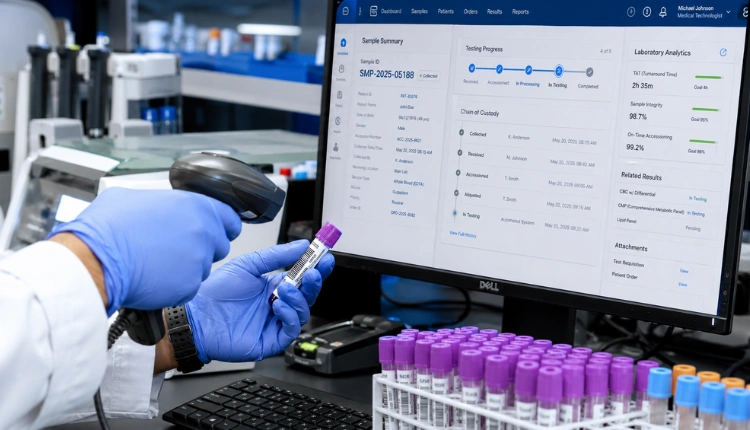

Choosing an EHR for multi-specialty hospital chains which is better for ai clinical documentation ehr is the core question this guide answers for 2026 enterprise buyers. We compare MedCore and Practo on AI documentation depth, interop, price, and scale. This helps CIOs and medical heads make a clear call. You will see what works, what does not, and what to ask in an RFP.
Book a live demo today →. Two traits matter most for hospital chains that run at scale. The first is a tight audit trail so your team can track who saw or changed PHI in seconds.
The second is high up‑time with safe offline use for clinics and camps. Orders and notes should queue on the device. They must sync at once when the link comes back. Both of these shape trust, time, and your risk stance.
The six evaluation dimensions
You can judge both tools with a short set of clear lenses. Start with AI note depth. This covers the ambient scribe, draft aid for radiology, and the use of specialty note sets. Next, look at how the tool joins all your sites and units.
You should have one record that ties OPD, IPD, and all side units like lab and pharmacy. Then check interop. That means FHIR R4, HL7 v2, and, for India, ABDM/ABHA link flows. Price must not rise fast when you add beds or staff.
Watch for per‑bed or per‑user creep. Then confirm the tool meets Indian rules like the DPDP Act 2023, supports GST‑aware bills, and sends DLT‑clean SMS. Last, check how fast you can go live. You want weeks, not a year.
For standards, FHIR has a clear write‑up on Wikipedia: https://en.wikipedia.org/wiki/Fast_Healthcare_Interoperability_Resources.For India’s health rails, see ABDM from the National Health Authority: https://abdm.gov.in/.For data laws, read the 2023 Act: https://en.wikipedia.org/wiki/Digital_Personal_Data_Protection_Act,_2023.Read each page. Save notes on key terms and flows. This will help your RFP team.
India’s hospital market is worth about $200B. Most of it still lacks good tech. AI‑first, joined platforms can lift flow and cut leak. You saw the six points above.
Use them as your base test when you size up an “EHR + AI” pitch. It keeps talks on track. It keeps the scope real.
To apply this in an RFP, ask vendors for proof that maps to care, cash, and risk. Ask for ten redacted notes across ten different fields. The notes should show ICD‑10 and CPT pre‑fill. They must also show an edit trail that logs each change.
Then ask for a live flow with lab, radiology, and pharmacy in the loop. In the demo, an OPD note should kick off LOINC‑based lab orders and a GST‑aware bill. Also, make the team walk through ABDM and ABHA end to end. That means link set up, consent ask, record view logs, and revoke.
Close with a data move plan. It should give a check‑sum report and a clear roll back plan. Do not skip this.
MedCore Overview: Strengths and Weaknesses for Hospital Chains

MedCore is an AI‑first health system for India’s non‑corp space. It serves solo clinics, mid‑size sites, and large multi‑specialty units. For multi-specialty hospital chains which is better for ai clinical documentation ehr, MedCore’s key idea is one tenant‑scoped record.
Named agents act across intake, triage, notes, radiology, and the cash side. This keeps the work in one flow. It also cuts copy‑paste.
Strengths start with the care AI stack. The ambient SOAP scribe drafts notes. It also pre‑fills ICD‑10 and CPT. The radiology agent drafts a clean, set view.
It lists each find with a score of how sure it is. That makes sign‑off fast and safe. The triage tool works in eight Indian tongues. It routes with SNOMED codes.
This helps move a case to the right field. A claims agent flags the chance of a reject. It drafts the claim and ties it to the visit. Your team can fix less and ship more on day one.
In addition, the EHR keeps one state for cash, lab, and pharmacy. You get GST‑aware bills with Razorpay and UPI. You see lab order change logs. You can print or share a QR for e‑Rx. You track drugs that need strict checks.
You write and share discharge notes in one place. The suite has 55+ parts. It has OT slots, an ambulance board, a bed map, and a blood bank with ABO “works with” checks. MedCore covers hard hospital flows. It works in small sites and in big chains.
“We replaced three tools with MedCore. Billing, pharmacy and lab now talk to each other without exports.” — Ravi Prasad, Administrator, Sunrise Clinic
Price is flat per month. There are no per‑bed or per‑user fees. This makes it easy to add staff and new fields with no bill shock. Cross‑branch views and an audit trail come built in. On rules, MedCore backs FHIR R4 and HL7 v2.
It links ABDM and ABHA. It aligns with the DPDP Act 2023. It keeps India data in India. Big buyers can pick on‑prem or a private cloud. You can get SLAs with up‑time credits.
Beyond the parts and the agents, MedCore puts weight on ops guard rails. You get role‑based access and scope by site. There are break‑glass flows for ER use. Each of these logs a full list of events. You can also run a template board for your chain.
That lets you set, check, and share note sets and order sets in all sites. A drug list is easy to set. You can add swap rules and strict e‑Rx for key drugs. The tool checks drug‑drug and drug‑allergy risk. It does this at the time of order.
Data move tools help you bring in old charts in bulk. Field maps and de‑dupe rules help. The team runs checks on test runs. This is done before cut over to lower risk.
For care teams, the scribe helps with the hard parts. It grabs vitals, ROS, HPI, PE, and plan in a set form. It also lets you type free‑text when you need it. This mix keeps the doc in charge.
It still keeps the note fit for code and claim. You can add smart text and voice cues. This cuts time on tasks that come up each day. That is key when OPD lines are long.
Where MedCore still lags
MedCore’s multi‑specialty tier uses “Contact us” price. So big buyers will not see a self‑serve quote on the site. The main base is India. HIPAA align work is in flight. If you plan a push to other lands, or see a lot of med tours, do a deep check.
It is a newer brand at chain scale. You will find less case proof in 500+ bed chains than you will find for old names. The self‑serve start flow works well for small and mid sites. For big chain starts, you will need a hands‑on team. This keeps the time line on track.
There are a few more things to keep an eye on. You will gain more from the tool if you set a data group in your chain. This group can set and tune note sets and views. They can watch how teams use the tool. They can fix gaps fast.
You also need a clear change plan. Pick super‑users and train them first. Make it easy for docs to use AI notes. Show how it saves time. Show where free text still fits.
Start early on links to old PACS, LIS, or HIS. Some links need HL7 v2 or a custom bridge. Plan a map meet and a slow roll out by site. This cuts risk and keeps care safe.
Practo Overview: Strengths and Weaknesses for Hospital Chains
Practo is one of India’s big, long‑run health tech brands. For multi-specialty hospital chains which is better for ai clinical documentation ehr, you should note what makes it stand out. It has a huge patient place on the web.
It brings in a lot of book‑now leads. Your sites can use that stream from day one. You do not have to build that on your own.
Practo Ray (for clinics) and Practo Pro give you the base you need. You get time slots, an EMR, and billing. The brand has trust with both the patient and the doc. It has been in the field for more than ten years.
A large partner ring with labs, drug shops, and cover (TPA and payers) adds ease. It has run at big scale with a lot of docs. This shows it can take high load.
But AI notes are not the base of its build. The tool grew first as a place to find a doc and book a slot. It was also a light clinic tool. AI parts came in bit by bit.
So, the depth of the ambient SOAP scribe is not the same as in an AI‑first tool. AI for radiology draft is not as deep. Per‑find score and speed to sign may not match. Interop past the Practo ring has been thin in posts in the past.
You should test FHIR R4 and HL7 v2 links in your RFP. Ask for a live run. Tools change, so check what is live now.
Practo is also strong in patient talk and the demand side. It can send SMS and WhatsApp for slot notes and okays. The flows use DLT‑clean text. It has a nice video care tool and an online list. This helps reach more folks.
It works well for skin, mind care, and more. It also shows reviews and Q&A from real folks. That helps trust and lift new book rates. It can feed a nice loop of growth.
For hospital chains, the check list is tight. If you run a lot of fields with a deep IPD load, test the EMR. Make sure each field has what it needs. Try to do this with no heavy custom work.
Check if you can get a clean export. Check if you have a rich edit log. Ask if your BI team can get a safe, de‑ID feed for cross‑site boards. These things will save you months.
Orientation summary
| Aspect | Practo’s orientation | Notes |
|---|---|---|
| Primary strength | Patient acquisition and booking | Strong brand trust and visibility |
| EHR focus | General practice management | Adequate for clinics; complex chains need diligence |
| AI depth | Incremental features | Not AI-native for SOAP/radiology |
| Interop | Ecosystem-first | Validate FHIR R4/HL7 v2 for hospital systems |
| Pricing | Per-provider or custom | Scales with headcount in hospital settings |
Practo remains a smart pick if marketplace‑driven patient volume is your top KPI, especially for early‑stage chains that need demand while they mature their internal systems.
Also Read!
How to Choose an AI Clinical Documentation EHR for Medical Tourism Hospitals in India
How to Choose an AI Clinical Documentation EHR for Multi-Specialty Hospital Chains
Feature-by-Feature Comparison: MedCore vs Practo for Multi-Specialty Chains
This section compares the platforms across eight points that drive care and profit. The view below is tuned to multi-specialty hospital chains which is better for ai clinical documentation ehr, not single‑site clinics. It uses clear, short terms. It aims to help your board make a fast, safe call.
Eight-dimension summary
| Dimension | Winner | Why it matters (2026 detail) |
|---|---|---|
| 1) AI Clinical Documentation | MedCore | AI-native agents: ambient SOAP scribe with ICD-10/CPT pre-fill; radiology drafting with per-finding confidence; claims tie-back. Practo’s AI is add-on, not core. |
| 2) Multi-Language Clinical Support | MedCore | Triage across 8–10 Indian languages with SNOMED-anchored routing supports equitable access; Practo’s clinical UI is primarily English/Hindi. |
| 3) EHR Depth & Specialty Coverage | MedCore | 55+ modules: OT scheduling, ambulance dispatch, blood bank (ABO), controlled substances, discharge summaries, lab deltas. Practo offers generalized EMR. |
| 4) Patient Acquisition & Discovery | Practo | India’s largest patient marketplace and booking flow; strong organic traffic and brand trust. MedCore focuses on hospital-branded apps. |
| 5) Multi-Branch Analytics | MedCore | Built-in cross-facility dashboards and audit trails; ops leaders compare OPD/IPD, labs, and pharmacy across branches. Practo reporting is more facility-centric. |
| 6) Interoperability | MedCore | FHIR R4 + HL7 v2 + ABDM/ABHA linking are native pillars. Practo’s external interop has been more limited historically; validate during RFP. |
| 7) Billing & Revenue Cycle | MedCore | GST-aware billing, Razorpay/UPI, payment plans; insurance/TPA pre-auth + claims auto-draft with denial prediction. Practo supports standard billing flows. |
| 8) Brand Trust & Ecosystem | Practo | A decade of market presence, a vast provider network, and millions of patient reviews. |
MedCore’s agent list also has an AI Voice Desk that can take calls round the clock. There is a follow‑up bot for voice and WhatsApp. Both help cut no‑shows. Both help boost drug and test follow‑through.
Its Android and iOS app for patients shows live tokens, lab reports, and bills. Your brand is on the app, not a third party. That keeps the next visit in your ring.
“The patient mobile app reduced our front-desk calls by half in the first month.” — Shalini Kumar, Operations Head, Greenleaf Care
Standards still count a lot. FHIR R4 and HL7 v2 help you link LIS, RIS, and old HIS stacks. This avoids risky CSV dumps.
ABDM and ABHA links let you share on the national rails with consent. For chains, this cuts re‑type time. It also lifts the truth of your data.
How to test the eight points in a pilot is just as key:
- Run a blind note test. Use 50 OPD meets across five fields. Check edit gap, code right‑rate, and time to sign. – Do an interop drill. Send and read ADT, ORM, and ORU to and from your LIS and RIS.
Check ACKs and how the tool flags errors. – Sim the TPA flow. Do pre‑auth, index docs, and ship the claim. Check the deny guess rate vs your own base line. – Review price paths.
Model 12–24 months of growth. Test both flat rate and per‑doc paths. Add in locums for peak days.
Get pricing details (instant) →. The key gap is the price shape. MedCore uses a flat, per‑site, per‑month price. It does not bill per bed or per user.
It ships all AI agents in the base plan. That means the ambient SOAP scribe, radiology draft, triage, and claims tools are in the set. They are not metered add‑ons. Big buyers can pick on‑prem or a private cloud. SLAs with up‑time credits are on the menu.
Practo offers a free start tier for solo docs on Practo Ray. For big sites, it uses per‑doc or custom quotes. As your head count climbs, the bill climbs with it. AI parts, when they ship, may live in high tiers.
This helps small clinics start on day one. But a large chain should plot a head count curve. Then see how the bill grows.
A fair value model for a 3-hospital chain
- Scenario: 3 hospitals, 50 doctors each → 150 providers total
- Flat-rate model: If each site mapped to Mid-size, license outlay would be about 3 × ₹24,999 = ₹74,997/month (illustrative; actual multi-specialty is custom)
- Per-provider model: Total equals 150 × (per-provider monthly rate)
- Break-even lens: At ₹74,997 total, any per-provider rate above ₹499.
This framing does not assert a set Practo rate. It shows why price shape matters. Chains add value fast when AI parts come in the base. Per‑bed or per‑user fees can hit hard when a field takes off.
It can hurt units that add more days and more guest docs. A flat rate keeps the bill fair when you add ortho, onco, or cardio teams. It keeps cost in check as you grow.
Be fair to both sides. Practo wins for low cost at start and on the demand side. It can drive a lot of new faces to your doors. MedCore wins on total cost for a scaled chain with lots of docs and AI use. It is built to keep cost flat while you add sites and teams.
To round out your cash view, include three tracks in your plan. First, add setup work and data moves. This is a one‑time bill in most deals. Push for a cap that ties to clear tasks and dates. Second, add train and change work.
Try to put a value on the time saved per doc per day. A ten‑minute save can pay for the tool on its own. Third, plan for links to old stacks. Add a buffer for map meets and test loops. Last, lock down what live help you get.
Check the up‑time SLA. Write down what a one‑hour stop costs you in OPD and IPD. Then write down who pays what when it fails.
Start setup now (no wait) →. Pick two pilot sites with a mix of fields and loads. Run both tools in a set time box of six to eight weeks. Score each tool on the six points and your own KPIs.
Use a short, clear survey for docs and desk teams. Then build a board‑ready pack. It should show TCO, ROI, and your risk stance. Note how the tool helps with rules, up‑time, and data move out if you ever switch.
Extra clarity on standards and India rules
A fast note on what FHIR R4 and HL7 v2 mean in your day to day. FHIR R4 is a set way to read and write health data. Think of it as a common card slot that all tools can use. It helps when you need to swap a lab tool or add a new PACS.
HL7 v2 is an older, still wide use set for live feeds. It sends admits, discharges, orders, and results. Your LIS and RIS may use it by default. A good EHR should take both in stride.
It should also log errors. It should show ACKs. This makes live test and go‑live less hard.
ABDM is India’s build for a shared health stack. ABHA is the patient ID under that. A good EHR should make the flow clear and safe. The tool should help create an ABHA. It should send a clean consent ask.
It should log what got shared. It should let the patient take it back. It should also show you a trail. This is key for trust and to stay in line with the law.
The DPDP Act 2023 is a big shift. It is short and clear. It says you must guard personal data with care. Health data is in a high risk class.
Your tool must help you meet that. Think of short data hold times for logs. Think of an easy way to get data out when a patient asks. Think of the right to fix or delete.
Check if the tool helps you do all that. Ask for proof. Ask for a run‑book.
Deep dive: AI notes, triage, and claims
AI notes should save time, not add risk. Ask how the ambient scribe works in noisy rooms. Ask if it can tag speakers. Ask how it fills ICD‑10 and CPT. Then check how easy it is to fix a code or a note.
Sign‑off should be one or two clicks. It should not feel like a hunt in a maze. A good scribe can cut ten to fifteen mins per doc per day. That adds up.
Triage in more than one tongue helps a lot. India has a lot of tongues in use. A tool that can take a note in Tamil, Kannada, or Marathi helps speed up the start. It also cuts miss steps that lead to a wrong field.
The SNOMED map helps avoid that. The tool should show the route it took. This helps train staff and build trust.
Claims AI can feel like a black box. It should not. Ask how it flags a risk. Ask what inputs it reads. Older denials?
Missed docs in your claim file? Old payor rules? The more clear it is, the more your team can fix the root cause. A clear tool is a calm tool.
MedCore setup and run in the real world
You do not want a year long slog. MedCore aims to get a mid site live in weeks, not months. That said, big chains need more care. The vendor should send a lead and a PM. They should lay out a map by week.
This will have data move, link tests, train, and a dress run. Super‑users should go first. They can then help bring the rest on board. A good plan saves time, cash, and stress.
For a chain with an old PACS and LIS, start link talks on day one. HL7 v2 maps can look dry, but they hide key gaps. Book three work meets to map ADT, ORM, and ORU. Fix one feed at a time.
Then test with real but masked data. Put a freeze on change one week before go‑live. This stops late scope creep.
Practo rollout tips for chains
Practo is fast to start for clinic use. It shines when you want more foot fall from the web. For a chain, start with OPD sites that need more reach.
Use the book flow and the reviews to draw new folks in. Set up clean slots and tight SMS and WhatsApp notes. Then add video care where it fits.
If you need deep IPD flows, do a gap scan. Put a nurse and a ward doc in the loop. Check orders, charting, med pass, and hand off notes. Look for hard work‑arounds.
Put the list on one page. Then talk to the vendor on what can be set up as is. This keeps the roll out real. It will also set the right plan for more sites.
What to put in your RFP and pilot scorecard
Do not send a vague ask. Vendors like clear asks. You will get clear bids. Set ten must‑haves and ten nice‑to‑haves. Use the six points we gave.
Add two that are unique to you. For the pilot, set three to five KPIs. Pick time to note, claim clear rate, and down time. Then run a tight test. End with a score on each point.
In your board note, write in plain words. Show how each tool helps care, cash, and risk. Show hard costs and soft saves. This will make the vote fast. It will also make the team feel sure when they go live.
FAQ for chain buyers
Q: Can I start on cloud and move on‑prem later?
A: Yes, if the vendor backs both. Ask to see a move plan. Ask to see a cut over check list. Ask for cost and time.
Q: How do I train a large care team fast? A: Pick ten super‑users. Run live, short, on‑floor drills.
Use clear one‑page guides. Do one site at a time. Keep a help desk live for the first two weeks.
Q: What if my net goes down?
A: You need safe, offline‑first flows. Notes and orders should queue on the device. They should sync when the net is back. Ask for a demo of this.
Q: How do I check interop is real?
A: Run a live HL7 v2 and FHIR test. Use your own test data. Ask to see ACKs and error logs. Do not take a slide deck as proof.
Q: Will AI notes cause errors? A: AI can make a guess. That is why sign‑off is key.
A good tool makes it easy to check and fix. Track edit rates in the pilot. Train on tricky note types first.
Final thought
Both tools have clear use cases. Practo is great when you need reach and quick starts. MedCore is strong for AI‑led notes, deep EHR parts, and flat price as you grow. For multi-specialty hospital chains which is better for ai clinical documentation ehr, start with your core goal.
Is it more foot fall this quarter? Or is it a full, joined EHR and AI stack for the next five years? Your pick will be clear when you line that up with the six points and the pilot score.