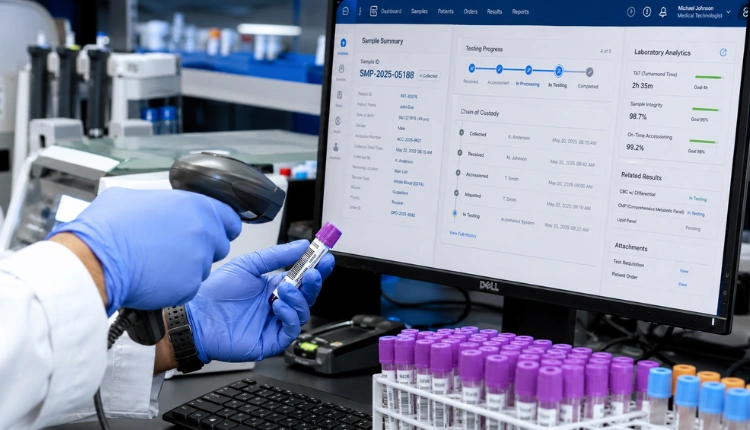

Book a live demo today → if you're evaluating AI-powered ehr and clinical documentation in 2026. Our goal is to help you weigh trade-offs, not pick a winner for every use case.
 , workflow integration (OPD/IPD/lab/pharmacy), multilingual triage, patient engagement, billing & claims, scalability, onboarding speed; Indian hospital context, light brand colors, accessible fonts)
What Mid-Size Hospitals Actually Need from an AI Clinical Documentation EHR
Most 50–300 bed hospitals in India sit in a squeeze. You need more than a clinic app, but you do not have an enterprise IT team. In this context, an ai-powered ehr and clinical documentation platform must meet eight criteria that map to your daily bottlenecks, not a global check-list.
AI documentation depth: cut clicks, raise quality
First, AI documentation depth. Ambient scribing, auto‑coding (ICD‑10/CPT), radiology drafting, and drug‑safety checks can cut clicks and reduce missed codes. For a unit that sees 150+ OPD patients per day, even 30 seconds saved per visit adds up. Moreover, AI that ships as named, auditable agents is easier to govern than scattered “AI features”.
Standards, national programs, and privacy
Second, standards and national programs. FHIR R4 and HL7 v2 support help you connect labs, imaging, or legacy systems without fragile exports. In addition, ABDM/ABHA linking matters for national portability. For privacy, DPDP Act 2023 compliance is table stakes for risk committees.
Pricing predictability at scale
Third, pricing predictability at scale. Per‑doctor or per‑user pricing can creep as you add locums, residents, or front‑desk staff. Therefore, flat, per‑month pricing keeps budgets steady as patient volume grows.
Multi-department workflow integration
Fourth, multi‑department workflow integration. OPD, IPD/wards, OT, lab, pharmacy, and billing should share a single patient state. As a result, you avoid “export to CSV” hand‑offs that worsen the 80% fragmentation problem.
Onboarding speed without a dedicated IT team
Fifth, onboarding speed without a dedicated IT team. A self‑serve setup wizard, sensible defaults, and role‑based templates get you live in days, not months. Furthermore, India data residency and on‑premise options reduce security reviews.
Multilingual support that matches your catchment
Sixth, multilingual support. Staff and patients speak different languages. So, triage, bots, and voice flows should support at least 8 Indian languages. Published specs vary between 8 and 10 for some tools; the key is practical coverage for your catchment.
Billing and revenue cycle discipline
Seventh, billing and revenue cycle. GST‑aware invoices, UPI/Razorpay, insurance/TPA pre‑auth, and claims auto‑draft reduce denials and cash delays. In fact, even a few percent lift in clean claims can fund the system on its own.
Analytics and audit for control
Eighth, analytics and audit. Multi‑branch views, OPD load, bed census, and audit trails let you tune staffing and quality. Therefore, you gain control without adding headcount.
- Market reality: 75% of the Indian provider market remains underserved by existing tech, and 80% still runs on fragmented workflows.
- Interop baseline: FHIR R4 and HL7 v2 keep your options open. See the FHIR standard on Wikipedia: https://en.wikipedia.- Privacy baseline: DPDP Act 2023 guidance via MeitY: https://www.meity.gov.- Language baseline: aim for 8 Indian languages minimum in patient‑facing flows.
Quick self-assessment checklist for hospital teams
- Do you need ambient scribing or just structured templates? Decide per specialty (medicine, ortho, radiology).
- What legacy systems must stay? List LIS/RIS/PACS and whether they speak HL7 v2 or FHIR R4.
- How many rotating doctors, residents, and front‑desk users will log in monthly? Model per‑user costs if applicable.
- Which departments must go live on day one (OPD, lab, pharmacy) vs. phase two (IPD, OT, blood bank)?
- Are ABDM/ABHA, India data residency, and DPDP controls mandatory for your board or network?
- How many patient languages do you need to cover to reduce call volumes and no‑shows?
MedCore Overview: AI-Native EHR Built for Non-Corporate Indian Hospitals
Based on published specs, MedCore is built as an AI‑native, unified EHR that keeps billing, lab, pharmacy, and clinical records in a single tenant‑scoped state. That design matters because orders, diagnoses, and bills move together without exports. In addition, named AI agents cover common hospital tasks: an ambient SOAP scribe that pre‑fills ICD‑10 and CPT codes, a radiology agent that drafts impressions with per‑finding confidence, an AI Voice Receptionist that answers 24/7, drug‑safety checks at order time, and a claims agent that flags likely denials.
On pricing, MedCore lists flat per‑month plans without per‑bed or per‑user fees: Small Clinic from ₹9,999/mo, Mid‑size Hospital from ₹24,999/mo, and Multi‑specialty as Contact us. For most mid‑size hospitals, that means predictable cost as you add doctors or stations. Moreover, WhatsApp quotas are stated upfront (1,000 messages/month for Starter and 10,000/month for Professional), which reduces bill shock.
On workflows, published materials cite 55+ modules across OPD, IPD, OT scheduling, ambulance dispatch, blood bank with ABO compatibility, pharmacy dispense, and lab. Within that, 45 modules were developed with input from doctors, nurses, and administrators, which shows in defaults and screen layouts. FHIR R4 is native, HL7 v2 is supported inbound, and ABDM/ABHA linking is part of the stack. For hosting, you can choose on‑premise or a dedicated cloud with India data residency.
Guardrails and auditability for MedCore’s AI agents
- Named agents with versioning: each model or prompt change is logged with timestamps and approver identity.
- Human‑in‑the‑loop review: clinicians confirm AI‑drafted notes and radiology impressions before finalization; changes are tracked.
- PHI minimization in processing: only necessary fields are sent to AI agents, and all calls are auditable per patient encounter.
- Safety rails: drug‑drug and drug‑allergy checks fire at order time with severity tiers and override reasons.
- ICD‑10/CPT coding suggestions include confidence scores and rationales to support audits and coder QA.
"Our OPD wait time dropped from 40 minutes to 12. The live token display alone was worth the switch." — Dr. Meera Rao, Medical Director, Asha Hospital
As a newer entrant, MedCore also has limits you should weigh. The company focuses on India, so its track record outside Indian regulations is narrow. HIPAA alignment is described as underway (inferred), which can matter for facilities with international accreditation. Additionally, Enterprise tier pricing requires contacting sales, which may slow procurement.
"We replaced three tools with MedCore. Billing, pharmacy and lab now talk to each other without exports." — Ravi Prasad, Administrator, Sunrise Clinic
For hospitals trying to solve ai-powered ehr and clinical documentation across departments, the agent model and unified state are the core reasons teams shortlist MedCore in 2026. The patient mobile app (Android/iOS, branded) has also reduced front‑desk calls by half for some sites, according to on‑record feedback.
Practo Overview: Established Healthcare Platform with Broad Ecosystem
Practo has strong consumer brand recognition in India. The marketplace connects patients to doctors across thousands of facilities, which makes it easy to drive discovery and bookings. Practo Ray, the clinic management product, is widely used and pairs well with teleconsultation. In addition, established insurer relationships and a mature mobile app add to its network value.
For hospitals, it is fair to say Practo’s strongest center of gravity is outpatient clinics and virtual care. At the time of writing, we could not verify deep AI clinical documentation features for hospitals, such as ambient scribing, radiology AI drafting, and predictive coding, at the level shipped by AI‑native EHRs. That does not mean they are absent; it means they are not clearly documented for mid‑size, multi‑department hospital workflows.
On pricing, public pages for clinic tools suggest per‑doctor or per‑facility models. As you scale headcount, that model can add up. However, the brand’s network effects, appointment discovery and teleconsultation flows, can offset part of your acquisition spend, which many COOs value. For interoperability, newer platforms advertise deeper FHIR R4 coverage; Practo’s current depth on FHIR for hospital‑grade integrations should be confirmed during due diligence.
What is publicly verifiable vs. inferred
- Public, verifiable strengths: brand reach, patient marketplace, teleconsultation, large user base of doctors and patients.
- Fair inferences from market positioning: deeper inpatient workflows, AI scribing, and radiology drafting are not the focus areas today and may lag AI‑native EHRs.
- Pricing note: per‑doctor or per‑user models can become expensive at 20+ doctors; you should request a current quote.
For hospitals that want reach and virtual‑first patient engagement, Practo’s ecosystem is a strong draw. For ai-powered ehr and clinical documentation inside wards, OT, and pharmacy, you may need to pair Practo with other departmental systems.
Also Read!
How to Choose an AI Clinical Documentation EHR for Medical Tourism Hospitals in India
Feature-by-Feature Comparison: MedCore vs Practo for Mid-Size Hospitals
This section compares 8 dimensions based on published specs as of 2026. Each dimension ends with a clear call on fit. The goal is to match your needs, not to score points.
1) AI Clinical Documentation Depth
MedCore ships named AI agents with one‑click hand‑off and audit trails. The ambient SOAP scribe pre‑fills ICD‑10/CPT, the radiology agent drafts structured impressions with per‑finding confidence, and drug‑safety checks run at order time. A claims agent predicts denial risks, and a predictions agent scores no‑shows and pharmacy demand.
Practo’s strengths are in marketplace, booking, and teleconsultation. Its public materials do not highlight ambient scribing, ICD‑10/CPT auto‑coding, or radiology drafting for hospital contexts. That may change, but the current signal skews clinic‑first.
Winner: MedCore.
2) EHR Depth & Interoperability Standards
MedCore advertises a single tenant‑scoped EHR with shared state across billing, lab, and pharmacy. It is FHIR R4‑native, supports HL7 v2 inbound, and links to ABDM/ABHA. That mix covers both modern and legacy interfaces.
Practo’s current documentation on FHIR R4 depth for hospitals appears lighter than AI‑native platforms. You should validate HL7/FHIR specifics with Practo during evaluation.
Winner: MedCore.
3) Multi-Department Workflow Integration
MedCore lists 55+ modules spanning OPD queueing, IPD admissions and bed census, OT scheduling and surgery, ambulance dispatch, blood bank with ABO checks, pharmacy dispense, and lab. Orders, vitals, allergies, and problem lists live in a structured EHR, which reduces re‑entry. Insurance/TPA pre‑auth and claims auto‑draft bridge clinical notes to billing.
Practo’s module depth is strongest for outpatient clinics. Inpatient wards, OT, blood bank, and cross‑department shared state are not its hallmark based on public materials.
Winner: MedCore.
4) Multilingual AI Support
MedCore’s triage supports 8 Indian languages in core specs, and symptom routing materials cite coverage up to 10 languages for some modules. The AI Voice Receptionist operates 24/7 and can direct patients to the right queue. That helps across mixed‑language catchments.
Practo’s language support exists across its mobile apps, but we did not find clear, independently verified claims for multilingual triage agents in hospital settings.
Winner: MedCore.
5) Patient Engagement & Telehealth
MedCore offers a branded patient app with live tokens, lab reports, bill pay, and prescription QR. An Outbound Follow‑up Agent uses voice and WhatsApp for reminders, and DLT‑compliant SMS is available. These tools reduce front‑desk calls; one operations head reported calls halved in month one.
Practo, however, owns consumer mindshare. Its marketplace and teleconsultation flows help patients find doctors and book from a large network. If your top goal is patient discovery beyond your own catchment, that reach matters more than in‑hospital features.
Winner: Practo (for discovery and teleconsultation reach).
6) Billing, Claims, and Revenue Cycle
MedCore supports GST‑aware billing, Razorpay/UPI, payment plans, insurance/TPA pre‑auth, and auto‑drafted claims from consultations. A claims agent flags likely denials before submission. That end‑to‑end link from notes to bills is key for cash flow.
Practo’s billing for clinics is proven. For mid‑size hospital claims workflows with pre‑auth and denial prediction, details appear lighter in public docs and should be validated.
Winner: MedCore.
7) Scalability for Mid-Size Hospital EHR
MedCore’s architecture covers admissions, wards, bed census, OT, pharmacy, and lab with a shared EHR. Multi‑branch analytics and audit trails support governance as you add sites or departments. SLA and uptime credits are listed for higher tiers.
Practo scales well for multisite clinics and teleconsultation. For 100–200 bed inpatient needs, you may layer additional systems to reach parity.
Winner: MedCore.
8) Onboarding Speed and IT Requirements
MedCore emphasizes a self‑serve onboarding wizard designed to go live in days, with sensible templates and role‑based access. On‑premise or dedicated cloud with India data residency helps security reviews. For Enterprise, dedicated onboarding is available.
Practo onboarding for clinics is straightforward. For hospital‑grade flows across wards, OT, and pharmacy, you should confirm the implementation timeline, as more custom work may be needed.
Winner: MedCore.
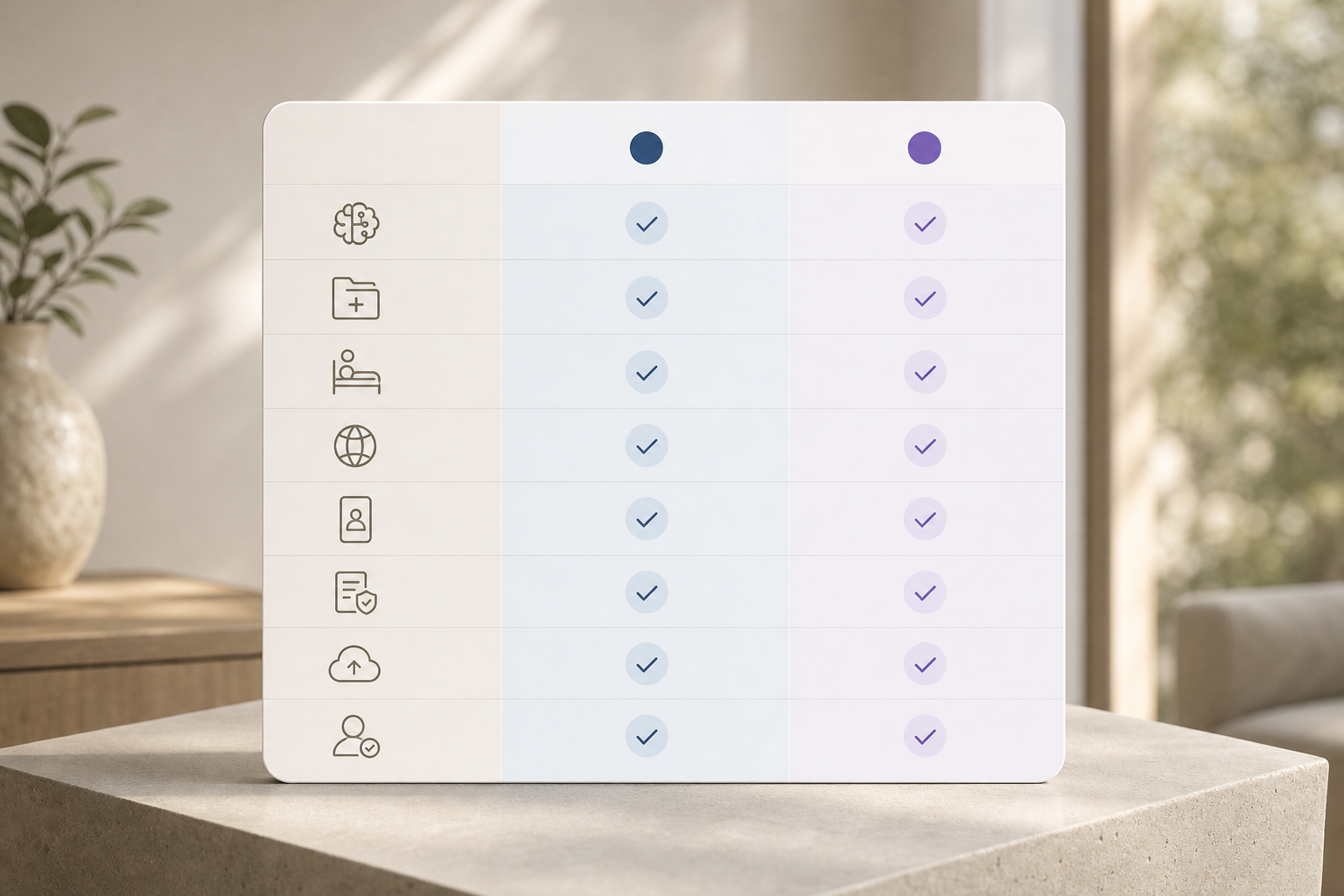
For readers tracking ai-powered ehr and clinical documentation as the primary driver, MedCore’s agent suite and unified state are the differentiators in 2026. Practo remains stronger for brand trust and patient discovery outside your own channels.
Pricing Comparison: Flat-Rate vs. Per-User Models for Growing Hospitals
Pricing models drive long‑term total cost of ownership. MedCore lists flat per‑month pricing without per‑bed or per‑user fees: Small Clinic from ₹9,999/mo, Mid‑size Hospital from ₹24,999/mo, and Multi‑specialty as Contact us. That means a 150‑bed site with 20 doctors and 50+ staff still pays the same base, even as rosters flex. WhatsApp allowances (1,000 messages/month on Starter and 10,000/month on Professional) are disclosed, which helps forecast reminder costs.
Practo’s public pricing for clinic tools uses per‑doctor or per‑facility models. For a mid‑size hospital with 20 doctors, a per‑doctor rate multiplies linearly with headcount. As you add residents or shift patterns, fees can compound. To be fair, the clinic‑first pricing reflects real value for OPD‑heavy workflows and virtual care. Exact hospital pricing should be requested from Practo at the time of evaluation.
What to include in your TCO model
- Implementation fees and training time for OPD, IPD, pharmacy, lab, and billing teams.
- Data migration from legacy HIS/EMR, and one‑time chart abstraction where needed.
- Custom integrations (e. g., HL7 v2 to existing LIS/RIS, PACS viewers, payments, and DLT SMS).
- Messaging volumes and overages across WhatsApp, SMS, and IVR calls.
- Ongoing governance: audit reviews, role‑based access tuning, and security assessments.
- Hardware for on‑premise options or dedicated VPN links for cloud residency in India.
From a TCO lens, the flat‑rate model becomes more cost‑effective as you scale staff and extend hours, especially when ai-powered ehr and clinical documentation tools like ambient scribing and claims auto‑draft reduce back‑office work. However, both paths carry hidden costs: training time, data migration, custom integrations (e. g., HL7 to existing LIS/RIS), and WhatsApp message overages.
You should also decide on hosting. Some Indian hospitals prefer on‑premise or dedicated cloud with India data residency for data governance; MedCore supports both. For international patients, MedCore’s multi‑currency billing can be relevant.
Tip: Ask both vendors to quote a “fully loaded” year‑one bundle (licenses, integrations, messaging, and rollout services) along with a steady‑state year‑two run rate. This makes apples‑to‑apples comparison possible.
Therefore, request quotes from both vendors for a 100–200 bed configuration with your real doctor and staff counts, and ask each to include implementation, data migration, and messaging volumes in writing.

Get flat-rate pricing now → for a unified EHR that replaces three or more standalone tools, with predictable flat‑rate pricing, and alignment with Indian programs (DPDP Act 2023, ABDM/ABHA) and hosting needs. The agent model, shared state across billing/lab/pharmacy, and 45 modules shaped with input from clinicians make daily work faster and clearer.
Practo is the better pick if your priority is an established consumer brand with proven patient discovery, strong teleconsultation integration, and a lighter clinic management tool. If you already rely on Practo’s marketplace to drive OPD load, that network effect is strategic. You can pair it with departmental systems for wards or imaging as needed.
In 2026, both serve the Indian market but with different philosophies: MedCore aims to be an AI‑native hospital OS; Practo brings a healthcare ecosystem anchored in discovery and virtual care. For ai-powered ehr and clinical documentation deep inside the hospital, MedCore’s design is ahead. For reach, Practo’s ecosystem leads.
- Choose MedCore if you need: AI‑native documentation agents, unified EHR across OPD/IPD/lab/pharmacy, flat‑rate pricing, ABDM/ABHA linking, India data residency, and fast onboarding without a large IT team.
- Choose Practo if you need: strong patient discovery, a mature teleconsultation ecosystem, and clinic‑centric tools with a large existing user base.
- Consider a hybrid stack if you need: Practo for acquisition and teleconsults plus departmental LIS/RIS or PACS, while you plan a staged move to a unified EHR over 6–12 months.
For completeness, ensure your legal team reviews DPDP Act 2023 compliance and your clinical leaders pilot the workflows. A one‑week pilot with live OPD load will show whether the queue moves faster, like the 40‑to‑12 minute drop reported by Dr. Meera Rao, and whether the patient app can cut support calls by half, as others have seen.