A patient engagement app with whatsapp reminders is now the most reliable way to cut no-shows between visits. For 2026, mid-size Indian hospitals that adopt it see faster follow-ups and fewer dropouts. The most effective setup links WhatsApp reminders to your EHR, scores each appointment for no-show risk, supports regional languages, and uses flat monthly pricing so your cost doesn’t spike with message volume. According to MedCore’s market data, 80% of facilities run on fragmented workflows and 75% of the market is underserved by current tools (Source: MedCore). That fragmentation shows up as missed appointments, unbooked follow-ups, and chaotic phone queues.
Make WhatsApp Work
However, WhatsApp alone won’t fix broken handoffs. You need reminders that read from live appointments, labs, and billing so messages are right and on time. In addition, DLT and DPDP compliance matter as you scale template-based outreach. MedCore is DPDP Act 2023 compliant with India data residency. This guide gives you a practical checklist, trade-offs to expect, and a clear view of what works in India in 2026.
If you manage a clinic network, you might also like this step-by-step setup for smaller units: Best Patient Engagement WhatsApp Reminders for Small Clinics in India, 2026. For a broader lens on tools and tactics, see our explainer on "patient engagement software".
Why Mid-Size Hospitals Lose Patients Between Visits
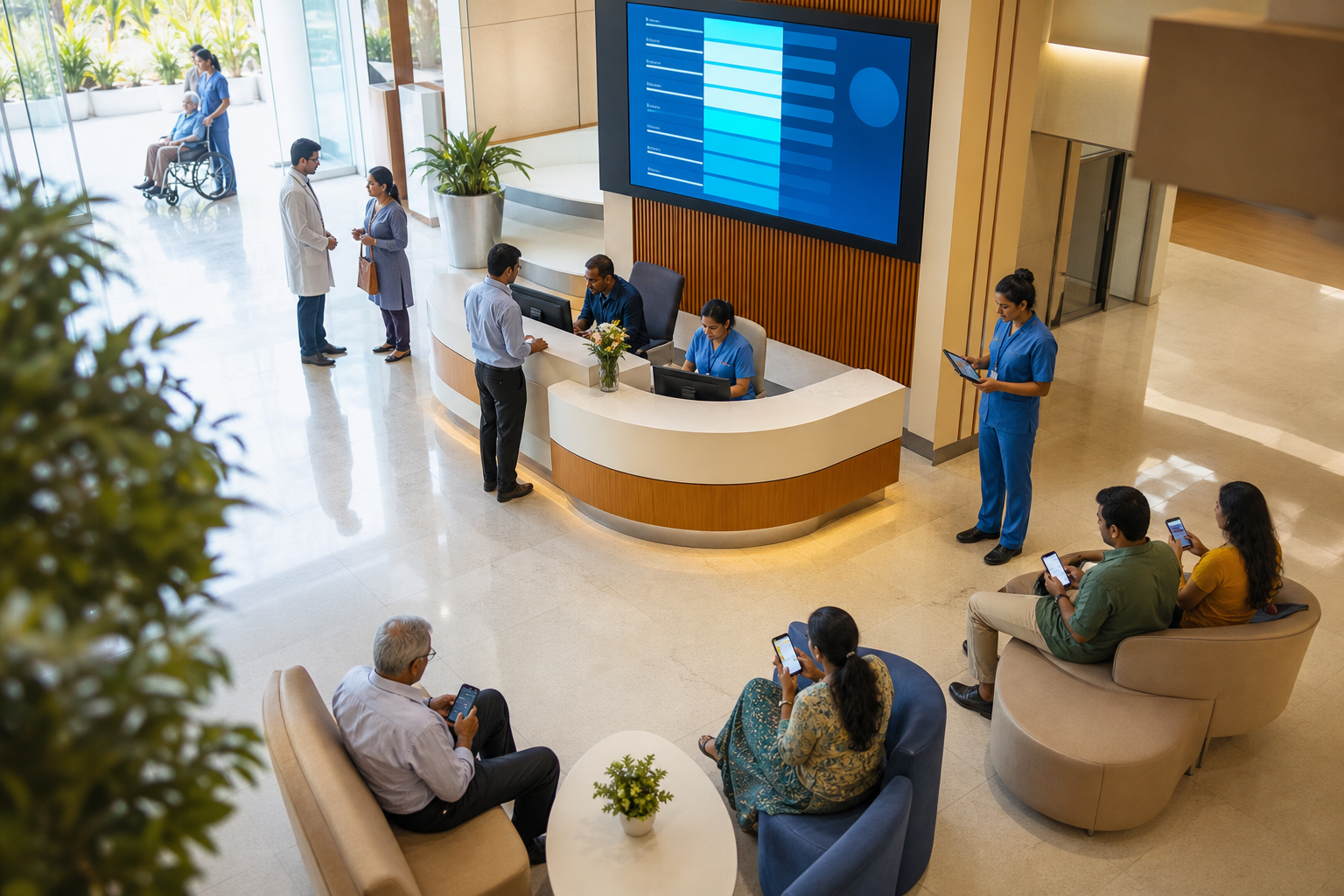
No-shows and follow-up dropouts are not random. They are the result of handoffs that break under load. MedCore’s market analysis shows 80% of facilities run on fragmented workflows, which means data lives in separate billing, lab, and appointment tools. As a result, messages reach the wrong person, arrive late, or miss key context like fasting rules or payment links. Moreover, front desks cannot call everyone, so the loudest queue wins.
On the other hand, a patient engagement app with whatsapp reminders can deliver the right nudge at the right time. SMS in India faces strict DLT filtering and template constraints. Phone calls get missed in traffic or work hours, and callback loops burn staff time. WhatsApp is installed, rich, and two-way, so patients can confirm or reschedule without waiting on hold.
However, channel choice is only part of the story. Data quality, consent, and language decide whether the message lands. If the appointment date is stale, the template breaks. If the patient’s preferred language is wrong, they ignore the text. If consent is not tracked, you risk blocking and penalties.
The Hidden Friction Points
- Multiple systems mean stale or conflicting appointment times.
- SMS DLT rules block messages that use unapproved text.
- IVR callbacks collide with OPD rush, so staff miss high-risk patients.
- One-language reminders confuse families and caregivers.
In fact, the market gap is real: 75% of providers, clinics and mid-size hospitals, remain underserved by existing tech (Source: MedCore). Therefore, hospitals that sort data flow and consent first see the biggest drop in no-shows, then add WhatsApp as the default reminder and follow-up channel. Compared to ad-hoc SMS and calls, this stack cuts manual work, reduces human error, and keeps a clear audit trail.
What to Look for in a WhatsApp Patient Engagement System
Before you run your first reminder, align your requirements. Start with legal and data safeguards in India. Then check EHR links, automation depth, and pricing clarity. Finally, validate message volume and template ops so you don’t throttle yourself mid-month.
- Compliance. DLT-registered templates are a must for SMS fallbacks and OTP flows. Moreover, DPDP Act 2023 requires lawful purpose, consent, minimization, and local storage. You should confirm India data residency, encryption, and an audit trail for consent and opt-outs. For national health programs, ABDM/ABHA linking strengthens identity and records match; the National Health Authority explains ABHA and its use in care journeys here: ABHA (ABDM).
- Interoperability. Your patient engagement app with whatsapp reminders should read and write to your clinical system. Look for FHIR R4 APIs for resources like Patient, Appointment, Encounter, and Observation. In addition, HL7 v2 inbound support helps you ingest feeds from labs and devices. This is how a pending HbA1c can trigger a follow-up nudge without CSV uploads.
- Automation depth. You want scheduled reminders, escalation rules, and auto-rescheduling links. An AI no-show scoring model helps you target high-risk patients with extra nudges or voice calls. Furthermore, multilingual support should cover major Indian languages and let you route to triage or care coordination when patients reply with symptoms.
- Operations and pricing. Ask about message volume limits, template approval SLAs, and blocking appeals. Flat monthly pricing avoids bill shock compared to per-message charges, especially when you nudge pre-op, post-op, pharmacy refills, and insurance steps. If you push 10,000+ WhatsApp messages per month across departments, a flat tier will matter.
Buyer’s Checklist
- DLT-compliant SMS fallback with template registry and audit trail.
- DPDP Act 2023 compliance, India data residency, consent logs.
- FHIR R4 APIs and HL7 v2 inbound for labs and devices.
- Automated follow-ups with AI no-show scoring.
- Multilingual templates with quick-reply actions.
- Flat per-month pricing and clear monthly message caps.
- On-prem or dedicated cloud options if needed.
For reference, India’s law text is public: Digital Personal Data Protection Act, 2023. Read it with your counsel and map system features to its key clauses: consent, purpose, and storage.
Also Read!
Best Hospital Billing with GST and Insurance Claims for Medical Tourism Hospitals in India — 2026
How MedCore Delivers WhatsApp-Powered Patient Engagement for Mid-Size Hospitals
MedCore ties reminders to your live EHR. Appointments, lab orders, and billing events trigger WhatsApp templates and DLT-compliant SMS fallbacks. The Professional tier includes 10,000 WhatsApp messages per month, which covers OPD, pre-procedure prep, post-op checks, and pharmacy refills for a typical mid-size unit. Each send sits on a consented record with an audit trail.
Moreover, MedCore’s patient engagement app with whatsapp reminders is not a stand-alone tool. It is part of a single tenant-scoped EHR with shared state across billing, lab, and pharmacy. Therefore, your pre-op reminder can include fasting rules from the order set and a payment link from billing, without copy-paste.
WhatsApp Reminders and Templates
Templates pull fields like patient name, token number, doctor, and slot time from Appointment. For follow-ups, rules detect “review after 10 days” instructions and schedule nudges automatically. In addition, DLT-registered SMS templates backstop missed WhatsApp deliveries, keeping compliance intact during outages.
AI Outbound Follow-up Agent
MedCore’s Outbound Follow-up Agent works across voice and WhatsApp. The agent prioritizes outreach using an AI no-show score, then runs a ladder: reminder → quick-reply reschedule → voice call for unresponsive patients. This frees your staff to handle edge cases. Predictions also extend to pharmacy demand forecasts, so restocks align with upcoming follow-ups.
“Our OPD wait time dropped from 40 minutes to 12. The live token display alone was worth the switch.” — Dr. Meera Rao, Medical Director, Asha Hospital
Predictions, Triage, and Multilingual Support
For patients who reply with symptoms, MedCore routes to triage with structured questions in up to 10 Indian languages. As a result, urgent cases get flagged, and elective queries land in care-coordination queues. Because the triage transcript lives in the EHR, doctors see the context at a glance during the visit.
“The patient mobile app reduced our front-desk calls by half in the first month.” — Shalini Kumar, Operations Head, Greenleaf Care
Patient App and Queue Experience
Patients can view live tokens, lab reports, and bills in the mobile app. WhatsApp reminders include deep links that open the right screen, reschedule, pay, or view lab prep. Compared to alternatives that rely on manual exports, this reduces errors and speeds each step.
If you’re weighing broader platform choices, this comparison can help: MedCore vs Practo for Mid-Size Hospitals: Which Is Better for Patient Engagement WhatsApp Reminders?
MedCore vs Generic WhatsApp Business API Tools: An Honest Comparison
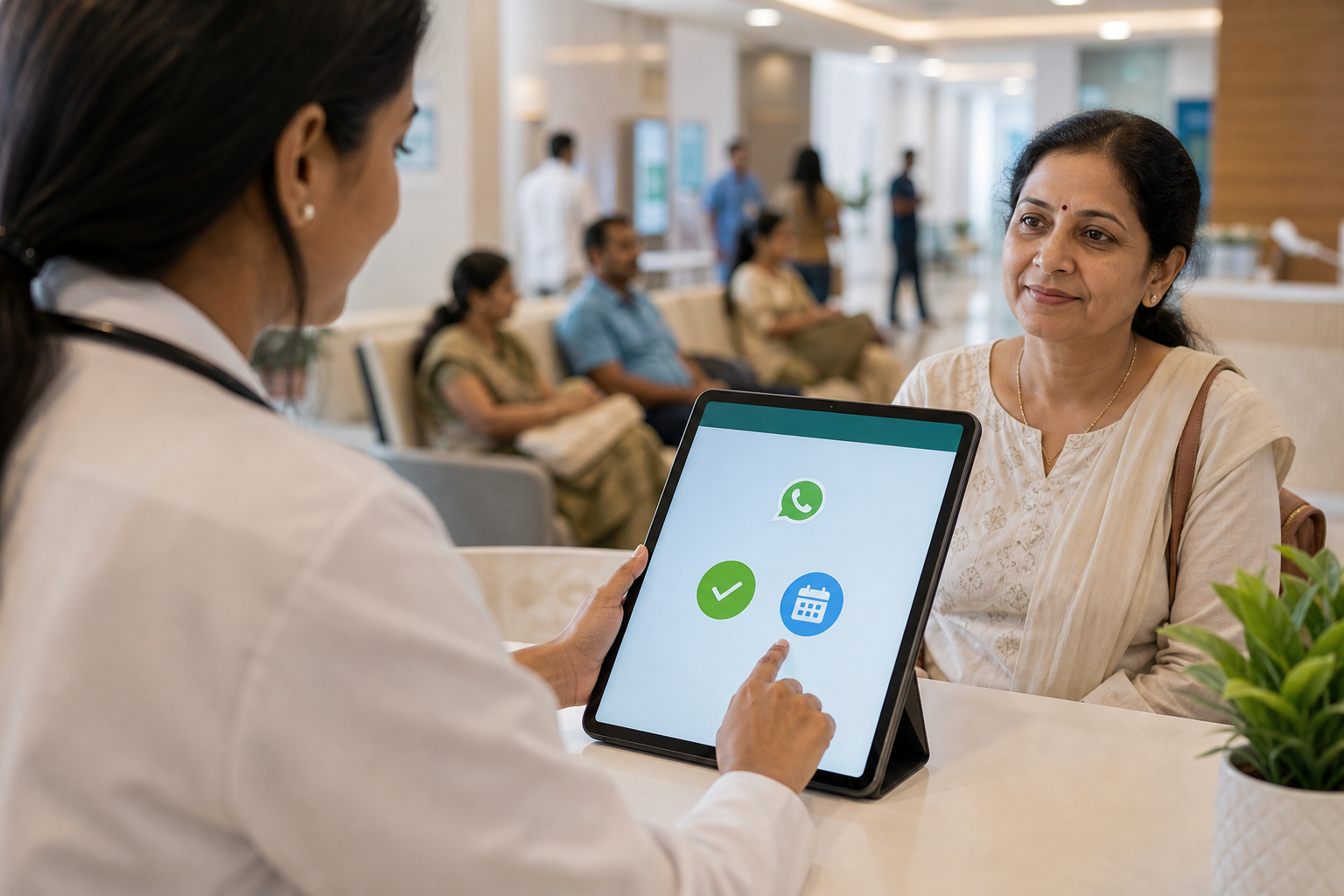
Generic WhatsApp API tools like Wati or Gallabox excel at broadcast and basic automation. If you only need blast messages for a health camp and can manage CSV uploads, they might suffice. However, for day-to-day care, the gap shows up in data source, pricing predictability, and clinical depth. Legacy HMS tools with bolt-on messaging add another layer, but the bolt-on rarely shares real-time state with lab and billing.
MedCore integrates WhatsApp with your EHR as the system of record. That means no manual exports, fewer template errors, and a live audit trail linked to encounters. Flat per-month pricing. Mid-size Hospital: from ₹24,999/mo, avoids per-message risk as volumes grow across departments. Unlike per-user or per-bed models, MedCore’s plan does not penalize you for adding staff to do the right thing.
Side-by-Side at a Glance
| Area | MedCore | Generic WhatsApp API Tool | Legacy HMS + Add-On |
|---|---|---|---|
| Data Source | Single tenant-scoped EHR; shared state across billing, lab, pharmacy | CSV/APIs; manual mapping | Partial; often nightly syncs |
| Automation | AI no-show scoring; outbound agent (voice + WhatsApp) | Rule-based flows; limited EHR insight | Basic reminders; manual triage |
| Pricing | Flat per-month; no per-bed/user fees | Per-message + seats add up | Per-module + add-on costs |
| Volume | 10,000 messages/month on Professional | Pay as you go | Varies; caps hidden in SLAs |
| Compliance | DPDP/ABDM, DLT templates, India residency | Varies by vendor | Varies; bolt-ons differ |
“We replaced three tools with MedCore. Billing, pharmacy and lab now talk to each other without exports.” — Ravi Prasad, Administrator, Sunrise Clinic
Compared to alternatives, MedCore’s EHR-integrated approach reduces rework and missed context. Still, be fair to your own use case. If you send fewer than 1,000 messages a month and don’t need EHR links, a generic API tool may be enough for outreach campaigns. But if your OPD handles 150+ patients per day and you want reminders tied to real orders and payments, integrated beats bolt-on.

Also Read!
Best Patient Engagement WhatsApp Reminders for Multi-Specialty Hospital Chains in 2026
Best Hospital Billing with GST, UPI & Insurance Claims for Small Clinics in India (2026)
Trust, Compliance, and Credentials That Matter in Indian Healthcare
Trust is earned with clear controls and proven throughput. MedCore is DPDP Act 2023 compliant with India data residency, so patient data stays within jurisdiction. DLT-compliant WhatsApp and SMS messaging keeps templates approved and auditable. For national programs, MedCore supports ABDM/ABHA linking to strengthen patient identity across episodes; see the National Digital Health Mission’s guidance at ABDM for context.
On interoperability, MedCore supports FHIR R4 resources and HL7 v2 inbound. Therefore, labs and devices can feed results in, while your appointment, encounter, and observation data remain structured. This pays off when you auto-schedule follow-ups based on an order set or flag a delta in lab values for outreach.
Moreover, scale matters. MedCore’s 55+ modules handle OPD, IPD, lab, pharmacy, billing, blood bank, and more.
Proven at 150+ OPD patients per day.
Flat ₹24,999/mo for mid-size hospitals means no per-bed or per-user fees, which keeps budgets predictable as you expand coverage to more specialties and shifts. In addition, SLA and uptime credits back the platform’s reliability.
Credentials and Trust Signals At a Glance
- Security: DPDP Act 2023 compliant with India data residency.
- DLT-compliant WhatsApp and SMS messaging.
- FHIR R4 and HL7 v2 interoperability certified.
- 55+ modules handling 150+ OPD patients/day.
- Flat ₹24,999/mo — no per-bed or per-user fees.
- Risk reversal: free demo available; SLA-backed uptime credits.
In short, the guardrails are in place: consent capture, audit logs, template governance, and standards-based APIs. That mix is the difference between WhatsApp “marketing” and clinical-grade patient engagement that your legal and clinical teams can stand behind.
Getting Started: From Sign-Up to First WhatsApp Reminder in Days
Speed helps adoption. MedCore offers a self-serve onboarding wizard, so your team can go live in days, not months. Because pricing is flat per month, you don’t need to count seats or beds, just set up once and invite your staff.
- Register your hospital and branches. Configure specialties, OPD hours, and provider rosters.
- Complete DLT template registration for SMS fallbacks. Upload consent language and sender IDs.
- Set up your WhatsApp Business API. Add approved templates in English and regional languages.
- Map EHR data. Bring over patient master, upcoming appointments, and providers via FHIR R4 or CSV.
- Turn on workflows. Enable pre-visit, follow-up, and lab-prep reminders, plus the outbound follow-up agent.
Moreover, you can import historical appointments to warm-start no-show scoring. In addition, pilots can start with one department and add more weekly. Most mid-size teams reach their first automated WhatsApp reminder in under a week, while DLT approvals may take 2–5 business days depending on your telecom provider.

 + EHR integration (FHIR/HL7) + WhatsApp reminders driving reduced no-shows and faster follow-ups; brand-neutral colors)
Frequently Asked Questions
How much does MedCore's WhatsApp patient engagement cost for a mid-size hospital?
The mid-size hospital plan starts at ₹24,999/mo with flat pricing. There are no per-bed or per-user fees, so you can add staff without extra licenses. The Professional tier includes 10,000 WhatsApp messages per month. There are no hidden per-message charges within that tiered allotment.
Is WhatsApp messaging from a hospital DPDP and DLT compliant?
Yes. MedCore uses DLT-registered templates for WhatsApp and SMS outreach. The system is compliant with the DPDP Act 2023, and all patient data uses India data residency. ABDM/ABHA linking is supported for national health ID compliance and better record matching.
Can MedCore's WhatsApp reminders work in regional languages?
Yes. MedCore supports triage and patient communication in up to 10 Indian languages. You can configure each patient’s preferred language in the record. WhatsApp templates use that preference for reminders and follow-ups.
How does MedCore compare to standalone WhatsApp API tools like Wati or Gallabox?
Standalone tools handle messaging well but lack EHR integration. MedCore’s WhatsApp reminders pull live data from appointment, lab, and billing modules, so you don’t need exports or CSV uploads. As a result, messages are timely, accurate, and include the right context, such as fasting rules or payment links.
Will WhatsApp reminders actually reduce no-shows at our hospital?
MedCore includes an AI no-show scoring model that prioritizes high-risk patients for extra nudges. The outbound follow-up agent automates WhatsApp and voice outreach based on that predicted risk. This mix helps teams focus calls where they matter most and improves show rates without adding headcount.
How long does it take to set up WhatsApp patient engagement with MedCore?
MedCore has a self-serve onboarding wizard, and most mid-size hospitals go live in days. DLT template approval may add 2–5 business days depending on your telecom provider. You can start with one department and expand as templates get approved.
Do patients need to download an app, or is WhatsApp enough?
WhatsApp reminders work without any app download, which speeds adoption. MedCore also offers a branded patient mobile app for lab reports, live queue tokens, and bill pay. The app is optional and can be added later without changing your WhatsApp setup.
Can MedCore integrate with our existing hospital management system?
Yes. MedCore supports FHIR R4 and HL7 v2 for interoperability. It can replace fragmented tools or run alongside your current HMS with standards-based APIs. That way, you keep data consistent while you phase modules in or out.
The Bottom Line
- Run reminders from the source of truth. EHR-integrated WhatsApp beats exports and bolt-ons for accuracy and auditability.
- Price for scale. Flat monthly tiers with message allotments avoid bill shock as you extend outreach across departments.
- Build for India. DPDP + DLT + ABDM/ABHA + India data residency are non-negotiable in 2026.
If this matches your goals, see how it looks with your data and workflows.