

In every hospital corridor, behind every diagnosis and treatment plan, there is one element that determines whether healthcare truly heals: Patient Care. It is not just about medicine or machines. It is about how a doctor listens, how a nurse comforts, and how a system responds. Great patient care goes beyond clinical accuracy; it blends skill with empathy, speed with sensitivity, and science with humanity.
When compassion guides every interaction, patients don’t just recover, they feel respected and valued. This blog explores why compassion is the cornerstone of truly exceptional patient care and how modern healthcare can nurture it at every level.
What Is Patient Care And Why Does It Go Beyond Treatment?
What is patient care, really? At its simplest, it refers to the services and support provided to individuals seeking medical help. But in practice, it is far more layered. Patient care includes clinical treatment, emotional support, clear communication, and follow-up assistance. It is the sum of every interaction a person has with a healthcare system, from the moment they walk through the door to the day they fully recover.
Good patient care is not just about curing illness. It is about acknowledging that behind every medical file is a human being dealing with fear, pain, or uncertainty. Compassion bridges that gap. When caregivers approach their work with genuine empathy, patients feel seen, heard, and safe, and that emotional safety plays a real role in recovery.
The Role of Compassion in Everyday Patient Care:
Compassion in patient care is not a soft extra; it is a clinical necessity. Studies consistently show that patients who feel emotionally supported are more likely to follow medical advice, report symptoms accurately, and recover faster. A compassionate caregiver creates trust, and trust creates better health outcomes.
Everyday acts of compassion in patient care can look like taking an extra minute to explain a diagnosis in simple terms, holding a patient’s hand during a difficult procedure, or ensuring a frightened elderly person understands their discharge instructions.
These small moments matter enormously. They transform a clinical transaction into a human connection. When healthcare providers practice compassion consistently, it elevates the entire standard of patient care, not just for individual patients but across the entire facility.
Patient Care in a Hospital: Where Compassion Is Tested Most:

Patient care in a hospital setting is uniquely demanding. Hospitals are high-pressure environments where staff manage dozens of patients simultaneously, often under time constraints. It is precisely in these moments that compassion can either thrive or erode. Long shifts, understaffing, and administrative burdens can make empathetic care harder to maintain but no less important.
Hospitals that prioritize compassionate care train their staff not just in clinical skills but in communication, active listening, and emotional intelligence. They build systems that reduce administrative load so that nurses and doctors can spend more time with patients, not paperwork. The best hospitals understand that patient satisfaction and clinical excellence go hand in hand. Compassion, when embedded into the culture of a hospital, becomes a standard of care, not an exception.
Emergency Patient Care: When Compassion Can’t Wait:
Emergency patient care presents perhaps the greatest test of compassion under pressure. In an emergency room, decisions are made in seconds, and patients arrive frightened, in pain, and often alone. While speed and clinical precision are non-negotiable, the manner in which care is delivered in those critical moments has a lasting psychological impact.
A calm, reassuring voice from a nurse in the emergency room can reduce a patient’s panic and make them more cooperative. A doctor who briefly explains what is happening, even in the middle of a critical intervention, helps the patient feel less powerless. Emergency patient care that blends urgency with empathy produces better outcomes: patients are calmer, information flows more accurately, and the care team operates with greater clarity. Compassion, even in emergencies, is never wasted.
How Compassionate Patient Care Services Build Long-Term Trust?
Exceptional patient care services are not just defined by their equipment or expertise; they are defined by the relationships they build. A patient who receives compassionate care is more likely to return to the same facility, recommend it to others, and comply with long-term treatment plans. Trust is the invisible infrastructure of great healthcare.
Patient care services that prioritize compassion invest in ongoing staff training, patient feedback systems, and communication protocols that treat every patient as an individual, not a case number. They set standards for how patients are greeted, how wait times are managed, and how bad news is delivered. These are not just operational details; they are expressions of the facility’s values. When compassion is woven into the fabric of patient services, the entire patient experience improves from first contact to final follow-up.
Also Read:
How Reliable Patient Care Services Empower Faster Healing
Top Healthcare Trends Shaping the Future of Patient Care in 2026
How does MedCore Empower Compassionate Patient Care?
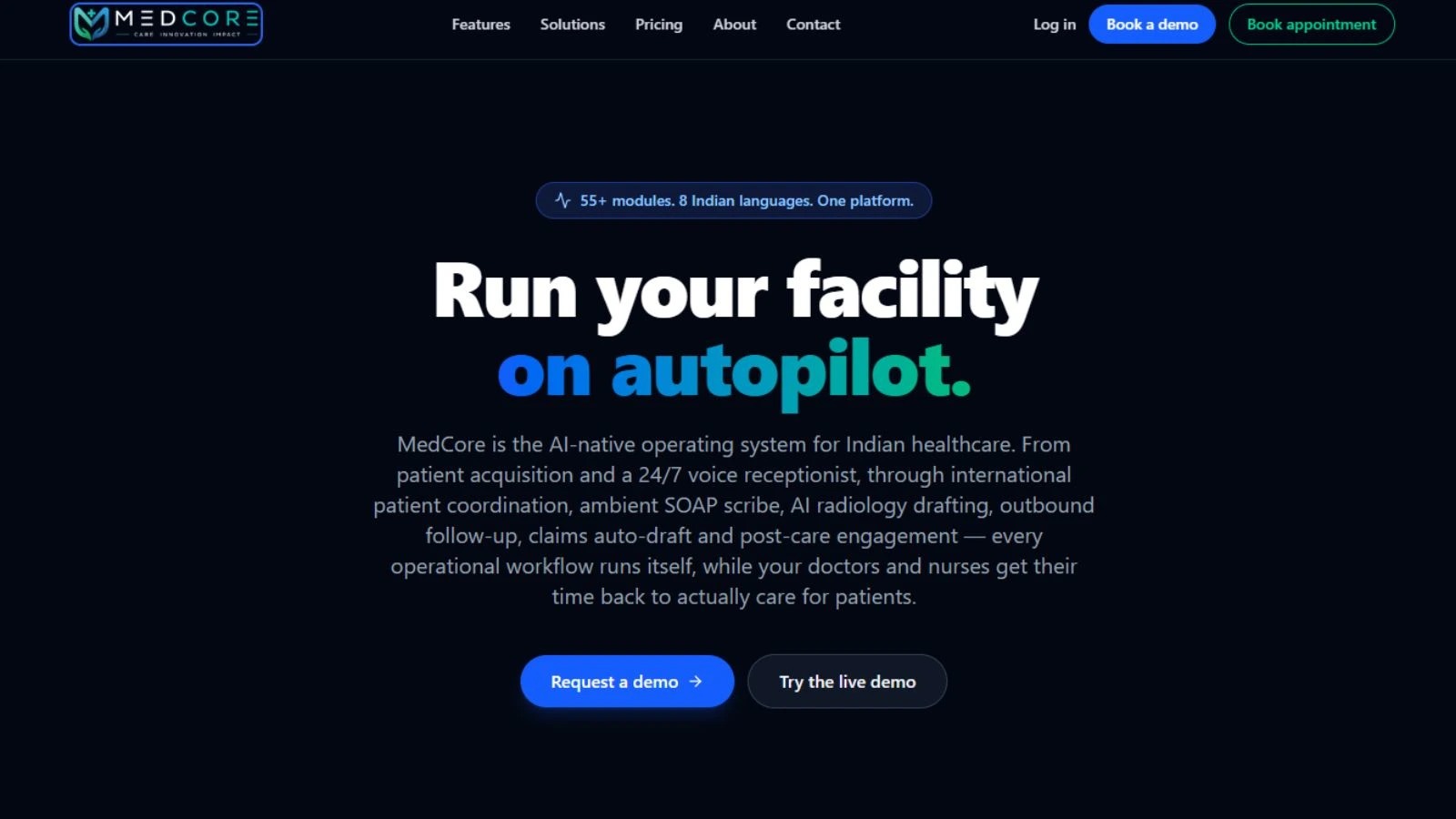
Technology plays a powerful supporting role in compassionate patient care, not by replacing human connection, but by removing the barriers that prevent it. MedCore is an AI-native hospital management platform built specifically for Indian healthcare facilities, and it is designed to give doctors and nurses more time to care.
Here is how MedCore supports better patient care at every level:
- AI Voice Receptionist– Available 24/7, it qualifies patient queries, books OPD appointments, and hands off to human staff with full context, so no patient is left waiting or confused.
- Ambient SOAP Scribe- Automatically documents clinical notes during consultations, freeing doctors from paperwork and letting them focus fully on the patient in front of them.
- Real-Time OPD Queue– Live token display and socket updates keep patients informed and reduce anxiety from uncertainty during waiting.
- Patient Mobile App– Patients access lab reports, prescriptions, and live queue status directly, improving transparency and reducing unnecessary follow-up calls.
- AI Triage in 8 Indian Languages- Ensures patients can communicate symptoms comfortably in their own language, making early care more accurate and inclusive.
- Outbound Follow-Up Agent- Proactively contacts patients post-visit for adherence and re-booking, maintaining the continuity of care beyond the hospital walls.
MedCore does not replace compassion; it creates the conditions for it to flourish.
Training and Culture: Building Compassion Into Patient Care Systems:

Compassionate patient care does not happen by accident. It is built through deliberate training, thoughtful leadership, and a culture that celebrates empathy alongside clinical achievement. Healthcare institutions that lead in patient outcomes typically have structured programs for communication training, conflict resolution, and emotional resilience for their staff.
Burnout is one of the biggest threats to compassionate care. When healthcare workers are overwhelmed, empathy is often the first casualty. Facilities must invest in staff well-being as seriously as they invest in patient outcomes, because the two are inseparable. Regular feedback sessions, peer support networks, and technology that reduces administrative burden all contribute to a culture where caregivers can show up with full emotional presence. Patient improves when the people delivering it feel supported and valued.
Conclusion:
Exceptional patient care is built on a foundation of compassion. Whether it is a kind word in an emergency room, a thorough explanation of a diagnosis, or a follow-up call that shows a patient they are remembered, every act of empathy strengthens the bond between caregiver and patient. As healthcare evolves, the facilities that will truly stand out are those that use technology and training not to reduce human connection, but to deepen it. Compassion is not a luxury in healthcare; it is the very heart of what patient care should be.
FAQs:
Q1. What is the meaning of patient care?
Ans: Patient care refers to all services and interactions provided to individuals seeking medical treatment, including clinical procedures, emotional support, communication, and follow-up assistance.
Q2. Why is compassion important in patient care?
Ans: Compassion builds trust between patients and caregivers, improves treatment compliance, reduces patient anxiety, and leads to better overall health outcomes.
Q3. How does technology support patient care?
Ans: Technology like MedCore reduces administrative burden on healthcare staff, enabling doctors and nurses to spend more time on meaningful patient interactions rather than paperwork.
Q4. What is emergency patient care?
Ans: Emergency patient care refers to the immediate medical attention provided to patients in acute or life-threatening situations, typically in an emergency department or urgent care setting.