Imagine knowing you have a heart condition six months before any symptoms appear. Not because you visited a hospital, but because your smartwatch caught the pattern and flagged it to your doctor. That is not science fiction. That is future healthcare already in motion.
Healthcare systems today are under serious strain. Aging popWhat a Patient’s Healthcare Journey Could Look Like in 2035ulations, chronic disease rates that keep climbing, staff shortages, and the ever-rising cost of delivering even basic care. Technology alone cannot fix all of this. But it is changing what is possible, faster than most people realize.
Read Aloud!
Future Healthcare at a Glance
Future healthcare is the next generation of medical care powered by artificial intelligence, digital health technologies, connected devices, predictive analytics, and personalized treatments. It focuses on preventing disease, improving patient outcomes, reducing administrative burdens, and delivering more accessible, data-driven care.
What makes it different from today? The shift from reactive to proactive. Treating illness has always been the default. Future healthcare pivots toward anticipating it.
Why Healthcare Needs to Change
The system was not designed for the world it now operates in. Populations are older than ever. Chronic conditions like diabetes, hypertension, and mental illness affect hundreds of millions globally. Healthcare workers are burning out. Costs keep rising while access remains uneven.
Rural communities in countries like India face this gap sharply. A specialist might be hours away. Clinics may be understaffed. For those communities, future healthcare is not abstract. It is urgent.
The Technologies Powering Future Healthcare
Artificial Intelligence
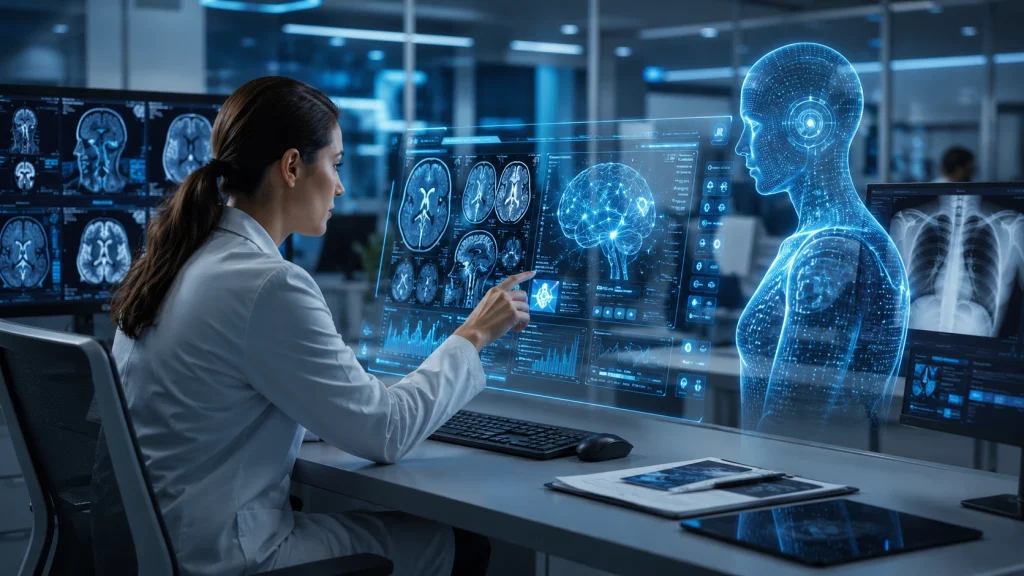
AI is quietly becoming the most consequential tool in medicine. It reads radiology scans faster than human specialists, sometimes catching early-stage cancers that would otherwise be missed. It supports clinical decisions by surfacing relevant patterns across millions of patient records.
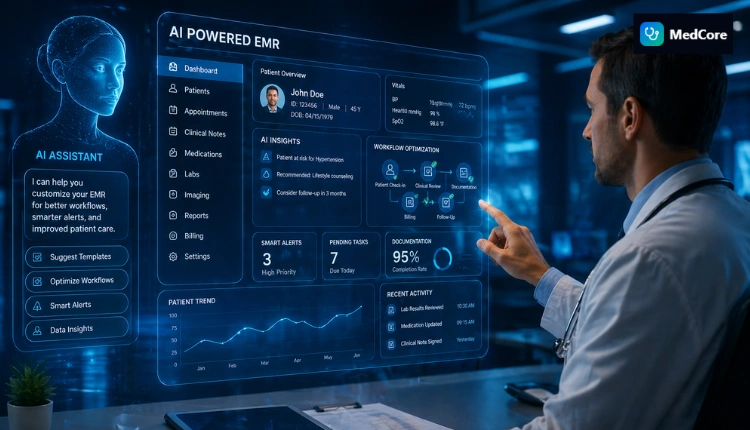
The future of AI in healthcare also extends into the back office. Administrative work, coding, billing, and scheduling eat up enormous amounts of clinical staff time. AI is beginning to handle much of that load, freeing clinicians for what actually requires human judgment.
The future AI in healthcare is not a single breakthrough. It is a long series of quiet improvements that, taken together, change what a clinician can know and decide on any given day.
Personalized and Precision Medicine
Not everyone responds to the same treatment the same way. Precision medicine uses genomic data to design treatment plans built around the individual, not the average case. This matters most in oncology, where targeted therapy can mean the difference between recovery and a treatment that simply does not work.
Wearables and Remote Monitoring
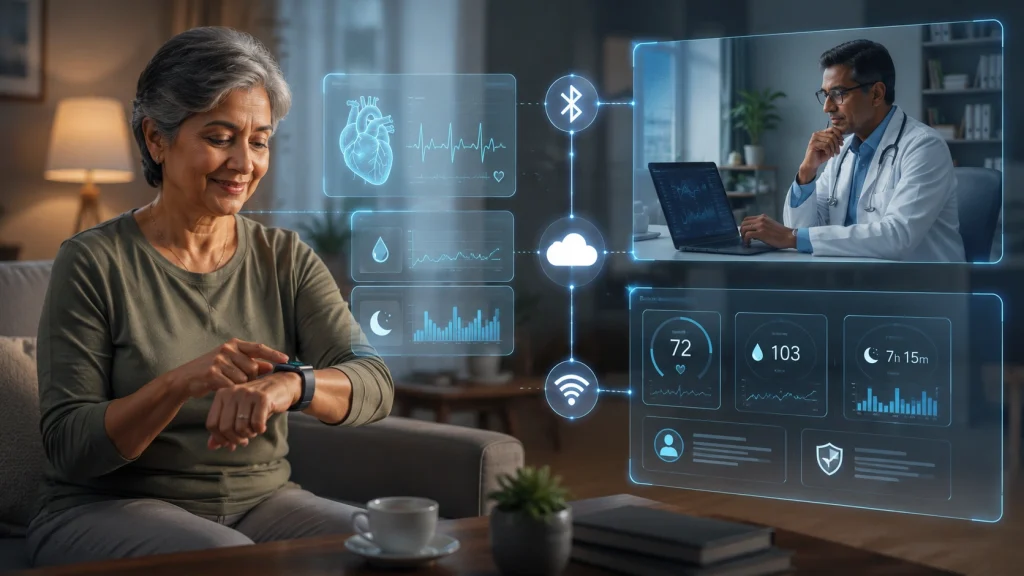
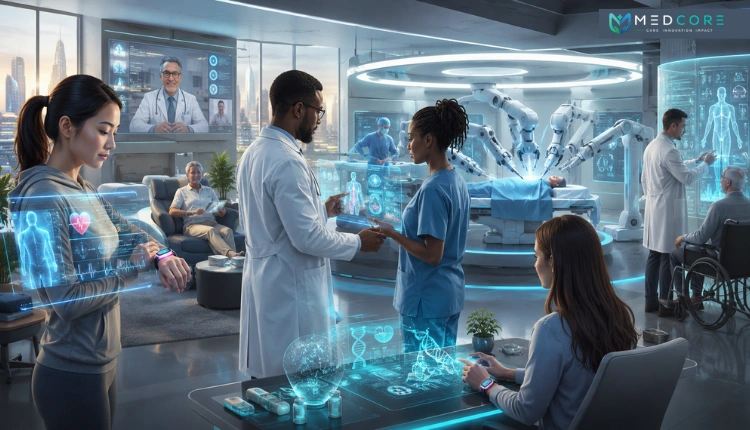
Continuous monitoring used to require a hospital stay. Now it requires a wristband. Devices tracking heart rate, blood oxygen, glucose, and sleep send real-time data to care teams without requiring patients to go anywhere. For managing chronic conditions, this is a significant shift from quarterly snapshots to continuous insight.
Telemedicine and Virtual Care
COVID-19 accelerated telemedicine adoption by years. For many routine consultations, a video call works as well as an in-person visit and removes barriers of travel and access. For rural patients in India or remote communities anywhere, virtual care is often the only realistic option.
Robotics and Smart Hospitals
Surgical robots allow procedures with smaller incisions and faster recovery times. Automated systems reduce medication errors. Smart hospitals are not yet the norm, but the direction is clear. Facilities investing in connected infrastructure now will operate more efficiently as these tools mature.
Real-World Applications Worth Knowing About
Earlier disease detection. AI tools are detecting diabetic retinopathy, certain cancers, and cardiac abnormalities from imaging data with accuracy that rivals experienced specialists.
Faster drug discovery. Machine learning models now predict how molecules will behave before synthesis begins, accelerating work on antivirals and rare disease treatments.
Personalized treatment plans. Hospitals are using patient data, including genetic profiles and treatment history, to build care plans that adapt over time rather than defaulting to standard protocols.
Better mental healthcare support. AI-driven apps support early screening for depression and anxiety. Digital therapeutics are being used alongside traditional therapy for conditions like PTSD and insomnia.
What a Patient’s Healthcare Journey Could Look Like in 2035
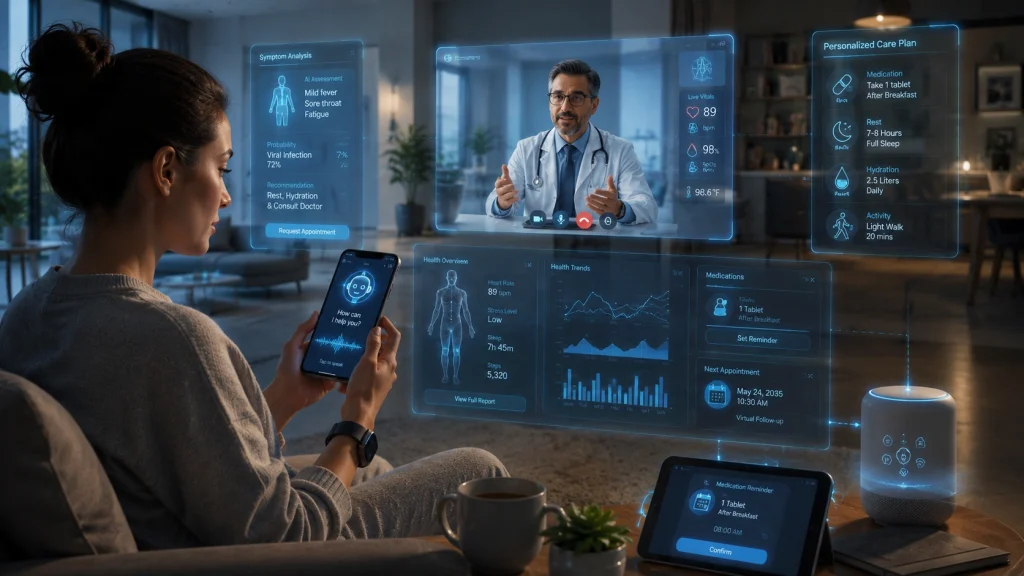
A patient notices persistent fatigue. Rather than waiting weeks for an appointment, they open a symptom-checking app. The AI reviews recent wearable data and flags a pattern consistent with thyroid dysfunction. A virtual consultation is booked for the next morning.
The doctor reviews the AI’s summary before the call. Blood work is ordered, results come back within hours, and a personalized treatment plan is ready within a day. The patient does not visit a clinic once. Their wearable continues monitoring. The care team receives alerts if anything changes.
That is future healthcare working as it should. Not replacing the doctor. Enabling them.
How Healthcare Organizations Can Prepare
Most articles on this topic stop at listing trends. The harder question is what organizations should actually do.
Build a secure digital infrastructure first. AI tools are only as good as the data they access. Interoperable systems are the foundation. Without them, most other investments underperform.
Improve data quality. Incomplete or inconsistent records produce unreliable AI outputs. Organizations need to treat data hygiene as a clinical priority, not just an IT problem.
Train clinical staff. Technology adoption fails when the people using it do not understand or trust it. Training needs to address the “why” behind new workflows, not just the mechanics.
Adopt AI responsibly. Trustworthy AI in future healthcare requires fairness, explainability, and robustness. A system that works well for one demographic and poorly for another is not ready for deployment.
Read More!
How Online Doctor Appointment Platforms Are Changing Healthcare
Top Healthcare Trends Shaping the Future of Patient Care in 2026
Why Choose MedCore for Hospital Management?
MedCore is an AI-native hospital management system designed to streamline clinical, operational, and financial workflows on a single platform. Built for Indian healthcare providers, it helps hospitals automate routine tasks, improve patient care, and increase operational efficiency.
Key Features of MedCore
- AI-Powered Hospital Management – Automates clinical, administrative, and operational workflows with built-in AI agents.
- Electronic Health Records (EHR) – Centralized patient records with prescriptions, vitals, allergies, diagnoses, and treatment history.
- Appointment & OPD Management – Online appointment scheduling, live OPD queue, token management, and doctor availability tracking.
- AI Voice Receptionist – Handles appointment bookings, billing queries, and patient calls 24/7 in multiple Indian languages.
- AI Triage & SOAP Scribe – Performs symptom triage and automatically generates consultation notes for doctors.
- Laboratory & Radiology Management – Supports lab orders, AI-assisted radiology reporting, and diagnostic workflow management.
Common Misconceptions
Myth: AI will replace doctors. Reality: The most credible voices in medicine consistently say the opposite. AI handles pattern recognition and data processing. Doctors handle context, relationships, and judgment. The role of the clinician evolves; it does not disappear.
Myth: Future healthcare is only for large hospital systems. Reality: Cloud-based tools, AI-driven scheduling, and remote monitoring platforms are increasingly accessible to small clinics and independent practices. The gap is narrowing faster than most people expect.
Myth: Virtual care means lower-quality care. Reality: For chronic disease management and mental health support, remote care often produces equivalent or better outcomes, largely because adherence improves when friction goes down.
Looking Beyond AI
Digital twins are beginning to appear in medicine. A virtual model of a patient’s cardiovascular system allows doctors to simulate how different treatments would perform before committing to one.
Preventive care powered by continuous monitoring will eventually become the norm. Instead of managing disease, the goal shifts to detecting deviation early enough to prevent it altogether.
The ethical dimension matters too. AI systems used in future healthcare must be explainable. Clinicians need to understand why a recommendation was made, not just accept a black-box output. Regulators, developers, and care organizations are actively building these standards together.
The future is not about replacing healthcare professionals. It is about enabling them to deliver safer, faster, and more personalized care to more people.
Where This Is All Heading
Future healthcare is not a distant concept. It is already reshaping how diseases are detected, how treatments are designed, and how patients interact with their care teams. The organizations investing in this shift today are not preparing for a hypothetical future. They are adapting to one that is already arriving.
The question is not whether to engage with these changes. It is how to do it thoughtfully, equitably, and with the patient at the center.
Frequently Asked Questions
What is future healthcare?
The next generation of medical care combines AI, connected devices, personalized treatments, and digital tools to shift from reactive illness management toward proactive, preventive, and patient-centered care.
What is the future of AI in healthcare?
AI is expected to transform diagnostics, clinical decision support, drug discovery, and administrative operations. It will not replace clinicians but will expand what they can do each day with better data and faster insights.
Will AI replace doctors?
No. AI supports clinical decision-making. Diagnosis, patient relationships, and ethical judgment still require human expertise. Doctors become more capable, not redundant.
What technologies will shape future healthcare?
Artificial intelligence, precision medicine, wearables, telemedicine, surgical robotics, predictive analytics, and digital twins are among the most impactful technologies expected over the next decade.
How can hospitals prepare?
By investing in digital infrastructure, improving data quality, training staff on new tools, adopting AI governance frameworks, and measuring patient outcomes continuously rather than just tracking adoption rates.