Picture this. A child gets a fever at midnight. A grandfather needs surgery next week. A young woman is waiting for her lab report. Behind every one of these moments, there is a quiet machine working in the background. That machine is the healthcare system.
Most people never think about it until they need it. Then, suddenly, it is the only thing that matters. So let’s talk about it. In plain words. No jargon. Just the truth about how care actually reaches patients and why the system behind it matters more than we admit.
What Is a Health Care System?

A health care system is not just a hospital. It is not just a doctor either.
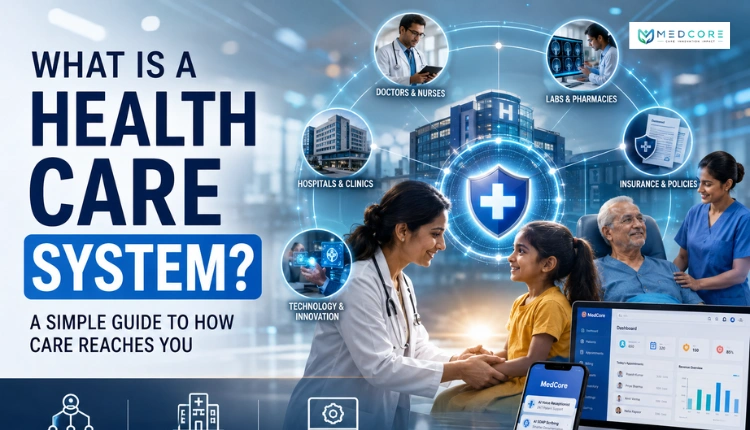
Let’s break it down simply. A health care system is the full network of people, places, and processes that work together to keep you healthy. It includes:
- Doctors, nurses, and pharmacists
- Hospitals, clinics, and labs
- Insurance and payment structures
- Government policies and regulations
- Technology that supports diagnosis and treatment
When all these parts move together smoothly, patients get better care, faster. When they don’t, people suffer. That is the real weight a health care system carries every single day.
Why the Health Care System Touches Every Life
Here is something worth sitting with. Your health does not depend only on your doctor. It depends on the entire health care system around you.
A strong health care system means shorter wait times, accurate diagnoses, and fair access to treatment. A weak one means delays, confusion, and sometimes, irreversible harm.
Across the world, countries are ranked on how well their health care systems perform. Quality, access, mortality rates, and patient satisfaction all play a role. Countries like South Korea, Denmark, and Japan often rank high. Others struggle with a shortage of staff, poor infrastructure, or unaffordable costs.
This is not just data. It is real families, waiting in real corridors, hoping someone reaches them in time.
The Health Care Delivery System: How Care Actually Reaches You
There is a difference between a health care system and a health care delivery system. People often use them as the same thing, but they are not.
A health care delivery system is the actual path care takes to reach a patient. Think of it like a relay race. The patient calls a clinic. A nurse takes the first note. A doctor examines. A lab runs tests. A pharmacist fills the prescription. Every handoff matters.
If even one step is slow or broken, the patient feels it. That is why a smooth health care delivery system is just as important as good doctors. Talent alone cannot fix a broken process.
Some signs of a strong healthcare delivery system include:
- Quick patient intake and triage
- Smooth communication between departments
- Easy access to lab results and prescriptions
- Minimal waiting time for appointments
- Clear follow-up after treatment
When delivery breaks down, even the best doctors cannot save the patient experience.
Health Care Management System: The Engine Behind the Scenes
Now here is the part most patients never see. Every health care system runs on a health care management system. This is the operational backbone.
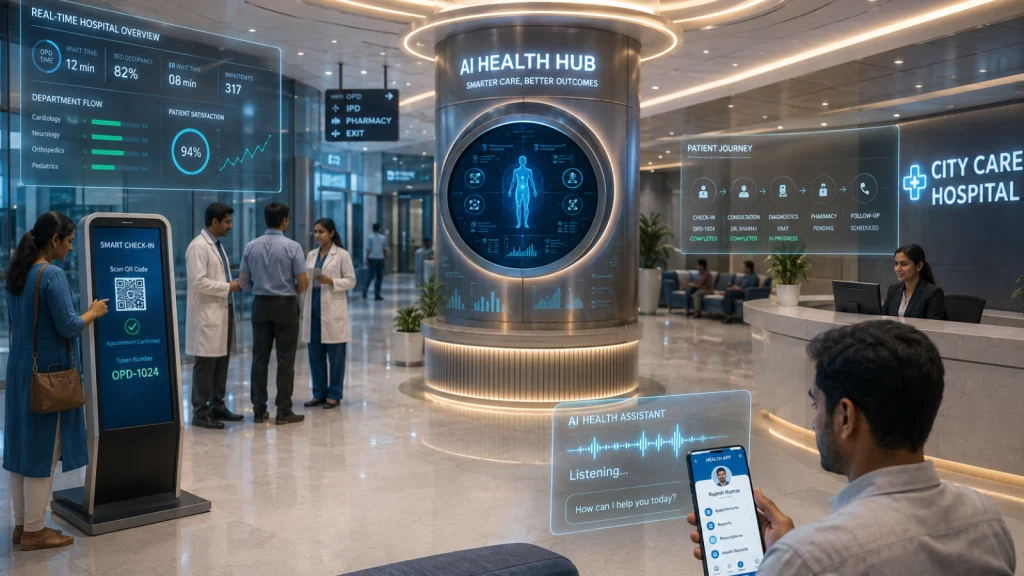
A health care management system handles scheduling, billing, records, staff management, and compliance. It is the silent worker who keeps a hospital from collapsing into chaos.
Without it, doctors spend more time on paperwork than on patients. Bills get delayed. Records get lost. Mistakes happen.
With a strong health care management system, hospitals run more smoothly. Staff get their time back. Patients feel that difference, even if they never see the system itself.
This is exactly the gap that needs solving, especially in fast-growing healthcare markets like India.
A Quick Look: MedCore and the Future of Health Care Management
This is where platforms like MedCore step in.
India’s hospital industry is massive, valued near 200 billion dollars. Yet most of that market, especially mid-sized hospitals and clinics, still runs on fragmented tools. Manual coordination. Outdated billing software. No real connection between departments.
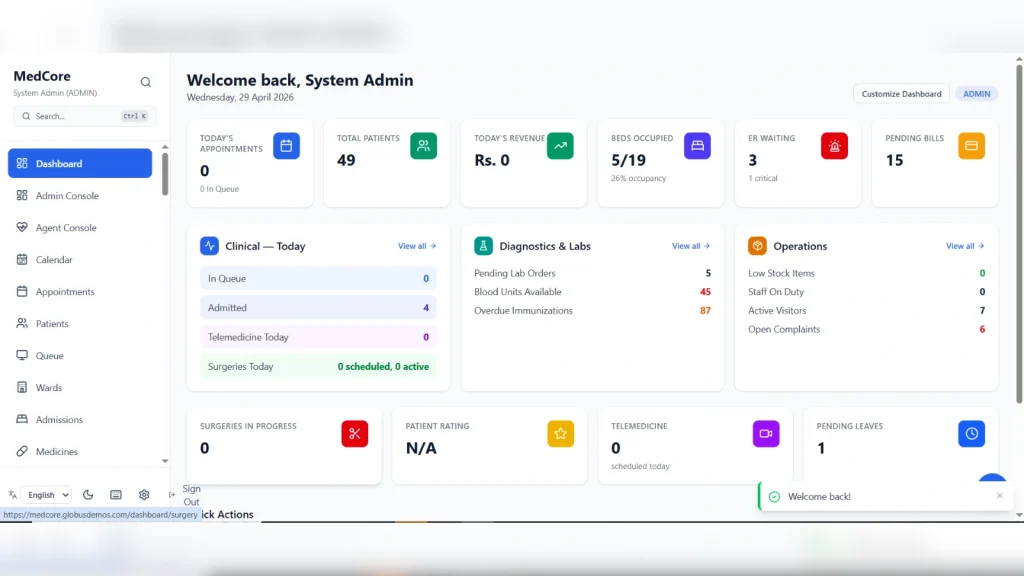
MedCore was built to close that exact gap. It is an AI native healthcare care management system designed for Indian hospitals and clinics. It brings together patient acquisition, a 24/7 voice receptionist, ambient SOAP scribing, AI-assisted radiology drafting, automated claims, and GST aware billing, all in one place.
In simple words, MedCore helps the health care delivery system work the way it should. Patients move faster through the queue. Doctors spend more time with people, not paperwork. Billing happens the same day care is given.
For hospitals trying to modernize their health care system without hiring ten different vendors, this kind of unified platform is becoming essential, not optional.
The Human Side of Every Health Care System
It is easy to talk about systems, software, and statistics. But underneath all of it are people. A nurse working a double shift. A mother waiting outside an OT. A patient hoping the lab report is not bad news.
A health care system is judged not by its size, but by how it treats people in their most vulnerable moments. That is the real test.
Some qualities every strong health care system should aim for:
- Access for everyone, regardless of income
- Speed, especially in emergencies
- Transparency in cost and treatment
- Compassion, not just efficiency
- Continuous improvement through technology
No system is perfect. Even the best ranked countries face challenges like aging populations, rising costs, and staff shortages. But the direction matters. A health care system that keeps improving, keeps listening, and keeps investing in better delivery, is one people can trust.
Final Thoughts
So, what is a health care system, really? It is more than hospitals and doctors. It is the full chain of people, technology, and processes working together so that when you are scared and sick at 2 a.m., someone is there to help.
A good health care delivery system gets you seen faster. A good health care management system keeps the hospital running without chaos. And a good health care system, as a whole, protects dignity along with health.
The future belongs to systems that combine all three, human care, smart technology, and reliable delivery. That is the direction healthcare is moving toward, and platforms built for that future will lead the way.
Here are 5 FAQs on topics not touched anywhere else in the blog, written with a clickbait edge:
Frequently Asked Questions
1. Is your hospital secretly costing you more than it should?
Most patients never check this, but billing errors and hidden charges are shockingly common across hospitals. A weak health care system often hides extra costs inside vague line items. Always ask for an itemized bill before you pay.
2. Could AI actually replace your doctor one day?
Not anytime soon, and here’s why. AI can draft notes, flag risks, and speed up diagnosis, but it cannot replace human judgment in a crisis. The real shift is AI working beside doctors, not instead of them.
3. What really happens when a hospital’s system crashes?
It sounds dramatic, but it happens more often than people realize. Lost records, delayed surgeries, and billing chaos can follow a single system failure. This is exactly why backup protocols and digital reliability matter more than most patients think.
4. Are you choosing a hospital the wrong way?
Most people pick a hospital based on location or recommendation alone. But things like average wait time, staff to patient ratio, and digital record accuracy say a lot more about quality of care than word of mouth ever will.
5. Is your personal health data actually safe?
Every time you visit a clinic, your data moves through multiple systems. Few patients ask where that data goes or who can access it. With rising digital adoption, data privacy is becoming one of the most overlooked risks in modern healthcare.