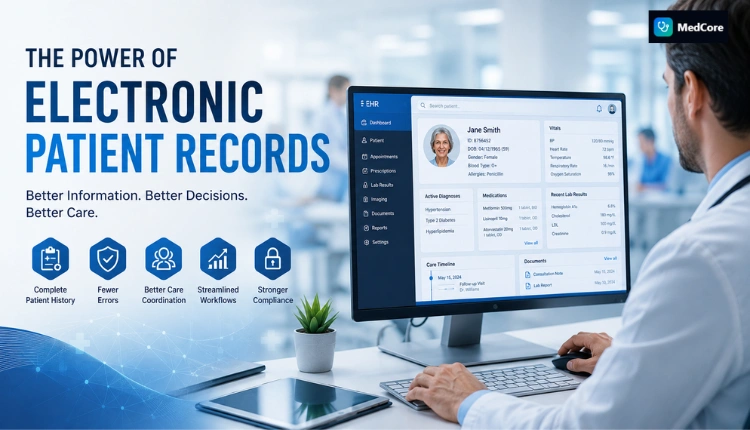

For 50–200 bed hospitals, the patient engagement app with whatsapp reminders that best automates care events is MedCore; Practo wins on patient reach. Because 80% of Indian facilities run on fragmented workflows (MedCore data, 2026), depth of integration beats surface features in day-to-day impact.
**Book a Demo. No Sales Pitch → Get a patient engagement app with whatsapp reminders live in days.
Security & compliance:
- TRAI-aligned DLT templates
- DPDP Act 2023 alignment
- India data residency
- ABDM/ABHA linking
Risk-free onboarding:
- Self-serve setup; go live in days
- Flat ₹24,999/mo with 10,000 WhatsApp messages included
In short, MedCore’s WhatsApp reminders are built into OPD, lab, pharmacy, and billing, with 10,000 messages/month included on its mid-size tier and flat ₹24,999/mo pricing. Meanwhile, Practo brings unmatched marketplace visibility, a broad user community, and polished appointment reminders, but WhatsApp is usually an add-on and pricing scales per doctor. This 2026 review is written for hospital administrators who need audit-friendly compliance, predictable costs, and fewer manual steps, not just a new messaging tool.
If you manage a smaller facility or need a step-by-step setup guide, you may also find these helpful: "patient engagement software" and MedCore vs Practo for small clinics in India in 2026: MedCore vs Practo for Small Clinics in India: Which Is Better for Patient Engagement WhatsApp Reminders?.

What Mid-Size Hospitals Actually Need From Patient Engagement WhatsApp Reminders
Most mid-size hospitals don’t want a messaging tool; you need reminders that fire at the right moment, in the right language, and stay compliant with TRAI and DPDP rules. According to MedCore’s 2026 market analysis, 80% of Indian healthcare facilities run on fragmented workflows and 75% of the market remains underserved by existing tech. In that context, a patient engagement app with whatsapp reminders should be judged on integration and reliability first, not just shiny templates.
Here’s the evaluation framework used in this review:
- DLT-compliant WhatsApp templates that meet TRAI regulations, with audit trails.
- Message volume capacity sized for 5,000–15,000 outbound messages/month.
- Multilingual support that covers 5+ Indian languages end to end.
- Deep EHR/billing integration so reminders trigger automatically from care events.
- Pricing predictability with flat costs you can budget for year-round.
First, compliance is non-negotiable. DLT registration and template approval is the baseline for WhatsApp reminders in India. For context, the Telecom Regulatory Authority of India (TRAI) oversees these norms; see the TRAI website for the policy backdrop. Good systems will also keep an audit trail and map each template to clinical events.
Second, volume matters. A 100-bed hospital running 150+ OPD patients/day can hit 9,000–12,000 reminders per month once you add confirmations, no-show nudges, lab alerts, and discharge check-ins. So, included allotments near 10,000 messages/month reduce surprise bills and make planning easier.
Third, language reach is a practical need, not a nice-to-have. Patient populations regularly span 5–8 languages in a single catchment area. If a tool claims eight languages, check that both triage and reminders support them, not just the UI.
Fourth, “integration” should mean reminders can read and react to OPD, lab, pharmacy, and billing states without CSV exports. Because 80% of facilities still stitch tools together, integrated WhatsApp reminders cut back-and-forth and reduce front-desk load.
Budgeting and Predictability
Finally, pricing predictability helps you avoid per-message, per-bed, or per-user creep. Flat pricing gives you control of the budget and shifts the focus to actual outcomes.
Also Read!
How to Set Up WhatsApp Patient Reminders for Multi-Specialty Hospital Chains
Small Clinic’s Guide to Hospital Billing, Insurance Claims, and GST in India
MedCore Overview: Strengths and Weaknesses for WhatsApp-Based Patient Engagement
MedCore is an AI-native healthcare management system built for clinics and mid-size hospitals, where WhatsApp reminders live inside the unified workflow. You don’t bolt them on. You switch on rules tied to OPD queues, appointment booking, lab results, pharmacy dispense, and discharge. As a result, a patient engagement app with whatsapp reminders feels like part of your EHR rather than a separate channel you must keep feeding.
On the Professional tier for mid-size hospitals, MedCore includes DLT-compliant WhatsApp messaging with 10,000 messages/month. That allotment aligns with the 5,000–15,000 monthly range for 50–200 bed facilities, and it removes per-message math from weekly ops. The AI Outbound Follow-up Agent then pushes automated post-visit check-ins over WhatsApp and voice. Because it’s tied to clinical events, it reduces the manual effort of calling, chasing, and logging outcomes after discharge.
MedCore’s multilingual layer is another practical win. The triage agent and reminders support eight Indian languages, which helps staff reach diverse patient groups without scripting custom flows for each language. On the patient side, a branded mobile app connects each WhatsApp reminder to a live OPD queue, lab reports, prescription QR, and bill pay.
“The patient mobile app reduced our front-desk calls by half in the first month.” — Shalini Kumar, Operations Head, Greenleaf Care
Where MedCore Falls Short
MedCore is newer to market and has fewer public case studies than established players. For very high-volume centers seeing 150+ OPD patients/day, the 10,000-message cap can feel tight, especially if you send multi-step follow-ups. And while the Professional tier is transparent at ₹24,999/mo for mid-size hospitals, the Enterprise tier requires contacting sales, so larger setups won’t see a published price.
From a governance view, MedCore aligns with DPDP Act 2023 expectations and offers India data residency, which hospital boards now ask about in 2026. Onboarding is also pragmatic: a self-serve wizard aims to get you live in days rather than months. In short, if you value unified data and don’t want to wire up third-party bots, MedCore’s “system-of-record + action + transaction” design keeps WhatsApp reminders close to the clinical source of truth.
Practo Overview: Strengths and Weaknesses for WhatsApp-Based Patient Engagement
Practo is the established SaaS leader in Indian healthcare. Its brand reach and patient marketplace are the biggest advantages you can’t buy elsewhere. Patients already trust the Practo ecosystem, which can push up open rates and make appointment reminders feel familiar. For a mid-size hospital, that built-in patient network can add footfall without extra marketing spend, a benefit MedCore cannot match yet.
Practo’s appointment booking flows are mature, shaped by years of iteration across clinics and hospitals. The reminder system for slots, confirmations, and doctor availability works reliably and has a large peer group to learn from. In addition, Practo maintains documented APIs, so if you already have a custom data warehouse or a third-party analytics stack, you can wire it in with moderate effort.
However, WhatsApp reminders are usually add-ons or higher-tier features rather than included at base. That means you may face per-message charges and plan upgrades to get what you want. In a mid-size hospital with 10–30 doctors, the per-doctor pricing model can become expensive at scale. It’s predictable per seat, but the totals rise quickly as you add specialties or expand hours.
Integration and Language
On the integration side, the Practo stack tends to be modular. Hospitals frequently report using separate tools for billing, pharmacy, and lab that don’t share state with the reminder system. You can bridge them, but you’ll live with sync delays and duplicate clicks in daily work. Language coverage also skews lower than AI-native platforms that launched with 8–10 Indian languages from day one. And the engagement flow stays appointment-centric; you’ll likely bolt on tools to reach the full care continuum (follow-ups, lab alerts, discharge tasks).
Still, a fair take for 2026: if your hospital already depends on Practo for patient discovery, sticking with its ecosystem can make sense. You’ll get reach, community support, and a queue of integration partners who know the terrain.
Feature-by-Feature Comparison: WhatsApp Reminders, Automation, and Integration
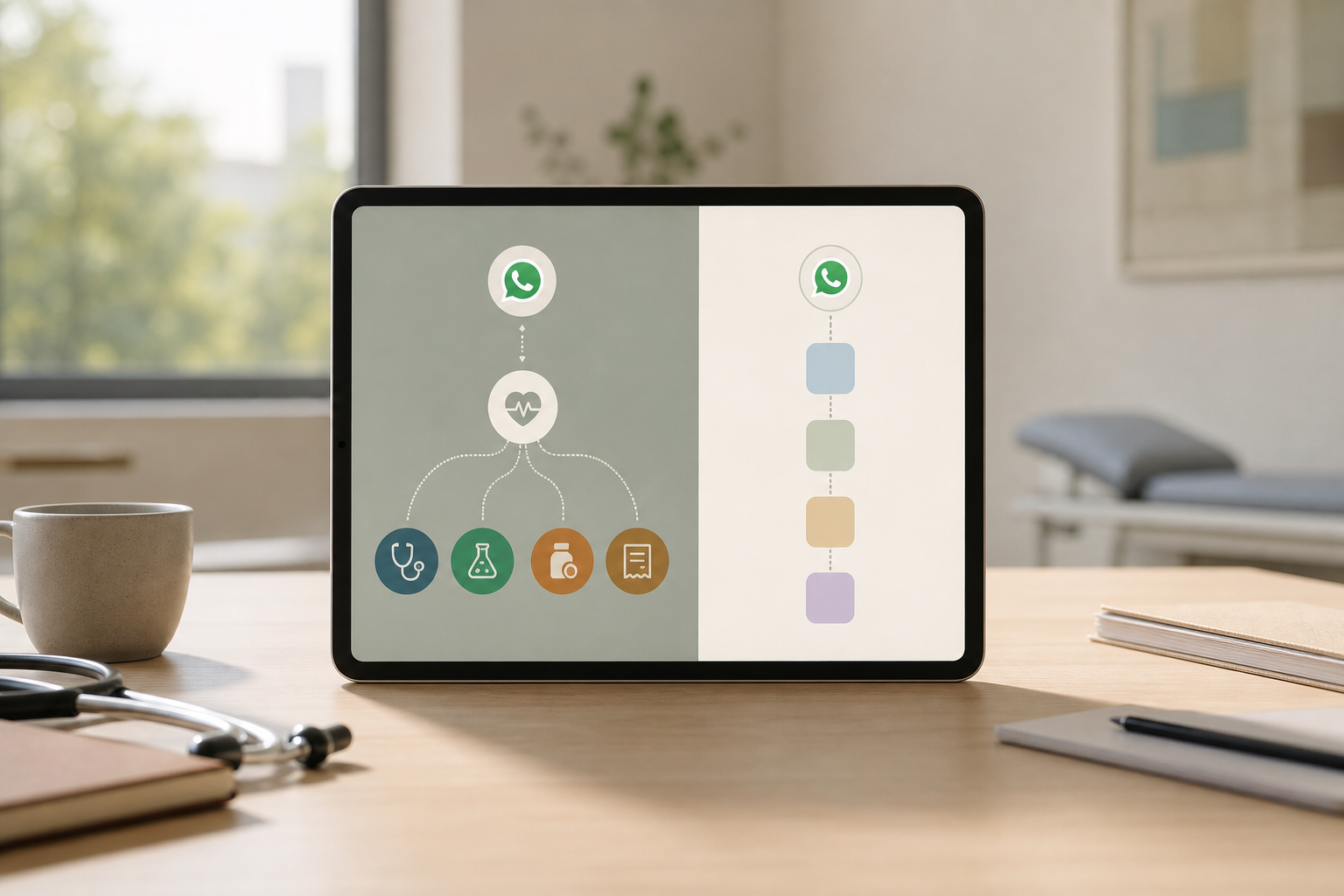
Below is a practical scorecard across seven dimensions that matter for 50–200 bed hospitals. The goal is clarity, not hype.
| Dimension | MedCore | Practo | Winner |
|---|---|---|---|
| WhatsApp message volume included | 10,000/mo included on Professional | Add-on; per-message charges common | MedCore |
| Automated follow-up workflows | AI Outbound Follow-up Agent (voice + WhatsApp) triggers from clinical events | Template/manual sends; less event-driven | MedCore |
| Language support | 8–10 Indian languages (triage + reminders) | 2–3 languages focus | MedCore |
| EHR integration depth | Single tenant-scoped EHR sharing state with billing, lab, pharmacy | Modular; separate tools often needed | MedCore |
| Patient marketplace and discovery | No external marketplace | Established patient search network | Practo |
| Ecosystem maturity and support | Newer; growing library | Larger community, more docs | Practo |
| Compliance | DLT, DPDP Act 2023, ABDM/ABHA linking | DLT; broader market norms | Tie |
MedCore includes WhatsApp reminders (DLT) with 10,000 messages/month on the Professional tier. That means you can plan 300–350 daily slots and still have room for lab alerts and follow-ups. Practo’s WhatsApp is usually an add-on, so volumes track your spend.
For automation, MedCore’s AI Outbound Follow-up Agent fires on discharge, critical lab deltas, or missed appointments. It can use voice and WhatsApp, record outcomes, and provide an audit trail. Practo supports templates and scheduled sends but relies more on manual triggers.
Language-wise, MedCore supports 8–10 Indian languages for both triage and reminders. This aligns with BKO signals like “Triage routing with symptom assessment in 10 Indian languages.” Practo’s multilingual support is narrower, which can add operational overhead in mixed-language regions.
On integration depth, MedCore’s single tenant-scoped EHR shares state across billing, lab, and pharmacy. That design lets reminders react to OPD tokens, lab release, pharmacy dispense, and invoice status without exports. Practo’s modular approach gives flexibility but adds glue-work to sync systems.
Marketplace, Support, and Compliance
For patient discovery, Practo is the clear winner. Its marketplace drives new patient acquisition and brand recognition that MedCore does not offer today.
Support maturity also tilts to Practo. A bigger community, more documentation, and broader peer references help administrators de-risk rollouts. MedCore is newer, even though its self-serve onboarding helps you go live in days.
For compliance, both meet DLT norms. MedCore also cites DPDP Act 2023 alignment and ABDM/ABHA linking, which boards ask about during 2026 audits. That said, both vendors operate within India’s regulatory context.
What the Scorecard Means for Daily Ops
- If no-shows and follow-up leakage are the main pain, MedCore’s event-driven agent and no-show scoring reduce manual chases.
- If new patient footfall is the target, Practo’s marketplace has real, sustainable reach that a newcomer cannot replace.
- If audits, consent, and history matter, MedCore’s named AI agents with one-click hand-off and a shared audit trail simplify reviews.
Also Read!
How to Set Up OPD Queue Management and Appointment Scheduling for Multi-Specialty Hospital Chains
Pricing Comparison: What Mid-Size Hospitals Actually Pay
Pricing clarity can save you months of back-and-forth. MedCore charges a flat ₹24,999/mo for mid-size hospitals. That includes WhatsApp messaging (10,000 messages/month), the branded patient app, AI agents, unified EHR, billing, lab, and pharmacy modules. There are no per-bed, per-user, or per-doctor fees, and the self-serve onboarding wizard avoids implementation consultancy costs. The Enterprise tier is custom and requires contacting sales.
Practo uses a per-doctor licensing model for practice management. Public plans cluster around ₹5,000–8,000 per doctor per month. For a 15-doctor mid-size hospital, that’s ₹75,000–120,000/month before WhatsApp/SMS add-ons. Hospital-tier pricing is less transparent and requires a sales conversation, so plan for variance. Also, WhatsApp/SMS packs are billed separately; budget for message growth if you scale follow-ups.
Worked Example
Worked example for a 100-bed hospital with 15 doctors and 150+ daily OPD patients in 2026:
| Item | MedCore (Professional) | Practo (Practice Mgmt) |
|---|---|---|
| Base monthly | ₹24,999 | ₹75,000–₹120,000 |
| 10,000/mo included | Add-on (billed separately) | |
| Estimated annual | ₹299,988 | ₹900,000–₹1,440,000 (+ messaging) |
Therefore, MedCore is easier to budget and is usually less expensive annually for engagement at mid-size hospitals. However, Practo’s marketplace value, new patient acquisition, can offset higher subscription costs for some hospitals. If you already depend on Practo for discovery, the higher outlay may still pay back.
**See Hospital Pricing.
For step-by-step clinics setup guidance, you can review: How to Set Up WhatsApp Patient Reminders for Your Small Clinic in India. The same design ideas scale to mid-size hospitals, event triggers, language checks, and clear audit logs.
Verdict: Which Platform Wins for WhatsApp Patient Engagement at Mid-Size Hospitals?
If your top goal is deeper automation across the care journey, MedCore is the stronger choice in 2026. Its AI-native design keeps WhatsApp reminders inside a unified EHR, so appointment nudges, lab result alerts, follow-up messages, and discharge instructions flow from clinical events without extra tools. The flat ₹24,999/mo pricing and included 10,000-message allotment make budget planning simple for administrators who dislike per-seat and per-message creep. In other words, a patient engagement app with whatsapp reminders works best when it lives where the data starts.
If you value brand-driven patient acquisition and an established ecosystem, Practo is the safer pick. The marketplace reach is real, the user community is large, and the appointment reminder system is mature. For hospitals that already rely on Practo for discovery, adding engagement layers on top of that stack can be pragmatic even if the total cost is higher.
Real-World Outcomes
Two real-world notes highlight the trade-off. First, an administrator said, “We replaced three tools with MedCore. Billing, pharmacy and lab now talk to each other without exports.”. Ravi Prasad, Administrator, Sunrise Clinic. Second, a medical director reported, “Our OPD wait time dropped from 40 minutes to 12.
The live token display alone was worth the switch.”. Dr. Meera Rao, Asha Hospital. These speak to integrated workflows and tangible time savings.
Quick Decision Guide:
- Choose MedCore if you need automation tied to clinical events, multi-language reminders, and flat costs that include 10,000 WhatsApp messages/month.
- Choose Practo if you need patient discovery at scale, a broad peer network, and you already invest in its marketplace.
- Consider MedCore Enterprise or a hybrid if you run 150+ OPD patients/day and want higher WhatsApp limits or custom integrations.
**Start in Days. Book a Demo →
Additionally, if you want background on clinics-scale decisions, see: Best Patient Engagement WhatsApp Reminders for Small Clinics in India, 2026.