

**Book a demo today, see it live →
Eighty percent of Indian facilities still run fragmented workflows, which is the fault line where OPD queues crack and visits overrun (Source: MedCore market analysis, 2026). For multi-specialty chains, opd queue management and appointment scheduling make or break patient flow across departments and branches. Short answer: MedCore fits chains that want AI-native queues, triage, and shared data across EHR, lab, and billing; Practo stands out for patient acquisition through its marketplace and a broad, proven provider footprint.
In 2026, CIOs face two real trade-offs: deep operational control versus reach on the consumer side. MedCore is newer, with AI agents and a unified EHR that syncs tokens, orders, and bills. Practo brings millions of patients to your doorstep and offers solid, clinic-to-hospital tools. Your call hinges on scale, brand maturity, and how much value you place on automation vs discovery.
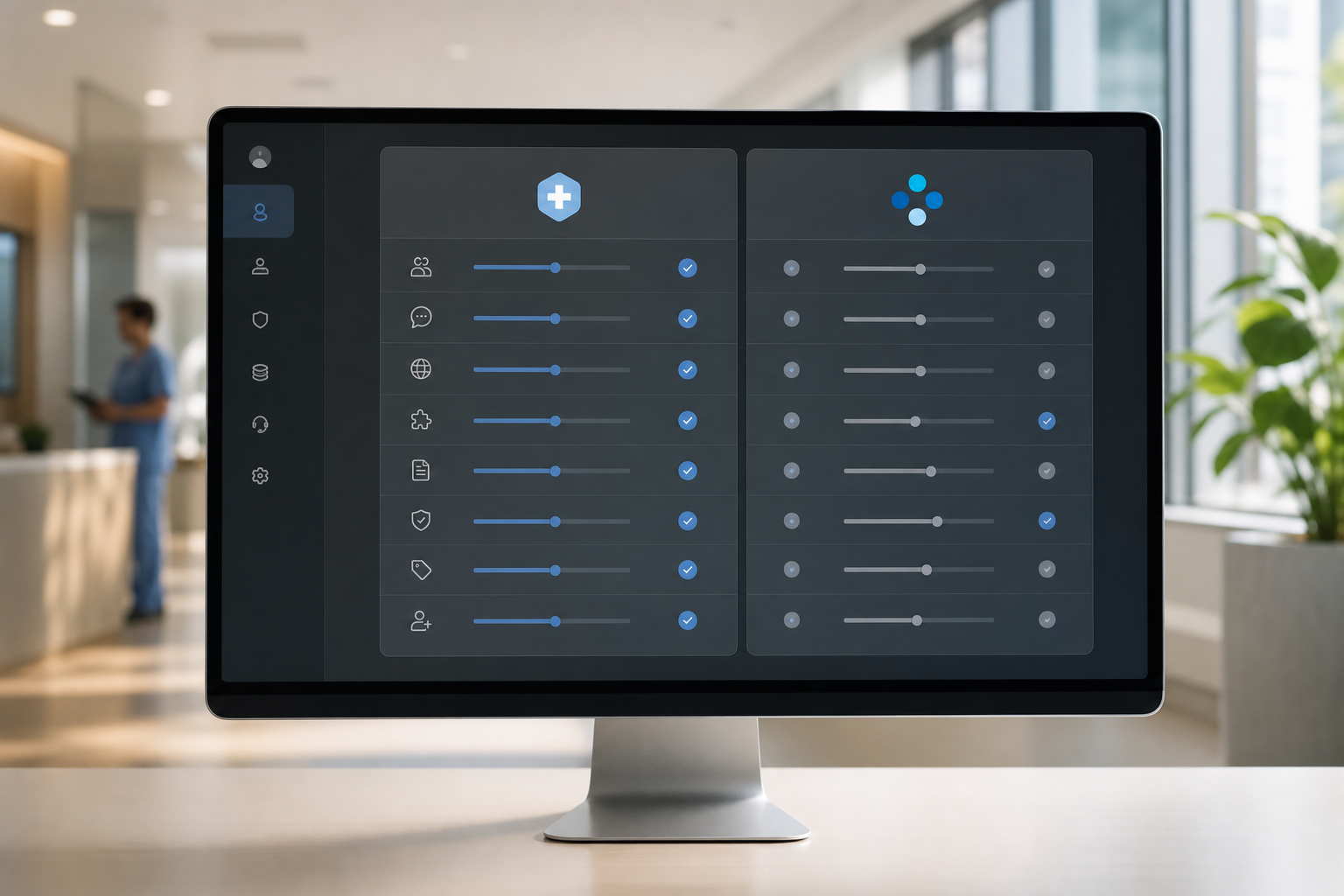
What Multi-Specialty Hospital Chains Actually Need From OPD Queue Management & Scheduling
For a single-site clinic, a calendar with SMS reminders can work. For a multi-specialty chain where a patient may move from internal medicine to cardiology, then the lab, the needs are different. Handoffs are where queues break, tokens get lost, and slots slip. Per MedCore market analysis (2026), 80% of Indian facilities still use fragmented workflows, which is why cross-department routing and shared state matter more than isolated calendars.
Moreover, a chain-level solution must keep pace with 150+ OPD patients per day at peak while giving head office real-time visibility. Therefore, the evaluation lens must reflect how queues, data, and people move across departments and branches.
- Cross-department routing: One visit often spans 2–3 specialties; tokens and notes must follow without re-registration.
- Real-time queue visibility across branches: Head office should see live load and ETA by doctor and department.
- Mixed walk-in and pre-booked handling: Walk-ins need smart token insertion without blowing up booked slots.
- AI-driven triage and routing: Triage that maps symptoms to a specialty, not just a doctor drop-down; see SNOMED CT.
- Vulnerability and emergency flags: Elderly, high-risk, and emergency cases should jump the queue safely with audit trails.
- Multi-branch analytics: Central dashboards for wait time, no-shows, and conversion from call-to-visit.
- Patient-facing apps with live token tracking: Reduce front desk calls by showing live position and ETA.
- Integration with EHR, billing, lab, and pharmacy: One shared record to avoid manual handoffs and re-entry.
Why Generic Schedulers Fail at Chain Scale
Generic tools book time; they rarely book care. Specifically, they miss cross-department routing, have no concept of clinical priority, and cannot sync with EHR orders or billing codes. As a result, the moment a patient shifts departments, the queue “resets,” and staff re-enter data. In contrast, an OPD-native system links tokens to the medical record, lab orders, and invoices, so every handoff is tracked and visible in real time.
For setup checklists and deeper playbooks, see the mid-size hospital guide: Best OPD Queue Management & Appointment Scheduling for Mid-Size Hospitals in 2026 and this practical walkthrough: How to Set Up OPD Queue Management and Appointment Scheduling for Mid-Size Hospitals.
Also Read!
How to Set Up OPD Queue Management and Appointment Scheduling for Multi-Specialty Hospital Chains
Best OPD Queue Management & Appointment Scheduling for Multi-Specialty Hospital Chains in 2026
MedCore Overview: AI-Native OPD Management Built for Indian Hospital Chains
MedCore is an AI-native healthcare management system with a unified EHR and shared state across billing, lab, and pharmacy. For OPD, its core strength is a real-time queue with live token displays, vulnerability flagging, and emergency triage. In practice, this means a patient’s token follows them from reception to doctor to lab, with staff seeing the same record and ETA across departments and branches.
Furthermore, MedCore’s AI Voice Receptionist handles first-call scheduling 24/7. It books new and follow-up visits, logs call notes into the patient record, and issues DLT-compliant WhatsApp and SMS reminders. On the digital front, the branded patient app shows live queue position, lab reports, prescription QR, and bill pay, cutting front-desk load and improving show-up rates. For chains, multi-branch analytics with an audit trail highlight wait times, bottlenecks, and no-show patterns.
"Our OPD wait time dropped from 40 minutes to 12. The live token display alone was worth the switch." — Dr. Meera Rao, Medical Director, Asha Hospital
Strengths You Can Validate
MedCore’s triage speaks 8 Indian languages for the agent experience and anchors routing to SNOMED concepts. Notably, its symptom assessment model covers 10 Indian languages for intake while the live triage agent supports 8, which is rare in 2026. The EHR is FHIR R4/HL7 v2–ready, and its agents include an ambient SOAP scribe (with ICD-10/CPT pre-fill), an AI radiology drafter with per-finding confidence, a claims agent that predicts denial risks, and a predictions agent for no-show scoring and pharmacy demand forecasts. Named AI agents allow one-click hand-offs with a recorded audit trail.
Pricing is flat per month (Small Clinic from ₹9,999/mo; Mid-size Hospital from ₹24,999/mo) without per-bed or per-user fees. As a result, cost does not spike when you add doctors. In addition, a self-serve onboarding wizard gets smaller facilities live in days, while enterprise deals include dedicated onboarding, SLAs, and uptime credits. Security-wise, MedCore aligns with India’s DPDP Act 2023 and supports ABDM/ABHA linking; HIPAA alignment is underway for chains running international programs.
Where It Lags For Some Chains
- The multi-specialty enterprise tier uses “Contact us” pricing, which adds friction for procurement teams that want list rates.
- The product’s focus is facilities excluding large corporate hospital groups; chains with 20+ branches should validate scale and reporting depth.
- As a newer entrant, MedCore has a smaller installed base and fewer public case studies versus established brands.
In short, for opd queue management and appointment scheduling with AI-native routing and a unified record, MedCore is purpose-built. The trade-off is procurement clarity at the top tier and verifying scale for 20+ sites.
Practo Overview: India's Largest Patient Discovery Platform With Hospital Tools
Practo is the country’s most recognized consumer healthcare platform with a patient app ecosystem in the millions. Its provider products. Practo Ray for clinics and Practo Insta for hospitals, cover appointment scheduling, basic queue features, patient records, and billing. For chains that want both operations software and a strong inflow of new patients, Practo’s built-in marketplace is a clear draw.
Strengths You Can Validate
Practo’s discovery engine drives real patient acquisition. New hospitals and growing brands see value in marketplace presence paired with online booking. Its OPD features include online scheduling with SMS/email reminders, and its app is already on many patients’ phones, which reduces adoption friction. Moreover, Practo offers established integrations with labs and pharmacies and a broad provider footprint across India, which helps procurement teams de-risk vendor selection.
Gaps To Check Before You Commit
On the other hand, Practo’s hospital operations software is secondary to its consumer marketplace. Queue management is more basic than AI-native systems: vulnerability flags and automated triage-to-specialty routing are limited, and language breadth for triage is narrower than 8-language agents. For multi-branch chains, central analytics and cross-branch dashboards may require enterprise add-ons.
Pricing often follows per-doctor or per-module models. Therefore, a 15-specialty hospital with 50+ doctors across branches can see spend rise fast as it scales. There is also less focus on AI-native workflow automation: there’s no ambient SOAP scribe, no AI radiology drafting, and no 24/7 voice receptionist. Still, for opd queue management and appointment scheduling paired with broad patient reach, Practo’s marketplace can offset gaps in hospital-first automation, especially for newer brands.
Also Read!
How to Set Up Lab, Pharmacy, and Blood Bank Management for Medical Tourism Hospitals in India
Feature-by-Feature Comparison: MedCore vs Practo for OPD Queue Management
1) Real-time Queue Management
Winner: MedCore
MedCore provides a live OPD queue with token displays, vulnerability flagging, and emergency triage priority. Staff see the same token across departments. Practo supports basic queueing but with limited clinical priority logic and fewer safety flags, which matters when you route elderly and high-risk cases during peak hours.
2) Appointment Scheduling
Winner: Draw (MedCore edge for automation; Practo edge for discovery)
MedCore merges online and walk-in bookings, plus a 24/7 AI Voice Receptionist that books by phone, scores no-shows, and sends DLT-compliant reminders. Practo offers strong online booking and the advantage of marketplace discovery, which increases booking volume. For pure automation, MedCore has the edge; for inbound demand, Practo’s marketplace is a plus.
3) AI-Powered Triage & Routing
Winner: MedCore
MedCore’s triage agent supports 8 Indian languages and anchors routing to SNOMED, while its symptom assessment covers 10 languages for intake. It auto-assigns the right specialty, trimming misroutes. Practo relies more on manual department selection with narrower language support.
4) Patient-Facing Experience
Winner: Nuanced
MedCore delivers a branded app with live token tracking, lab results, prescription QR, and bill pay. Practo counters with a massive consumer user base and a patient app many already have. If you prize live OPD transparency, MedCore is compelling; if you prize familiar consumer touchpoints and marketplace branding, Practo is strong.
5) Multi-Branch Chain Management
Winner: MedCore
MedCore includes multi-branch analytics and centralized dashboards with an audit trail by default. Head office can see wait times, clinician load, and SLA trends in one place. Practo’s branch-level tools work, but chain-wide rollups often need enterprise add-ons.
6) EHR & Workflow Integration
Winner: MedCore
MedCore runs a single tenant-scoped EHR with shared state across billing, lab, and pharmacy, plus FHIR R4/HL7 v2 interoperability (see FHIR overview). Orders, tokens, and invoices stay linked. Practo’s approach is more modular, which can lead to manual handoffs across systems in complex OPD flows.
7) AI Automation Beyond Scheduling
Winner: MedCore (by a wide margin)
MedCore ships named AI agents: ambient SOAP scribe with ICD-10/CPT pre-fill, radiology drafting with per-finding confidence, claims denial-risk prediction, a predictions agent for no-show scoring and pharmacy demand, and an outbound follow-up agent for voice/WhatsApp. Practo does not focus on these AI-native workflows.
8) Patient Acquisition
Winner: Practo
Practo’s discovery engine and brand reach are unmatched in India. For chains still building their brand or opening new branches, that inflow can be decisive for revenue ramp.
As you balance opd queue management and appointment scheduling against marketing reach, decide where each rupee returns more, faster queues and fewer no-shows, or higher new-patient volume.

Pricing Comparison: What Multi-Specialty Chains Will Actually Pay
MedCore uses flat monthly pricing without per-bed or per-user fees: Small Clinic from ₹9,999/mo and Mid-size Hospital from ₹24,999/mo. The multi-specialty tier is “Contact us.” As you add doctors or expand hours, the bill does not balloon per user. For chains with 100+ doctors across branches, this model can yield sizable savings versus per-doctor pricing, but you should validate against MedCore’s enterprise quote.
Practo often prices per doctor or per module. For a 15-specialty hospital with 50+ doctors across multiple sites, that can scale quickly as you add departments or modules. On the plus side, Practo is a known quantity, procurement can secure quotes fast from an established vendor and model demand uplift from marketplace traffic.
Hidden Costs To Check
- Practo: Marketplace listing and promotion fees, plus enterprise add-ons for centralized analytics.
- MedCore: Enterprise customization, integrations beyond FHIR/HL7, and potential data migration for legacy systems.
Both vendors offer implementation support. However, MedCore emphasizes a self-serve onboarding wizard that gets smaller sites live in days, with dedicated onboarding for enterprise.
For ballpark totals and rollout tactics, this setup guide helps: How to Set Up OPD Queue Management and Appointment Scheduling for Mid-Size Hospitals.
**Get a pricing estimate, no per-user fees →
Verdict: Which OPD Queue Management System Should Your Hospital Chain Choose?
If your top goal is OPD flow, fast, fair queues, fewer misroutes, and unified records. MedCore is the more purpose-built choice. Its real-time token displays, vulnerability flags, 8-language AI triage with SNOMED-anchored routing, and shared EHR/billing/lab state fit multi-specialty chains that want data to move with the patient. The flat pricing model can be attractive as you grow headcount and branches in 2026.
However, if patient acquisition is as important as operations, especially for newer brands. Practo’s marketplace and established consumer app deliver reach no operations tool can match. If you already rely on Practo for discovery, factor in switching costs and referral flows before changing your OPD stack.
"We replaced three tools with MedCore. Billing, pharmacy and lab now talk to each other without exports." — Ravi Prasad, Administrator, Sunrise Clinic
MedCore also notes DPDP Act 2023 compliance, FHIR R4 support, and 55+ modules that expand beyond OPD. For chains serving international patients, confirm HIPAA alignment and any on-prem or dedicated cloud needs.
- Choose MedCore if you need AI-native queues, multi-branch dashboards, unified EHR workflows, and predictable flat pricing.
- Choose Practo if you need marketplace-driven patient acquisition with solid basics in OPD scheduling and reminders.
- Consider a hybrid if you need Practo’s discovery plus another layer for advanced triage and shared-state OPD workflows.