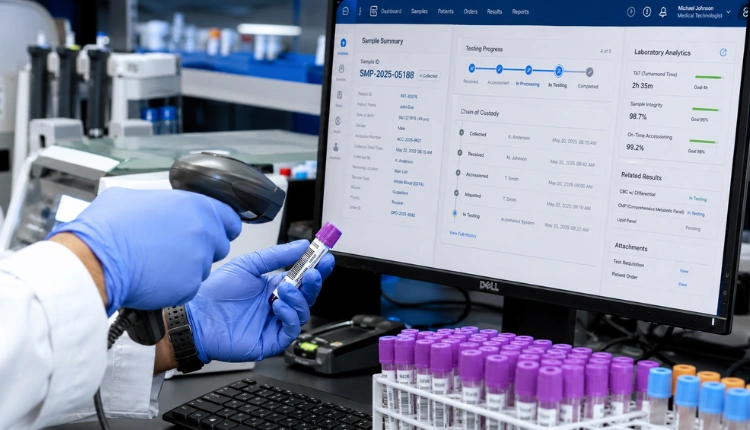

Eighty percent of facilities run on fragmented workflows. The fix is to get clear on provider flow: the ordered steps a patient takes across triage, consults, tests, billing, and discharge, and to remove the bottlenecks you can see. This complete guide provider flow healthcare shows you how to cut waits and fatigue with a simple map-then-act method built for 2026.
In practice, you want a single view of the journey. First, register or check in. Then triage. Next, consult, order labs or imaging, dispense meds, collect payment, and discharge with clear instructions. If you run OPD (Outpatient Department) days that see 150+ OPD patients per day, small delays compound into long queues.
As a benchmark, one MedCore customer reported: “Our OPD wait time dropped from 40 minutes to 12.” That change came from visible queues and tight handoffs, not more staff. In this guide, you’ll learn the same process, the tools to support it, and a month-one plan you can start now.
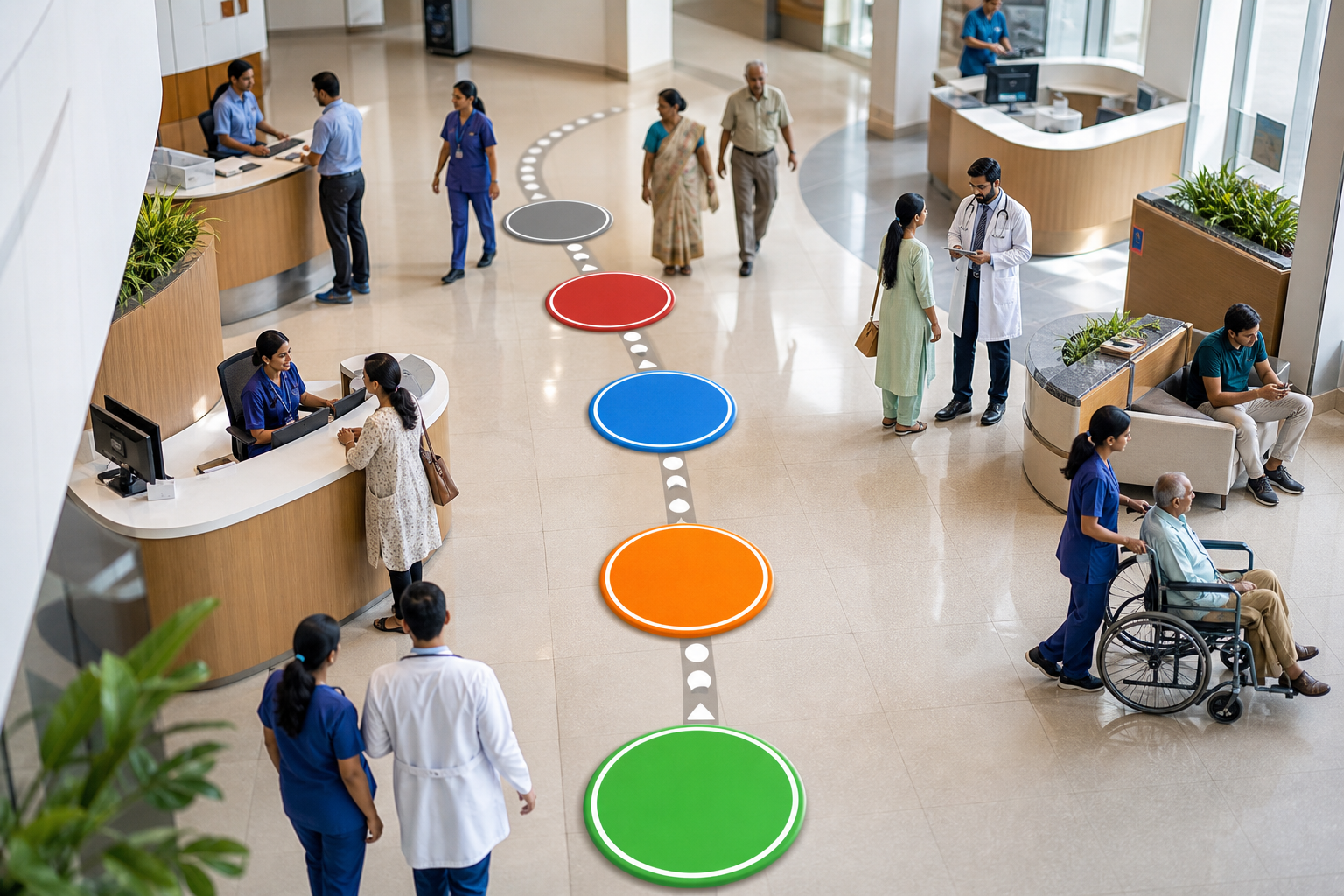
What Is Provider Flow and Why Does It Matter?
Provider flow is the sequence of steps a patient moves through in a care encounter. In OPD, that flow runs from registration and triage to consult, orders, results, pharmacy, billing, and discharge. In the emergency unit, it’s faster and risk-weighted, but the principle is the same: one journey, clear handoffs, no rework.
For the triage-to-discharge path, standard rules help. For instance, use a structured triage scale and make queues visible to staff and patients. For a quick primer on triage tiers and history, see the Triage (Wikipedia). Then, lock in how results return, who closes the loop, and when discharge education happens.
Why does this matter? Because poor flow shows up as wait times, burnout, and revenue loss. If staff don’t see the queue, you get idle rooms and crowded corridors at the same time. If billing sits at the end without pre-checks, you get denials and write-offs. And if notes lag, you get callbacks and complaints.
MedCore’s customer data points to the gains a small team can make: OPD wait time dropped from 40 minutes to 12 with live tokens, and daily throughput at 150+ OPD patients per day stays feasible with clean handoffs. Yet 80% of facilities run on fragmented workflows, paper slips, separate apps, and side spreadsheets, which hides queues and doubles documentation (Source: MedCore Stats).
“Our OPD wait time dropped from 40 minutes to 12. The live token display alone was worth the switch.” — Dr. Meera Rao, Medical Director, Asha Hospital
If you need a fast foundation for your plan, bookmark this complete guide provider flow healthcare. Use it with your nursing lead and billing head in one shared review, then pick one fix to land this month.
OPD Flow, Triage-to-Discharge: A Quick Map
- Check-in and basic vitals
- Triage with risk flags
- Doctor consult and orders
- Sample collection or imaging
- Results to EHR and patient
- Pharmacy and billing
- Discharge education and follow-up
7 Steps to Improve Provider Flow in Your Facility
Fix flow by making work visible, standard, and less manual. You’ll notice each step targets waste: invisible queues, variable triage, manual slotting, heavy documentation, and back-loaded billing. This section grounds the seven steps in tools and daily practice. We’ll also point to where AI helps today without adding clicks.
First, read the steps all the way through. Second, pick the biggest blocker. Third, set a target (e.g., average wait time cut, consults per hour, or discharge lag). Finally, run a 30-day pilot before you scale.
1) Map the current patient journey
Shadow three patients end-to-end. Time each step. Count handoffs.
Capture where staff wait or re-enter data. Keep it to one page. A camera roll of signage and desks helps your team see the actual path.
2) Add real-time queue visibility
Use a live OPD queue with token displays and vulnerability flagging. Put screens at reception and nurse stations. On the clinician screen, show next patients with flags for age, risk, or language so the right next step is clear.
3) Standardize triage protocols
Adopt a fixed triage script. Build in vitals, pain, red flags, and routing rules. For emergencies, a triage nurse should be able to route to the right bay in one tap. Standard notes cut handoff time and errors.
4) Automate appointment scheduling
Offer online and walk-in slots in one pool. Auto-confirm on WhatsApp with DLT-compliant SMS as a fallback. Overbook carefully based on historical no-shows. Keep the doctor’s view in one calendar.
5) Reduce documentation burden
Use an ambient SOAP scribe with ICD-10 and CPT code pre-filling. Doctors still review and sign. Voice-first entry keeps eyes on the patient. Templates for common complaints save extra minutes each hour.
6) Make billing faster at point of care
Use GST-aware billing with Razorpay and UPI integration. Pre-verify insurance, pre-fill line items from orders, and show a single bill to the patient. If you can collect at the pharmacy handoff, cash flow improves and rework drops.
7) Measure and iterate with data
Set one weekly dashboard: median wait, tokens cleared per hour, documentation lag, and discharge-to-bill time. Meet for 15 minutes each week to spot drift and assign one change. Then, repeat.

As you work these steps, tie them back to your goals for 2026. If your aim is lower waits, prioritize Steps 2–3. If your aim is doctor time saved, focus on Step 5. This complete guide provider flow healthcare gives you a stable order of moves; your targets decide where to start.
Also Read!
The Complete Guide to Epic Certification: Paths, Costs, and Career Impact
5 Common Mistakes That Break Provider Flow
- First, running on siloed systems that don’t share data. If your billing, pharmacy, and lab tools can’t see the same patient context, you get re-entry, misbilled tests, and calls back to patients. One clinic replaced three tools, billing, pharmacy and lab now talk to each other, and cut front-desk ping-pong.
- Second, manual triage without standardization. If each nurse asks different questions, routing varies by shift. That spreads wait times, allows risk misses, and frustrates doctors. A fixed script plus visible queues evens load.
- Third, no patient self-service tools. Without a patient app or live tokens, you field constant “How long?” calls. A simple mobile view with live tokens and lab reports frees front-desk time and calms lobbies.
- Fourth, ignoring no-show patterns. Without no-show scoring and pharmacy demand forecasts, you book like every day is the same. That inflates no-show gaps and stockouts. Let a light-weight model suggest holds and short-call lists.
- Fifth, treating flow as a one-time fix. Flow drifts. New doctors, new hours, and seasonality all change the math. You need a small weekly review and a single owner to keep gains.
Moreover, a gap in tools hits smaller hospitals hardest. In India, 75% of the market is underserved by existing tech (Source: MedCore Stats). If that’s you, start with basics: a shared EHR and a live queue. Then add patient-facing pieces as wins stack up. For help thinking through the stack, see this overview of healthcare provider solutions and how they fit with OPD days.
To keep the language clear, teach the map to new hires with one image and two rules: write once in the EHR, and make the queue visible. With that frame, and this complete guide provider flow healthcare, your audits get much faster.
Quick Check: Are You Making Any of These?
- Separate logins for billing, lab, and pharmacy
- Triage varies by shift or unit
- No live token or patient app
- No-show rates tracked but unused in booking
- No weekly flow review or owner
Tools and Systems That Improve Provider Flow
You can improve flow with three tool layers: make queues visible, reduce typing, and keep billing in sync with orders. Queue management displays, EHR-integrated scheduling, AI triage chatbots, and ambient scribes each attack a common delay. The right fit depends on your size and staff.
For OPD, start with a real-time queue and token display tied to your EHR. Add a patient app for live tokens and lab results. Then, add an ambient SOAP scribe that suggests ICD-10 and CPT codes for faster sign-off. On the finance side, GST-aware invoicing with Razorpay and UPI integration helps collect at handoff without chasing payments.
Tools like MedCore are one option if you want an AI-native system with integrated workflows and a unified EHR. It includes a self-serve onboarding wizard, triage routing with symptom assessment in 10 Indian languages, and 45 modules built with input from doctors, nurses, and administrators. On privacy and security, it aligns to DPDP Act 2023 and supports FHIR R4 and HL7 v2 for data exchange.
Low-Cost Starts
If your clinic is small, you can still get gains. As a low-cost start, print a visible queue board and use a shared spreadsheet for tokens. For triage scripts, standardize a one-page form. As you grow, consider open-source EHRs for basic records and add an ambient scribe later.
For a broader view on digital building blocks, scan this overview of healthcare AI solutions and digital healthcare solutions that link scheduling, queues, and notes. In 2026, it’s realistic to have a 24/7 voice receptionist for first calls, with safe hand-offs and an audit trail. This complete guide provider flow healthcare frames where that tech slots into your day.
What Good Tooling Looks Like
- One EHR view shared by billing, lab, and pharmacy
- Live tokens on TVs and in the patient app
- Voice-first notes with doctor sign-off
- GST-aware billing with UPI/Razorpay at handoff
Also Read!
What Does MRN Mean? A Complete Guide to Medical Record Numbers
What to Do Next: Building Your Provider Flow Improvement Plan
Start with an audit you can do in one day. Pick a typical clinic day. Shadow one patient from check-in to discharge. Time each step.
Note every re-entry of the same data. Snap photos of desks, signs, and handoff points. Then, write the journey on one page with times by step.
Next, rank bottlenecks. Is the longest delay before triage? Outside the doctor’s door?
Diagnose the Cause
At billing? For each, ask: is it a visibility issue (no live queue), a variation issue (no standard triage), or a load issue (not enough slots)? Note the cause, not just the symptom.
Then, pick one improvement to pilot this month. Examples: turn on a real-time OPD queue with token displays and vulnerability flagging; add an ambient SOAP scribe for the busiest OPD room; or switch pharmacy handoff to GST-aware billing with Razorpay and UPI integration. Keep scope to one unit and one metric.
Set a target and a review rhythm. Track average wait time, notes sign-off lag, or discharge-to-bill time. Meet weekly for 15 minutes.
Scale or Adjust
If the change helps, expand it to one more unit. If not, adjust the play. For more context on stack choices and change impact, read this primer on healthcare analytics solutions.
Finally, write a one-page plan for quarter two 2026 with three lines: the metric, the move, and the owner. Share it with your nursing lead, your OPD lead, and finance. This complete guide provider flow healthcare is your reference during those check-ins.

**See Pricing In Minutes →
Key Takeaways
Provider flow is the patient’s path from triage to discharge. If you see the path clearly, you can fix waits, save staff time, and protect revenue. The aim is not to buy more tools by default; it’s to make the queue visible, trim variation, and cut rework. You can start with a one-day audit, a 30-day pilot, and a weekly 15-minute review.
- Visible queues beat guesswork. Live tokens and on-screen next-patient lists reduce idle rooms and long lines.
- Standard triage reduces risk. A fixed script plus routing rules keeps load even and flags risk faster.
- Less typing saves hours. An ambient SOAP scribe with ICD-10 and CPT code pre-filling keeps focus on patients.
- Billing at handoff helps cash flow. GST-aware billing with UPI/Razorpay collects on time and trims denials.
- Keep at it. Flow drifts, so hold a short weekly review and adjust one thing at a time.
On trust and safety, pick systems that meet DPDP Act 2023, support FHIR R4 and HL7 v2, and keep India data residency. That protects patients and your team. To show results you can cite, anchor changes to clear metrics like average wait time and documentation lag. With those basics and this complete guide provider flow healthcare, you can hold gains through 2026.
What to Do This Week
Day 1: Shadow a patient end-to-end and time each step. Take photos of every handoff point. Draw the one-page map with step times.
Day 2: Meet with your OPD lead and triage nurse. Pick the single biggest bottleneck. Choose one pilot: live queue with tokens, a standard triage script, or ambient notes in the busiest room.
Day 3: Set one target metric and a weekly 15-minute review. Write names next to changes.
Launch and Review
Days 4–5: Launch the change. Train in 30 minutes at a whiteboard. Measure from the first hour.
Week 2: Hold the first review. Keep what works. Fix what does not. Decide whether to extend the pilot to a second room or to refine the current one.
By Friday, you’ll have a working pilot and a clearer path to scale. Keep this complete guide provider flow healthcare handy, and iterate with your data and team feedback.