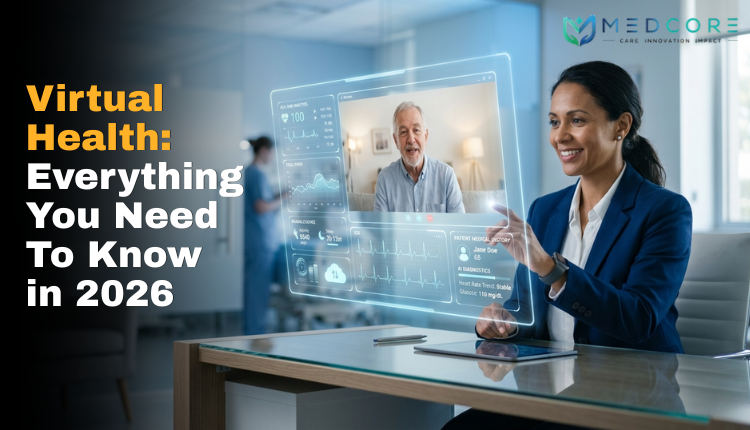
Healthcare has quietly undergone one of the biggest transformations of the decade.
Not long ago, getting medical advice almost always meant taking time off work, sitting in a waiting room, and hoping your appointment stayed on schedule. Today, a patient can consult a doctor through a smartphone, receive prescriptions digitally, monitor chronic conditions from home, and even get AI-powered health guidance between appointments.
This isn’t simply a technological upgrade; it’s a complete shift in how healthcare is delivered.
At the center of this transformation is virtual health.
Driven by better internet connectivity, artificial intelligence, wearable devices, and growing patient expectations, virtual healthcare has become an essential part of modern medicine rather than an emergency alternative. Hospitals are investing heavily in digital care models, healthcare providers are embracing remote consultations, and patients are discovering that quality care no longer depends entirely on physical visits.
But what exactly is virtual health? How does it differ from telehealth? Which services does it include? And why are healthcare organizations across the globe making it a long-term priority?
Let’s explore everything you need to know.
What Is Virtual Health?
Virtual health refers to the delivery of healthcare services through digital technologies instead of relying solely on in-person interactions.
It combines communication tools, connected medical devices, healthcare software, artificial intelligence, and cloud-based platforms to help patients receive medical care wherever they are.
Rather than replacing traditional healthcare, virtual health extends it beyond hospitals and clinics.
Today, virtual health includes:
- Video consultations with doctors
- Remote patient monitoring
- Digital prescriptions
- Secure messaging between patients and providers
- Health tracking applications
- Mental health counseling
- Chronic disease management
- Online follow-up appointments
- Digital rehabilitation programs
- Patient education portals
The goal isn’t simply convenience.
Virtual health aims to make healthcare more accessible, proactive, continuous, and personalized throughout a patient’s healthcare journey.
Why Virtual Health Is Growing Faster Than Ever
Several major trends have accelerated the adoption of virtual healthcare worldwide.
1. Patients Expect Healthcare to Be More Convenient
Consumers now book flights, order groceries, attend meetings, and complete banking transactions from their phones.
Healthcare is naturally moving in the same direction.
Instead of waiting weeks for a routine consultation, patients increasingly prefer speaking with healthcare professionals online whenever appropriate.
This saves time, reduces travel, and improves access to care.
2. Healthcare Systems Are Under Pressure
Hospitals everywhere face similar challenges:
- Growing patient populations
- Rising healthcare costs
- Physician shortages
- Longer waiting times
- Increased chronic disease cases
Virtual health helps reduce these pressures by allowing providers to manage many consultations remotely while reserving physical appointments for cases that truly require them.
The result is a more efficient healthcare system without compromising patient care.
3. Technology Has Become More Reliable
A decade ago, poor internet connections and limited digital infrastructure restricted remote healthcare.
Today, improvements in:
- High-speed internet
- Cloud computing
- Electronic Health Records (EHR)
- Artificial Intelligence
- Mobile healthcare apps
- Wearable devices
have made digital healthcare both practical and dependable.
Patients can now securely connect with providers from almost anywhere.
Virtual Health vs Telehealth: What’s the Difference?
Many people use these terms interchangeably, but they’re not exactly the same.
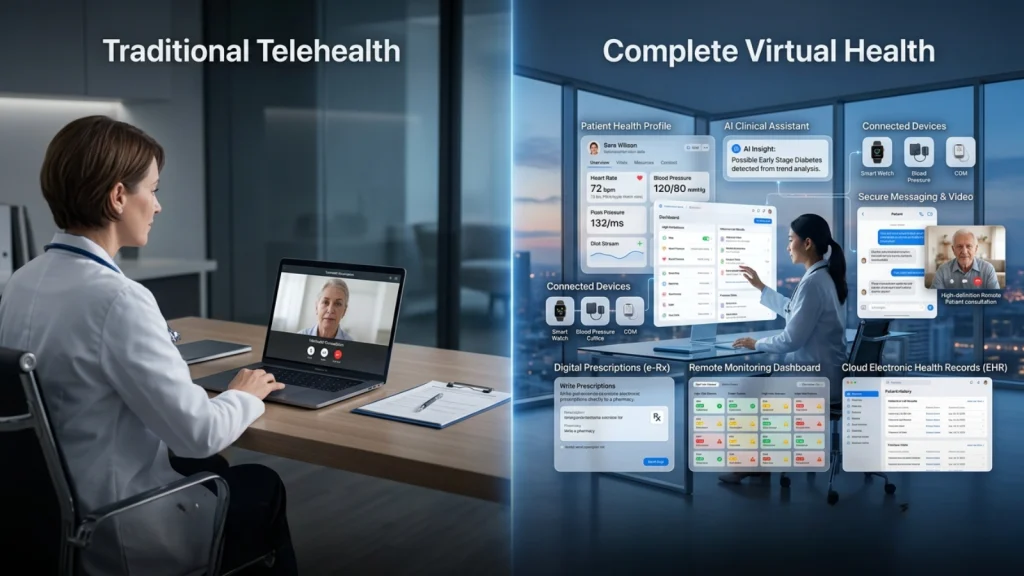
Telehealth focuses primarily on delivering clinical services remotely.
Examples include:
- Video consultations
- Phone appointments
- Specialist referrals
- Remote diagnosis
- Digital review of lab reports
Virtual health, however, is much broader.
It includes telehealth while also covering non-clinical healthcare experiences such as:
- Appointment scheduling
- Medication reminders
- Patient education
- Health coaching
- Wellness tracking
- Online symptom assessments
- Continuous monitoring through connected devices
Think of telehealth as one important component inside the much larger virtual health ecosystem.
The Most Common Virtual Health Care Services
Healthcare providers now offer a surprisingly wide range of digital services.
Let’s explore the most important ones.
1. Virtual Doctor Consultations
Perhaps the most familiar example.
Patients can connect with physicians using secure video platforms to discuss symptoms, receive treatment advice, review test results, or obtain prescriptions.
Virtual consultations work especially well for:
- Cold and flu symptoms
- Skin conditions
- Allergies
- Follow-up appointments
- Medication management
- Mental health consultations
Not every medical issue requires an in-person examination, making virtual appointments an efficient solution for both patients and clinicians.
2. Remote Patient Monitoring
Patients with chronic illnesses no longer need to visit hospitals every week.
Instead, connected devices can continuously collect health information, including:
- Blood pressure
- Blood glucose
- Oxygen saturation
- Heart rate
- Weight
- ECG readings
Healthcare providers receive this data in real time, allowing them to detect warning signs before complications become serious.
For conditions like diabetes, hypertension, asthma, and heart disease, remote monitoring has transformed long-term care.
3. Mental Health Services
One of the fastest-growing areas of virtual healthcare is mental wellness.
Patients can now access:
- Online therapy
- Psychiatric consultations
- Cognitive Behavioral Therapy (CBT)
- Group counseling
- Digital mental health programs
For many individuals, virtual therapy removes barriers like travel, social anxiety, or limited local access to specialists.
4. Digital Prescription Services
Many healthcare providers now send prescriptions directly to pharmacies after virtual consultations.
Patients avoid unnecessary trips simply to collect paperwork.
Prescription renewals, medication tracking, and refill reminders have also become easier through integrated healthcare platforms.
5. Health Education Platforms
Virtual healthcare isn’t only about treatment.
Many organizations provide educational portals where patients can:
- Learn about medical conditions
- Access recovery instructions
- Watch rehabilitation videos
- Review treatment plans
- Track healthcare progress
Better-informed patients often become more active participants in their own care.
How a Virtual Health Assistant Is Changing Patient Care
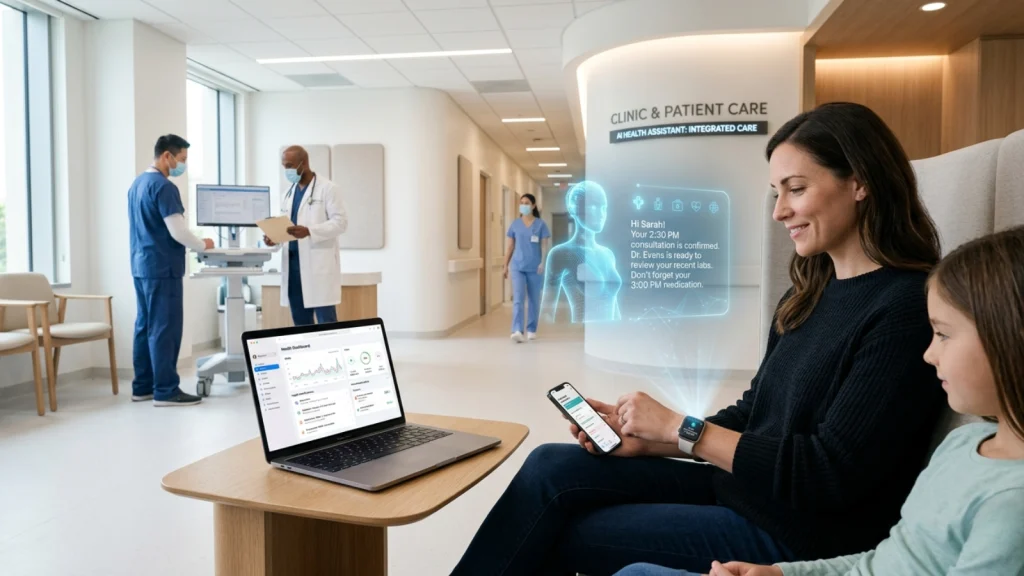
Artificial intelligence is introducing an entirely new layer of healthcare support.
A virtual health assistant helps patients navigate their healthcare journey using conversational technology and automation.
Instead of replacing doctors, these assistants handle routine tasks that improve efficiency.
They can:
- Schedule appointments
- Answer frequently asked health questions
- Send medication reminders
- Help patients prepare for consultations
- Guide symptom assessments
- Recommend appropriate care pathways
- Provide post-treatment instructions
Because they’re available around the clock, patients receive immediate guidance even outside clinic hours.
Healthcare providers also benefit by reducing administrative workloads and allowing medical staff to focus on higher-value patient care.
What Does a Virtual Health Care Assistant Do?
While the terms are often used interchangeably, a virtual health care assistant usually supports both patients and healthcare professionals throughout daily clinical operations.
These assistants may help with:
For Patients
- Appointment scheduling
- Medical record access
- Prescription reminders
- Follow-up notifications
- Insurance information
- Care navigation
For Healthcare Providers
- Administrative support
- Patient documentation
- Appointment management
- Workflow coordination
- Data organization
- Communication management
By automating repetitive processes, healthcare teams gain more time to focus on diagnosis, treatment, and patient relationships.
Key Benefits of Virtual Health
Virtual healthcare continues to gain momentum because it creates meaningful advantages for everyone involved.
1. Better Access to Healthcare
People living in rural communities often struggle to reach specialists.
Virtual care removes geographical barriers by connecting patients with healthcare professionals regardless of location.
2. Greater Convenience
Patients no longer spend hours commuting, waiting in clinics, or rearranging work schedules for routine appointments.
Healthcare becomes far easier to fit into everyday life.
3. Faster Medical Attention
Minor health concerns can often be addressed much sooner through virtual consultations.
Earlier intervention frequently leads to better outcomes.
4. Improved Chronic Disease Management
Continuous monitoring allows doctors to detect problems before they become emergencies.
Instead of reacting to illness, providers can prevent complications earlier.
5. Lower Healthcare Costs
Virtual appointments often reduce:
- Transportation expenses
- Hospital readmissions
- Emergency room visits
- Administrative overhead
Healthcare systems can allocate resources more efficiently while improving patient care.
Challenges That Still Need Attention
Despite its rapid growth, virtual healthcare isn’t without limitations.
1. Digital Access
Not everyone has reliable internet or modern devices.
Expanding digital infrastructure remains essential for equitable healthcare access.
2. Privacy and Security
Medical information is highly sensitive.
Healthcare organizations must invest in:
- End-to-end encryption
- Secure patient authentication
- Regulatory compliance
- Data protection frameworks
Patient trust depends on keeping healthcare information secure.
3. Not Every Condition Can Be Treated Virtually
Certain situations still require physical examinations.
These include:
- Surgical procedures
- Emergency care
- Imaging tests
- Laboratory diagnostics
- Physical injuries
- Complex neurological evaluations
Virtual care complements traditional healthcare—it doesn’t replace it entirely.
Industries Benefiting From Virtual Health Care Services
The expansion of virtual health care services is transforming multiple medical specialties.
Some of the biggest beneficiaries include:
- Primary Care
Routine consultations, prescription renewals, and preventive health visits have become much easier online.
- Mental Healthcare
Digital therapy platforms have significantly improved access to licensed professionals.
- Cardiology
Remote heart monitoring enables earlier intervention for cardiovascular conditions.
- Diabetes Care
Connected glucose monitors help clinicians adjust treatments based on real-time patient data.
- Pediatrics
Parents can consult pediatricians without unnecessary clinic visits for common childhood concerns.
- Elderly Care
Older adults receive regular monitoring while remaining comfortably at home, reducing hospital admissions and improving quality of life.
Before wrapping up, it’s worth noting that while virtual health is transforming the patient experience, delivering it successfully requires the right technology behind the scenes. Healthcare providers need more than video consultations; they need a connected platform that streamlines patient management, clinical documentation, billing, communication, and follow-up care. This is where modern healthcare operating systems like MedCore play an important role, helping hospitals and clinics deliver seamless virtual healthcare while reducing operational complexity.
Why MedCore Is Built for Modern Virtual Healthcare
Designed specifically for Indian healthcare providers, MedCore is an AI-native hospital operating system that brings patient care, hospital operations, and AI-powered automation together on one platform. From appointment booking and clinical documentation to billing and post-care engagement, it helps healthcare organizations deliver smarter and more connected virtual healthcare experiences.
AI-Powered Patient Engagement
Keep patients connected with a 24/7 AI voice receptionist, automated follow-ups, appointment reminders, and a dedicated mobile app for live queues, prescriptions, and reports.
Smart Clinical Assistance
Reduce administrative work using AI-powered SOAP documentation, multilingual symptom triage, radiology drafting, and intelligent patient chart search.
Complete Hospital Management
Manage EHRs, OPD/IPD workflows, billing, laboratory, pharmacy, HR, payroll, insurance claims, and more from a single integrated platform.
Built for Indian Healthcare
Stay compliant with ABDM, ABHA, DPDP, FHIR R4, and HL7 standards while supporting multiple Indian languages and international patient billing.
AI-Driven Automation
Automate repetitive hospital workflows with AI agents for voice reception, patient follow-ups, claims drafting, predictive analytics, and international patient coordination.
Simplifying the Future of Virtual Healthcare
As virtual health becomes central to modern healthcare, hospitals need technology that goes beyond online consultations. MedCore brings AI, automation, and hospital management together to simplify operations, improve patient experiences, and help healthcare teams focus on delivering quality care.
Ready to Modernize Your Hospital?
Whether you manage a clinic, specialty center, or multi-specialty hospital, MedCore provides the tools to streamline operations and deliver seamless virtual healthcare.
Book a demo today and see how MedCore can help your healthcare facility operate smarter, faster, and more efficiently.
The Future of Virtual Health in 2026 and Beyond

Virtual healthcare is moving well beyond video appointments.
Several emerging technologies are shaping its future.
Artificial Intelligence
AI is becoming increasingly capable of assisting with:
- Early disease detection
- Clinical decision support
- Medical imaging analysis
- Patient triage
- Personalized treatment recommendations
Wearable Technology
Smartwatches and medical wearables now collect continuous health information that healthcare providers can use to monitor patients remotely.
Future devices will likely measure even more clinical indicators with greater accuracy.
Predictive Healthcare
Instead of treating illness after symptoms appear, healthcare systems are increasingly using predictive analytics to identify risks before they become serious.
This shift supports preventive care rather than reactive treatment.
Connected Healthcare Ecosystems
Future healthcare platforms will integrate:
- Electronic health records
- Pharmacies
- Laboratories
- Insurance providers
- Specialists
- Hospitals
- Home monitoring devices
Patients will experience a far more connected and seamless healthcare journey.
Final Thoughts
Healthcare is no longer limited by clinic walls.
Virtual health has evolved into a comprehensive ecosystem that combines technology, medical expertise, artificial intelligence, and connected care to improve patient outcomes while making healthcare more accessible than ever before.
From routine consultations and chronic disease monitoring to AI-powered support through a virtual health assistant, digital healthcare is reshaping the patient experience at every stage. As virtual health care services continue to expand, healthcare providers are finding smarter ways to deliver timely, personalized care without sacrificing quality.
The future isn’t about replacing doctors with technology. It’s about giving healthcare professionals better tools, empowering patients with greater access, and creating a system where care is available whenever and wherever it’s needed.
As we move through 2026, virtual health is no longer a glimpse of what’s next—it’s becoming the standard for modern healthcare.
Frequently Asked Questions (FAQs)
1. What is virtual health?
Virtual health is the delivery of healthcare services through digital technologies such as video consultations, remote patient monitoring, mobile health apps, and online patient portals. It allows patients to receive medical care without always visiting a healthcare facility in person.
2. What is the difference between virtual health and telehealth?
Telehealth mainly focuses on remote clinical services like virtual doctor consultations, while virtual health is a broader concept that also includes patient education, digital prescriptions, remote monitoring, appointment scheduling, and other technology-enabled healthcare services.
3. What does a virtual health assistant do?
A virtual health assistant uses AI and automation to help patients with tasks such as scheduling appointments, sending medication reminders, answering common health-related questions, and providing guidance before and after consultations.
4. What are virtual health care services?
Virtual health care services include video consultations, remote patient monitoring, online prescription management, mental health counseling, chronic disease management, digital health education, and follow-up care delivered through secure digital platforms.
5. How does a virtual health care assistant benefit healthcare providers?
A virtual health care assistant helps healthcare providers automate administrative tasks like appointment management, patient communication, documentation, and follow-up reminders. This reduces manual workload and allows medical staff to spend more time on patient care.