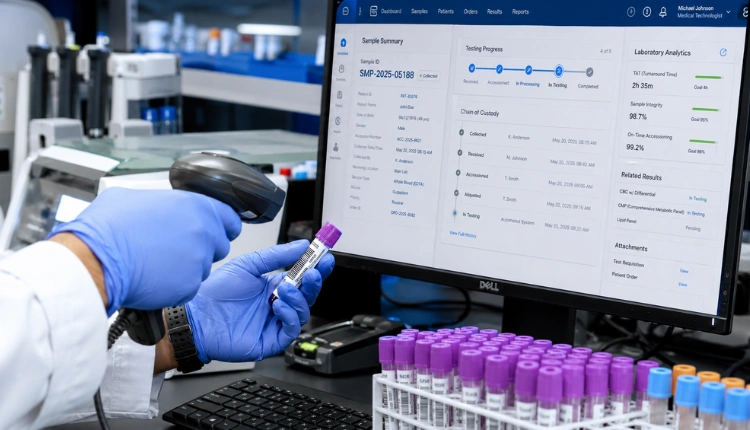

One wrong number can send a lab result to the wrong patient. An MRN is a unique identifier a hospital or clinic assigns to you to pull up the right chart, fast. This mrn complete guide medical gives you a plain-English answer, a step‑by‑step view of how MRNs work, and simple ways to find and protect yours in 2026.
Direct answer: A Medical Record Number (MRN) is a facility-specific ID that ties every note, lab, image, prescription, and bill to one patient in that organization’s electronic health record. It is not your insurance ID, Aadhar, ABHA, or Social Security number. It is the key the front desk and clinicians use to find your record without confusion.
As of 2026, most hospitals in India and worldwide store records in an electronic health record (EHR), which uses MRNs to organize care. For more background on digital charts, see this overview of electronic health records. If you want a refresher on terms before we dive in, here’s an easy primer on MRN meaning explained.

What Is a Medical Record Number (MRN)?
An MRN is a unique code that a single healthcare facility creates for you the first time you register there. Think of it like your library card number, but for your medical chart at that specific hospital or clinic. Every time you return to the same facility, they use that MRN to pull up your record in seconds.
Crucially, an MRN is not a national ID. It is created and owned by the hospital’s system. Your MRN links to clinical details in a structured EHR: vitals such as blood pressure and heart rate, allergies like penicillin or peanuts, your current problem list (for example, Type 2 diabetes), medications, procedures, and imaging. Because those key fields are stored in standard formats, clinicians can sort, search, and act on them during care.
Moreover, an MRN is separate from your insurance member ID and from government identities. In India, your ABHA (Ayushman Bharat Health Account) number under the ABDM (Ayushman Bharat Digital Mission) is a national health identity used to consent to share records across systems. Your MRN, by contrast, is local to one hospital.
Many modern systems can link your MRN to your ABHA with your consent so your records can move when you do. To learn more about ABHA at the policy level, see India’s official ABDM site at abdm.gov.in.
A quick medical guide distinction
- MRN: Local hospital ID that points to your chart at that facility.
- ABHA: National health ID to link records across providers (with consent).
- Insurance ID: Policy/member number used for billing and claims.
- SSN/Aadhaar: Government identity numbers; not used as MRNs.
"We replaced three tools with MedCore. Billing, pharmacy and lab now talk to each other without exports." — Ravi Prasad, Administrator, Sunrise Clinic
How MRNs Are Assigned and Used — Step by Step
When you first visit a hospital, the front desk registers you in the patient system. At that moment, the system creates a new MRN for you in its database. From then on, that code becomes your handle in the hospital’s single tenant-scoped EHR, where billing, lab, and pharmacy share one source of truth.
Specifically, a modern EHR will map your MRN to FHIR R4 resources for patients, encounters, observations, and medication requests. If the hospital still receives data from legacy devices or labs, HL7 v2 inbound messages tie into the same chart. That way, your lab results, prescriptions, radiology reports, and invoices all line up under one ID without manual matching.
Here’s what the full flow looks like.
- Registration — Front desk or an online form captures your name, date of birth, phone, and ID proof. The system checks for existing records to avoid duplicates.
- MRN generation — The hospital’s software issues a new MRN. It is unique within that hospital and never reused.
- EHR linking — Your MRN becomes the key to all modules: OPD visits, admissions, vitals, allergies, problem list, diagnostics, e-prescriptions, and billing.
- Repeat visits — You come back next week or next year. Staff enter your MRN (or scan your patient card/QR) to open the same record instantly.
- Care coordination — Clinicians, labs, pharmacy, and billing teams all use that same MRN to find orders, verify identity, and post results without mix-ups.
 , and follow-up visit reusing the same MRN; labeled steps 1-5)
Technical note for medical systems
- EHR structure: single tenant-scoped with shared state across billing, lab, and pharmacy.
- Interoperability: FHIR R4 objects for clinical data; HL7 v2 inbound for legacy feeds.
- Safety layer: demographic deduping and alerts when two records look alike.
For a standards explainer in plain language, see FHIR basics on Wikipedia.
Also Read!
What Does MRN Mean? A Complete Guide to Medical Record Numbers
Common Misconceptions About MRNs
MRNs are exacting by design, yet small misunderstandings can cause big problems. Let’s clear those up with real consequences you can picture.
First, an MRN is not universal. If you visit Hospital A and then Hospital B, you will have two different MRNs. As a result, sending reports from A to B requires either ABHA-based sharing with your consent or a secure transfer. Expecting one MRN to “work everywhere” leads to delays and repeated tests.
Second, an MRN is not your insurance number. Mixing them up can cause claim denials. For example, if a bill gets submitted under your MRN instead of your insurer’s member ID, the claim bounces back. That adds work and can delay discharge.

Third, duplicate MRNs at the same facility are dangerous. If staff accidentally create two MRNs for the same person, results can land in the wrong chart. A potassium alert in one chart might never reach the clinician. That’s a safety risk with real impact.
Fourth, MRNs do not expire when you switch providers inside the same hospital network. Your old visits remain tied to that MRN forever, which helps your care team see trends over time. However, if you move to a new facility, that MRN won’t follow you.
What errors look like in the real world
- Wrong-patient result posting due to similar names and dates of birth.
- Insurance claim rework when MRN is entered in place of policy ID.
- Missed allergy alerts if data is split over duplicate MRNs.
- Delayed referrals if teams expect a “universal MRN” that does not exist.
How Hospitals Manage MRNs — Systems and Tools
Hospitals use different setups to create and manage MRNs. Each path has trade-offs in cost, speed, and safety. Here’s a grounded look so you can assess your own context.
In legacy paper-based flows, staff assign numbers by hand or from a paper ledger. While simple, this approach creates duplicate risks, makes searches slow, and blocks links across labs, pharmacy, and billing. Merges and corrections take time, and audit trails are thin.
From manual to integrated systems
Standalone registration software is a step up. It issues MRNs and holds basic demographics, but it may not share a live state with labs, pharmacy, or billing. Therefore, staff re-enter data or export/import CSVs. That’s where typos creep in and orders go missing.
Integrated platforms unify MRN management across modules. Tools like MedCore bring a single tenant-scoped EHR with shared state across billing, lab, and pharmacy, and support FHIR R4 with HL7 v2 inbound. With 45 modules built with input from doctors, nurses, and administrators, these systems also support ABDM/ABHA linking with patient consent. That gives you one chart per patient, fewer duplicates, and faster retrieval.
"Our OPD wait time dropped from 40 minutes to 12. The live token display alone was worth the switch." — Dr. Meera Rao, Medical Director, Asha Hospital
Furthermore, platforms that serve 150+ OPD patients per day and ship 55+ modules tend to bake in guardrails: duplicate checks, merge tools, and MRN search from any module. That means safer results posting and fewer billing errors.
Medical guide snapshot: what to ask IT
- Does the system auto-check for duplicate MRNs at registration?
- Is the EHR shared across lab, pharmacy, and billing in real time?
- Can we link MRNs to ABHA with consent and a clear audit trail?
Also Read!
How to Find and Protect Your MRN
Your MRN is useful at check-in and when calling support. It also links to your medical history, so treat it with care.
Here’s how you can find it fast and keep it safe
-
First, check your discharge summary. The MRN usually appears near the top, close to your name and date of birth.
-
Second, open your patient portal or app. Most hospitals now show your MRN in your profile along with visit history.
-
Third, look at your hospital ID card or any lab report header. You will often see MRN printed next to your visit number.
-
Fourth, store it securely. Do not post it on social media or send it in public chats.
If your hospital offers a branded patient app with a live queue, lab reports, prescription QR, and bill pay, use that instead of email to view and share documents. That reduces risk and speeds up check-ins.
- For privacy in India, the Digital Personal Data Protection Act, 2023 sets rules for how providers handle your data. You can read the ministry site here: Ministry of Electronics and IT. As a patient, you can ask how your hospital protects identifiers and whether your records live in India data centers.
Quick steps to keep your medical ID safe
- Save a photo of your MRN on your phone’s secure notes or password manager.
- Use the official patient app or portal for reports and invoices.
- Bring your MRN to every visit to speed registration and avoid duplicates.
- If you spot a mismatch in your name or date of birth, report it at once.
- For a deeper primer, see this clear guide on MRN basics and examples.

Key Takeaways
-
An MRN is your hospital’s unique ID for you. It connects every note, lab, script, and bill inside that facility’s EHR. It is not your insurance number, Aadhaar, SSN, or ABHA. As of 2026, MRNs remain local to each organization.
-
MRNs power care coordination. When labs, pharmacy, and billing share a single tenant-scoped EHR, staff don’t retype data, results post to the right chart, and billing flows match the right visit. That reduces errors and speeds care.
-
The mrn complete guide medical core idea: one patient, one ID per facility. When you return, the front desk can find your full chart in seconds. If you go elsewhere, a new MRN starts a new chart unless you consent to share via ABHA.
-
Mistakes carry real costs. Duplicate MRNs can split a record and hide allergy alerts. Using an MRN in place of an insurance ID causes denials and rework. Expect delays if you assume an MRN works at every hospital.
-
You can help keep it right. Bring your MRN to visits, use the official patient app, and flag name or date-of-birth errors early. Under the DPDP Act 2023, you have rights to ask how your identifiers are stored and shared.
What to Do This Week
Start with a five-minute audit. Find your MRN in your latest discharge summary or patient app, and store it in a secure note. Then, check that your name and date of birth are correct on file. If your hospital offers a patient app with lab reports and a prescription QR, install it and sign in. This simple setup makes your next visit smoother and cuts check-in time.
Next, ask your provider two questions: How do you prevent duplicate MRNs at registration, and can you link my records to my ABHA with my consent? These small steps improve safety and help your care team see your full history. In 2026, hospitals that support FHIR R4 and HL7 v2 inbound can usually answer “yes” and show you the audit trail.
Finally, if you help run a clinic or hospital, review how your MRN process connects to billing, lab, and pharmacy. Tools that are DPDP Act 2023 compliant and maintain India data residency reduce risk while improving retrieval speed. If you’re exploring a unified option, you can compare plans and go live fast.
See pricing and plans →