Eight in ten facilities still juggle OPD, billing, labs, pharmacy, and records across disconnected tools (Source: MedCore market analysis). If you need to choose hospital facility management software in 2026, start with a simple rule: pick the platform that fixes your current bottlenecks first, then support growth. The short answer is this: map your end-to-end care journey, insist on FHIR/HL7 data flows, verify DPDP/ABDM, and run a one-department pilot before you sign anything.
For context, most mid-sized hospitals I advise run busy OPDs, 150+ patients on a heavy day, with queues that spill into hallways and lab-to-pharmacy handoffs that rely on calls or WhatsApp. In that chaos, software earns its keep only if it shortens OPD waits, reduces rework at billing, and keeps the EHR as the single source of truth.
Moreover, your 2026 decision has a long tail. Pricing compounds with growth, onboarding affects morale, and data standards decide whether your new system talks to imaging, LIS, and payers. Therefore, plan selection like a clinical protocol: write it down, check it twice, and test on real patients and staff before rollout.
What Hospital Facility Management Software Actually Needs to Do
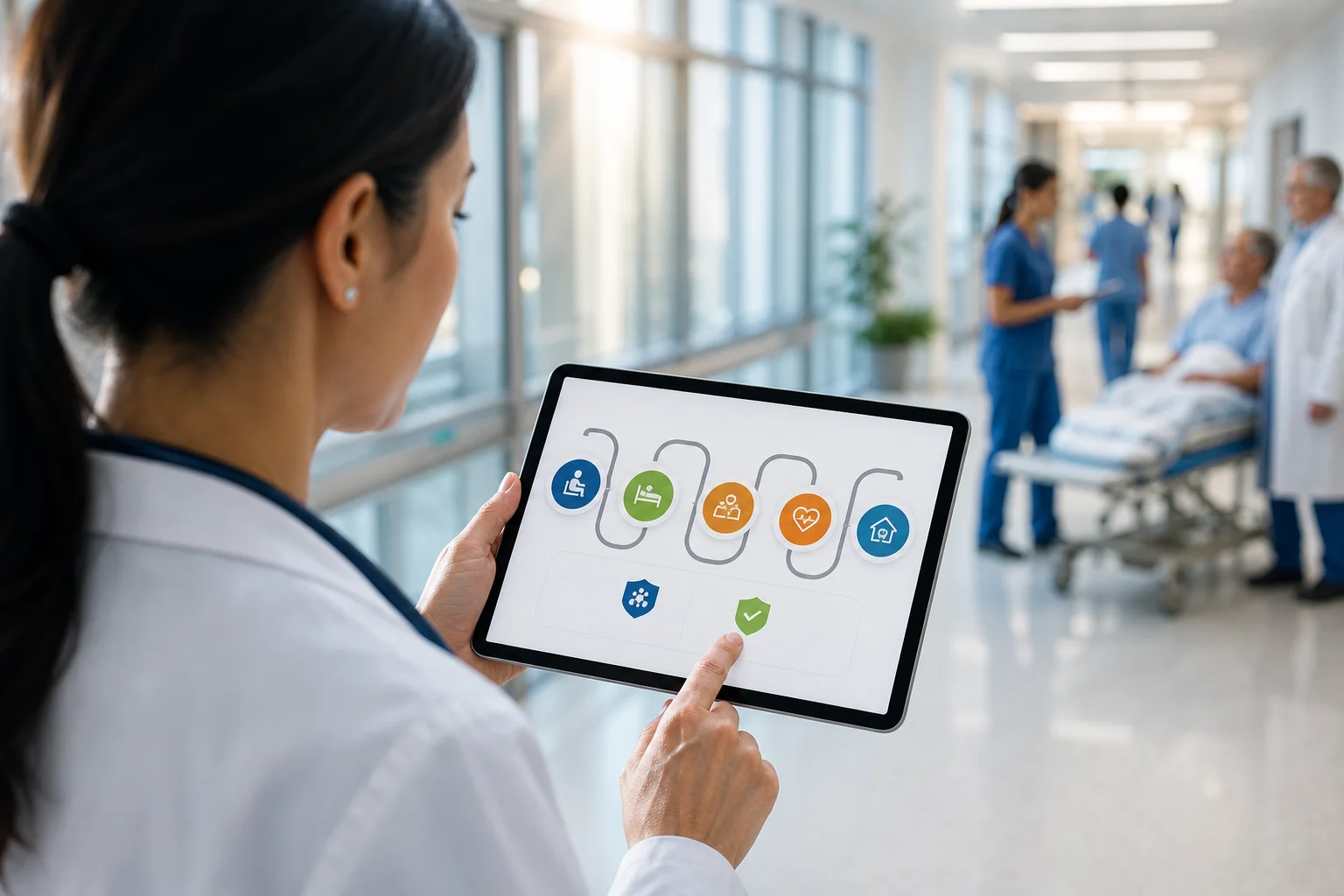
Start with the core problem: fragmented workflows. In most facilities I see, OPD registration sits in one app, billing in another, and the lab uses spreadsheets. As a result, the same patient details are typed three times, and results reach the clinician late. Per MedCore data, 80% of facilities run on fragmented workflows, and 75% of the market is underserved by existing tech. That gap is why you need a healthcare-specific platform, not a generic facility tool.
Generic facility software handles rooms, assets, and maintenance tickets. Healthcare platforms must do that plus clinical-grade tasks like vitals capture, allergy checks, controlled substances, discharge notes, and claims. In addition, they must keep the EHR as the record of care while feeding billing, labs, and pharmacy in near real time. Otherwise, you build new silos with nicer screens.
Ground yourself in five pillars that tie to daily work:
- Clinical workflows: EHR that supports OPD notes, ICD-10 codes, orders, OT scheduling, and ward census—all in one patient chart.
- Billing and revenue: GST-aware invoices, insurance/TPA pre-auth, and claim drafting tied to the visit and orders.
- Patient engagement: live OPD tokens, WhatsApp reminders (DLT), branded mobile app with reports and bills.
- Compliance: DPDP Act 2023 controls, ABDM/ABHA linking, India data residency, and auditable access.
- Analytics: multi-branch dashboards, no-show risk, pharmacy demand, and audit trails.
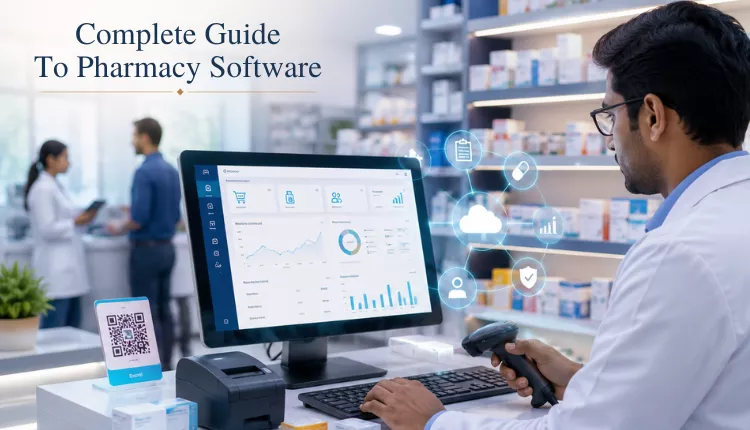
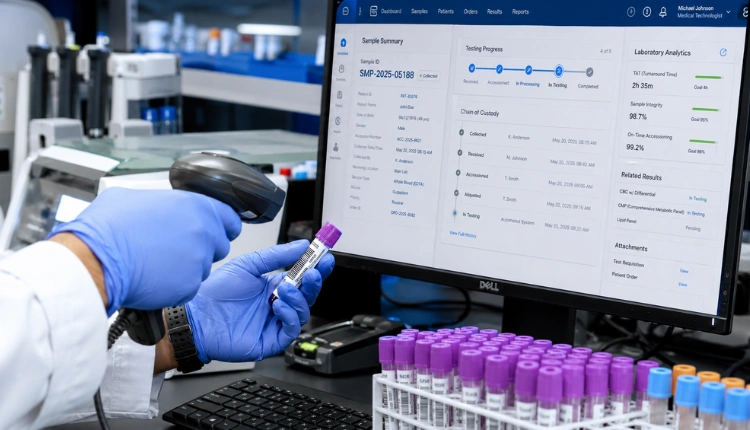
Now, test those pillars against real scenarios. At OPD, you want live token displays and triage flags that reduce wait anxiety and speed consults. In the lab-to-pharmacy handoff, you want delta alerts and e-prescriptions with QR so the counter dispenses the right drug without a call-back. For billing, your invoice must auto-pull services from the EHR, not rely on manual item entry.
Finally, check breadth. Mature platforms draw on frontline input. For example, tools that built 45 modules with doctors, nurses, and admins tend to reflect real shift work, handoffs, night admits, and discharge rush hours, rather than idealized flows.
Clinical vs. Generic: A Quick Litmus Test
- Does the EHR write once, then share to labs, pharmacy, and billing?
- Can OPD, IPD, and OT share one patient timeline?
- Are DPDP and ABDM native settings, not add-ons?
A Step-by-Step Framework for Evaluating Hospital Software
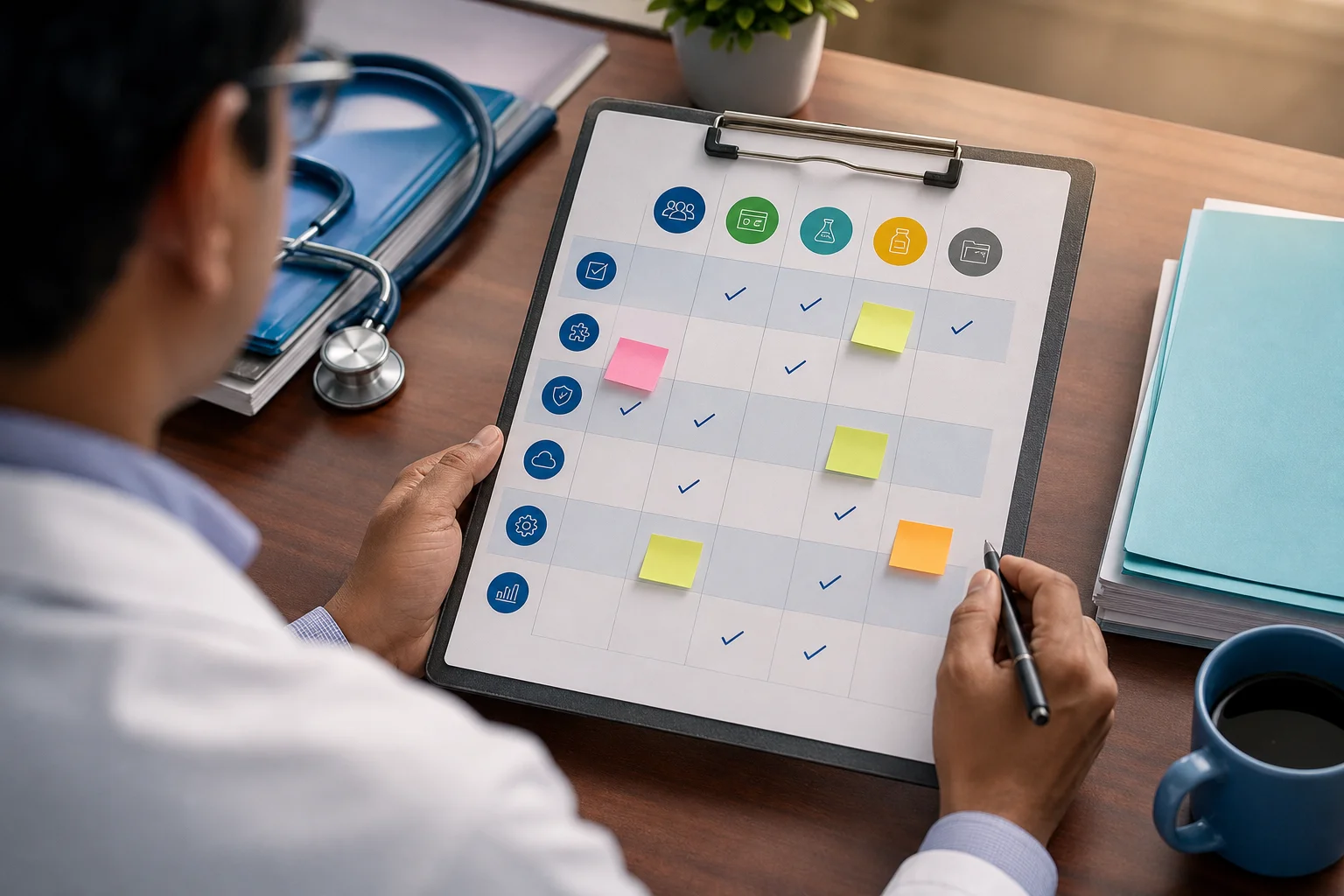
To choose hospital facility management software with confidence, run a structured, seven-step review. Keep it on paper. Share it with your matron, front desk, and billing lead. Then hold vendors to it.
-
Audit current workflows and pain points
List the last 10 days’ issues by department. For OPD, measure average wait from registration to consult. For labs, track time from order to report. For pharmacy, count corrections due to illegible scripts. For billing, list claim denials. -
Map must-have vs nice-to-have modules
Mark must-haves: EHR with ICD-10 and vitals; OPD queue tokens; billing with GST; pharmacy dispense; labs with delta flags; discharge summaries. Nice-to-haves: patient mobile app, AI triage, radiology drafting, ambulance dispatch. Write non-negotiables in bold. -
Check interoperability standards
Insist on FHIR R4 and HL7 v2 support for core resources, patients, encounters, orders, observations, imaging, and claims. If your radiology or LIS speaks HL7 v2 only, ask the vendor to show a live interface. For background, see FHIR on Wikipedia. -
Evaluate pricing models
Compare per-bed, per-user, and flat per-month pricing. Per-bed and per-user models look low at 30 beds, then spike at 75. Flat per-month pricing stays predictable as you add doctors, counters, or weekend camps. Model 3-year TCO including SMS/WhatsApp and payment fees. For deeper finance questions, bookmark this revenue cycle management software guide.
-
Test onboarding speed and training needs
Ask for a self-serve onboarding wizard and measure time to first OPD token, first e-prescription, and first invoice. Good teams go live in days, not months. Sit your billing clerk and a new nurse at the keyboard. If they need a manual to print a discharge summary, the UI is not intuitive. -
Verify regulatory compliance
Confirm DPDP Act 2023 controls, ABDM/ABHA linking, India data residency, DLT-compliant SMS, and role-based access. Request a demo of consent capture and access logs. If you need ABHA info, use the official ABDM ABHA overview. -
Run a pilot with one department
Pick OPD or labs. Set a 30-day goal: reduce OPD waits by 25% or cut lab report turnaround by 20 minutes. Define success metrics up front. Then, hold a weekly stand-up with clinicians and admins to adjust.
What Good Looks Like in 2026
- FHIR R4 and HL7 v2 connectors ready on day one
- DPDP and ABDM/ABHA as native settings, not paid extras
- Self-serve onboarding wizard; live transactions within days
- Flat per-month pricing that does not penalize growth
**Get transparent pricing, no per-bed fees →
Also Read!
How to Choose Revenue Cycle Management Software for Your Healthcare Facility
How to Set Up OPD Queue Management and Appointment Scheduling for Multi-Specialty Hospital Chains
5 Costly Mistakes Hospitals Make When Selecting Management Software
You do not have to learn these the hard way. Use these five traps and fixes to stress-test every vendor before you sign. Spread the questions across OPD, labs, pharmacy, billing, and records to keep it real.
-
Choosing by feature count, not workflow fit
A demo shows “55+ modules,” but your OPD still types vitals twice. Fix: ask to register a walk-in, move the token, write notes, order labs, and bill, all in one uninterrupted screen share. -
Ignoring per-bed/per-user pricing traps
You start at 40 beds and add 10 users. Costs jump 35% mid-year. Fix: demand flat per-month pricing and write a growth clause into the order. -
Skipping interoperability checks
Your LIS cannot ingest orders; staff retype everything. Fix: require a working HL7 v2 ORU demo and a FHIR R4 Observation push during the trial. -
Underestimating staff training time
A billing clerk needs 6 clicks to add GST and mark insurance. Fix: see it done live with GST-aware billing, Razorpay and UPI integration, and a claim draft from the same visit. -
Not verifying Indian compliance upfront
No DPDP safeguards and no ABHA link means delays and risk. Fix: ask for a consent flow, breach response, and ABHA search/attach on a test patient.
A Single Source of Truth Prevents Rework
- Ask whether the system runs a single tenant-scoped EHR with shared state across billing, lab, and pharmacy.
- If the EHR is split from billing, you will keep exporting CSVs and fixing mismatched totals.
Tools and Platforms Worth Evaluating
Your shortlist should span three categories: EHR-first platforms, billing-first platforms, and unified systems that treat the EHR as the single source of truth. Legacy HMS vendors bring breadth, cloud-native tools bring speed, and AI-integrated newcomers bring automation for front desk, clinical notes, and claims.
Tools like MedCore are AI-native with integrated workflows and a unified EHR. In practice, that means named AI agents with one-click hand-off and an audit trail for tasks like triage, SOAP scribing, and claim drafting. In addition, an AI Voice Receptionist operating 24/7 can answer calls, book visits, and route urgent cases, handy for OPD surges and night shifts.
On the other hand, open-source HMS options can work for tech-forward teams that want to host on-prem and build HL7 bridges. Enterprise suites suit multi-site networks that need deep ERP ties. However, insist that any option still proves OPD queue speed, lab-to-pharmacy handoffs, and claim drafting during a demo.
How to Run Fair Demos
- Prepare three identical patient journeys and ask each vendor to run them live.
- Score data flow, clicks, and time at each handoff.
- Include a denial-prone insurance case to test claims logic.
- Cap each demo at 45 minutes and record it.
For revenue details that do not fit in a product demo, keep this RCM selection guide at hand. It helps you compare claim submission, denial prediction, and settlement tracking apart from the EHR view.
What to Do Next: Your 7-Day Evaluation Plan
Decisions stall without a clock. Put your plan on a wall and move. The goal this week is not to sign a contract. It is to pick one pilot department, one vendor, and a go-live date.
Day 1–2: Document pain with staff input
Walk the floor. Time OPD waits at three points: registration to triage, triage to consult, consult to bill. Ask labs how many results arrive after consults end. Note pharmacy corrections. Capture 10 issues per unit.
Day 3: Build a weighted scorecard
Weight must-haves at 60% and nice-to-haves at 40%. Add FHIR/HL7, DPDP/ABDM, and pricing model as gate checks. Mark “intuitive UI” as a 10-point item judged by nurses and billing clerks.
On Days 4–5: Request structured demos
Send each vendor the same three patient journeys: walk-in OPD with labs, elective surgery with pre-auth, and a chronic care follow-up. Limit screen shares to 45 minutes. Record sessions.
By Day 6: Compare 3-year total cost
Add software fees, SMS/WhatsApp, payment gateway MDR, onboarding/training, and custom HL7 work. Model two growth paths: steady to 150+ OPD patients per day and a ramp with added weekend camps.
On Day 7: Decide the pilot and timeline
Pick OPD first if wait times hurt your NPS. Choose labs if consults stall for results. Write a 30-day pilot plan with weekly huddles. Use one metric to keep score.
“Our OPD wait time dropped from 40 minutes to 12. The live token display alone was worth the switch.” — Dr. Meera Rao, Medical Director, Asha Hospital
Who Must Sit at the Table
- Nurses who manage queues and vitals
- Billing clerks who close the bill and handle claims
- A lab tech and a pharmacy lead for handoffs
- One doctor who sees OPD volume and can test notes

Key Takeaways
- Start with end-to-end care flows, not features. Demand EHR-led data flow to labs, pharmacy, and billing.
- Insist on FHIR R4, HL7 v2, DPDP, and ABDM/ABHA—shown live during the demo.
- Model flat vs per-bed/per-user costs over three years; pricing traps lurk at growth.
- Run a one-department pilot with weekly huddles and one north-star metric.
- To choose hospital facility management software well, involve nurses and billing clerks early.
What to Do This Week
Write your scorecard tonight, schedule two demos for Day 4, and block Day 7 for a pilot decision. If a vendor cannot prove OPD tokens, lab orders, e-prescriptions, and GST billing in one flow, move on.
**Book a demo today →
**Get started today →
For standards background, review FHIR, HL7, DPDP, and ABHA sources once, then keep your focus on your OPD queue and lab-to-pharmacy handoffs. That is where your 2026 gains will show.