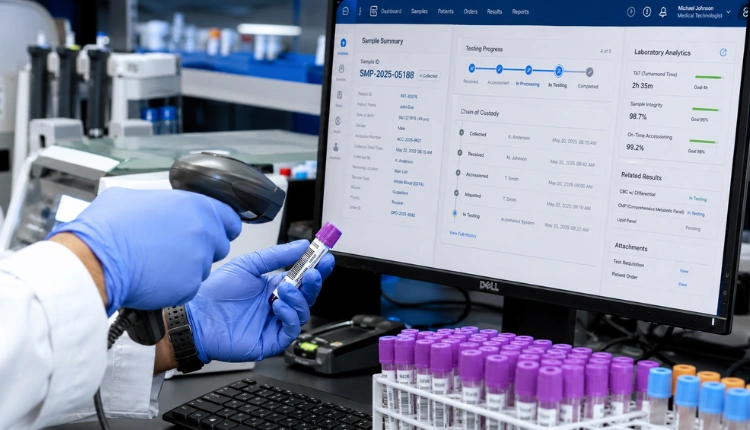

Eighty percent of facilities still run on fragmented workflows, paper, spreadsheets, and one-off apps that don’t talk to each other (Source: MedCore market data). Use this mentor-style guide to choose an EMR system your team can run with in 2026 and beyond. The direct answer: map your actual care pathways first, then test a short list against seven hard checks, interoperability, pricing model, onboarding speed, compliance, and a live pilot with your own staff.
As a healthcare IT advisor, I see the same pattern: tools look fine in a slide deck, but fail at triage handoffs, bedside documentation, pharmacy dispense, or insurance claims. So, let’s be practical. You’ll get a no-fluff framework, examples that fit OPD/IPD reality, and where to push vendors on cost and time.
Moreover, this is built for India’s context. India’s hospital market is valued at ~$200B, yet 75% of the market is underserved by existing tech (Source: MedCore stats). Therefore, the winner in your RFP isn’t the flashiest demo. It’s the one that respects your queues, your staff, your budget, and your data laws in 2026.

What Is an EMR System and Why Does It Matter in 2026?
Here’s the simple split many teams blur. An EMR (electronic medical record) manages clinical records within your single facility. An EHR (electronic health record) is designed for data that can follow the patient across facilities and systems. For background, see the Electronic health record entry for the broader definition and history.
The stakes are real. Per MedCore market data, 80% of facilities still run fragmented workflows. That means OPD queues in a Google Sheet, billing in a desktop app, and lab results in email PDFs. As a result, front-desk staff retype data, doctors lose context, and pharmacy spends hours on reconciliations. Error risk climbs while everyone stays late.
In addition, fragmentation costs money you can count. Duplicate entry can add 2–4 minutes per patient at intake. Over 150+ OPD patients per day, that’s several staff-hours. Missed lab deltas or broken discharge handoffs can turn into rework and readmissions. Meanwhile, your leadership loses live visibility on bed census and receivables.
Therefore, to choose emr system your practice can trust, start with the goal: one system-of-record with shared state across modules like OPD, IPD, lab, pharmacy, and billing. If data flows once and updates everywhere, your teams stop chasing export files and can focus on care. India’s ~$200B market has room for better tools because 75% of providers are still underserved. Your facility does not need to stay in that 75%.
- Hidden costs of paper-and-spreadsheet workflows:
- Rework: retyping demographics, vitals, and orders across systems.
- Delays: staff searching email or WhatsApp for lab results.
- Revenue leakage: missed charges due to manual claim drafting.
For a deeper look at tailoring screens and notes to your flows, see this practical EMR software customization guide. It walks through clinic-specific templates and how to avoid brittle one-off custom code.
7-Step Framework for Evaluating EMR Systems
You don’t need a 60-point RFP to make a sound call. You need seven concrete checks that mirror your real work. Use this list with your nursing lead, a physician champion, the billing head, and IT.
The seven checks that matter
- Map your workflows: Start with OPD intake, triage, consultation, orders, pharmacy, billing, and discharge. Then add IPD flows: admission, orders, MAR, progress notes, transfers, and discharge summaries. Finally, mark every handoff and data re-entry. Your map is the test plan. 2) Identify must-have modules: List what must go live on Day 1: OPD queue and tokens, structured EHR (vitals, allergies, problem list), e-prescriptions with QR, lab orders/results with delta flags, pharmacy dispense, GST-aware billing, and insurance/TPA pre-auth with claims auto-draft.
Nice-to-haves come later. 3) Check interoperability (FHIR, HL7): Demand FHIR R4 resources and HL7 v2 inbound where legacy devices or LIS/RIS need it. For context, Fast Healthcare Interoperability Resources is the modern web standard for health data exchange. If a vendor ducks this, expect vendor lock-in and manual exports. 4) Evaluate pricing models: Insist on flat per-month pricing that won’t spike with per-user or per-bed fees as you grow.
Moreover, ask for a one-page quote with all SMS/WhatsApp, payment gateway, and integration costs listed. If the model punishes your growth, walk. 5) Test onboarding speed: Ask for a self-serve onboarding wizard and a mock go-live in a sandbox. Can your admin configure departments, services, taxes, payment plans, and WhatsApp templates in hours, not weeks? Time it.
If it takes a month, that’s real staff cost. 6) Verify compliance and data residency: Confirm DPDP Act 2023 alignment and India data residency. For background, see the Digital Personal Data Protection Act, 2023. Also check ABDM/ABHA linking support, DLT-compliant SMS, audit trails, and role-based access. Then run a mock breach-response drill.
- Trial with real staff, not a vendor pilot: Run a 10–15 day pilot with your own front desk, nurses, and doctors. Use production-like data with masked PHI. Score it on OPD wait times, documentation time per encounter, claim auto-draft accuracy, and error rate. If staff want to keep using it on Day 16, you’ve got a fit.
Specifically, use this framework to choose emr system your operations team will enjoy using at 8 p.m., not just at 10 a.m. during a slick demo.
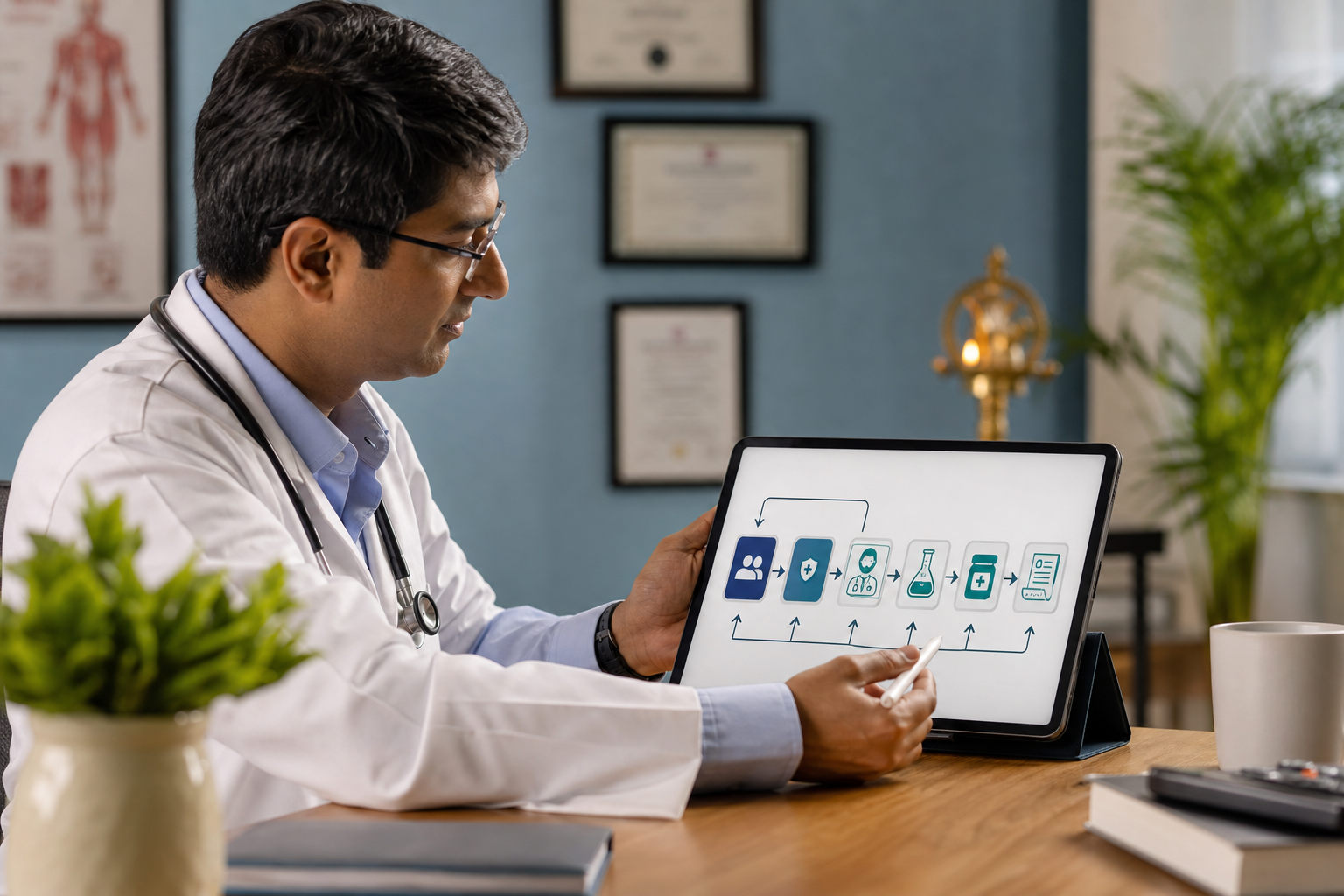
For setup pitfalls and tailoring screens to your specialties, this hands-on EMR customization guide shows how to adapt forms and queues without breaking upgrades.
**See transparent pricing now →
Also Read!
How to Choose an AI Clinical Documentation EHR for Your Small Clinic in India
How to Set Up OPD Queue Management and Appointment Scheduling for Your Small Clinic in India
5 Costly Mistakes When Selecting an EMR System
Even sharp teams fall into the same traps. Here are the top five and how to avoid them on day one.
- Choosing on feature count alone — Vendors list 200+ features. However, if OPD queues, lab delta flags, or claims auto-draft don’t work in your context, that list won’t save a single minute.
- Ignoring per-user or per-bed fees — Per-seat pricing sounds cheap at five users. By 35 staff and a new ward, your bill doubles. Therefore, push for flat per-month pricing without per-bed or per-user fees.
- Skipping interoperability checks — No FHIR R4 or HL7 v2 inbound means manual exports and “CSV Fridays.” Moreover, radiology and lab integrations stall, and you pay for custom glue.
- Underestimating staff training time — If nurses need a 2-day class to record vitals, your go-live slips. Instead, ask for a self-serve onboarding wizard and role-based guides so teams ramp in days, not weeks.
- Forgetting the patient-facing layer — Patients expect an app with live queue tokens, lab reports, prescription QR, and bill pay. If your tool lacks this, your front desk fields status calls all day.
"Our OPD wait time dropped from 40 minutes to 12. The live token display alone was worth the switch." — Dr. Meera Rao, Medical Director, Asha Hospital
As a practical check, include a patient journey in your pilot: booking, check-in, consult, lab, pharmacy, and payment. Then measure front-desk calls and no-shows before and after. That’s where you’ll feel the gain. And yes, use this lens to choose emr system your patients will actually notice, in shorter waits and fewer calls.
EMR Tools and Platforms Worth Evaluating
You have three broad categories on the table. Each fits a certain budget, risk profile, and IT stance.
Legacy on‑premise systems
These run on servers in your building. On the plus side, you get direct control and local integrations with old LIS/RIS. On the other hand, you carry capex, maintenance, backups, and upgrade cycles. In 2026, that cost lands harder as your modules expand.
Cloud‑native platforms
These offer faster feature delivery and simpler rollouts across branches. Furthermore, India data residency and audit trails are now standard asks. For multi-branch analytics and OPD volumes above 150/day, the operations upside adds up.
AI‑integrated options with a unified EHR
This class brings AI scribing, triage in Indian languages, claims auto-draft, and predictions together in one record. Tools like MedCore are AI-native with integrated workflows and a unified EHR, plus 45 modules developed with input from doctors, nurses, and administrators. Pricing is straightforward for India: Small Clinic from ₹9,999/mo and Mid-size Hospital from ₹24,999/mo, with multi-specialty deployments on request. Trial it side-by-side with a cloud-native baseline to see where the gains land in real minutes saved.
Moreover, align platform choice to your practice size and growth horizon:
| Practice Size | Good Fit | Budget Signal |
|---|---|---|
| Solo clinic | Cloud-native or AI‑integrated with simple setup | From ₹9,999/mo |
| Mid-size hospital | AI‑integrated unified EHR across OPD/IPD | From ₹24,999/mo |
| Multi-specialty | Unified EHR with deep modules and SLA | Custom quote |
Finally, stress-test the patient app layer. If it lacks live queue tokens, lab results, digital prescriptions with QR, and bill pay, your front desk will still drown in calls. Use this as a tie-breaker to choose emr system your front-line teams will thank you for.
Key Takeaways
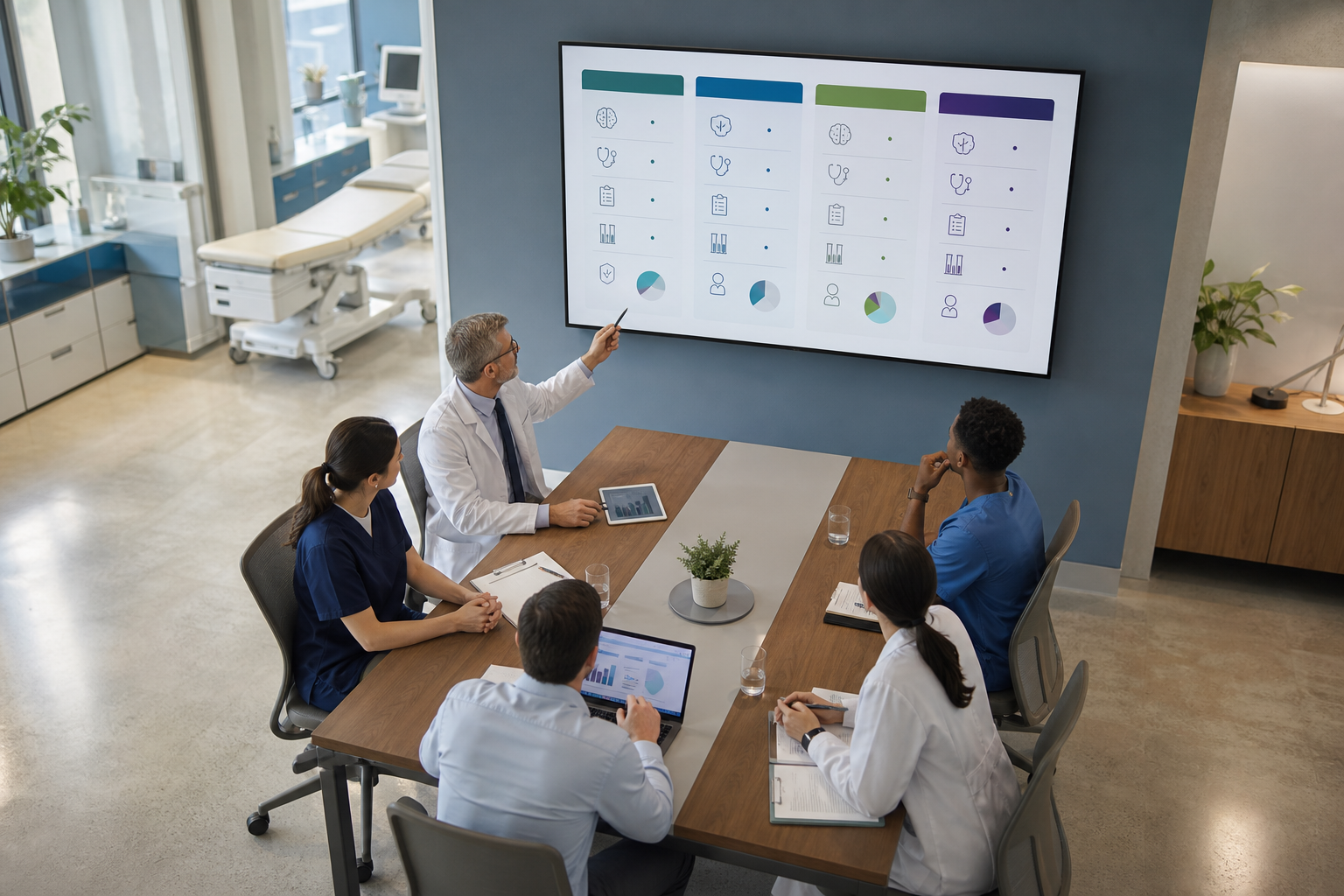
- Map your real workflows first; the software must fit care handoffs, not the other way around.
- Demand FHIR R4 and HL7 v2 inbound, DPDP 2023 alignment, and India data residency from day one.
- Push for flat per-month pricing and a self-serve onboarding wizard to go live in days.
- Include patient app features in scope: live queue, lab reports, prescription QR, and bill pay.
- Use a scored, staff-run pilot to choose emr system your facility can run at scale.
What to Do This Week: Your EMR Evaluation Checklist
Here’s a concrete five‑day plan you can start today. Keep it tight, keep it real, and log time saved and errors avoided each day.
- Monday — Audit current workflows: Walk a patient journey end to end. Time OPD check-in, consult notes, orders, lab, pharmacy, and billing. List every retype and every bottleneck.
- Tuesday — Write requirements: Split “must‑have Day 1” and “nice‑to‑have.” Include interoperability (FHIR R4, HL7 v2 inbound), DPDP 2023 alignment, ABDM/ABHA linking, audit trail, and India data residency.
- Wednesday — Shortlist three vendors: Pick one legacy, one cloud-native, and one AI‑integrated unified EHR. Ask for flat per‑month pricing without per-bed or per-user fees and a self-serve onboarding wizard.
- Thursday — Run live demos with your data: Share masked cases. Test OPD queue tokens, lab order/result flow with delta flags, e‑prescriptions with QR, pharmacy dispense, and GST‑aware billing. Also test patient app logins and bill pay.
- Friday — Score and decide next step: Score usability for front desk, nurses, and doctors; onboarding time; claim auto‑draft accuracy; and total monthly cost. Then choose emr system your staff would keep using on Monday. If it’s close, plan a 10–15 day pilot with clear success metrics.
For extra depth on making the tool fit your clinic’s notes and queues, keep this EMR customization guide handy as you build your test cases.