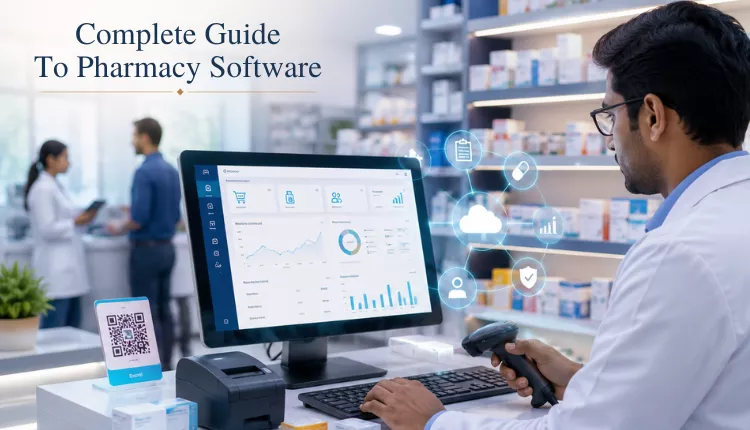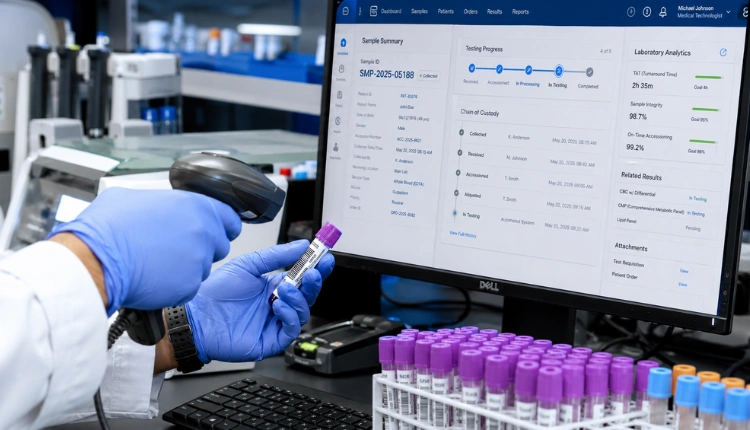
Across India, 80% of facilities run on fragmented workflows (MedCore data). Your guide care everywhere starts by fixing this: build one patient record that follows the person across locations, devices, and time. In 2026, the direct path is clear, unify your EHR, adopt FHIR/HL7, link ABHA, give patients an app, and stitch follow-ups across voice and WhatsApp.
Care Everywhere means continuous care, not just a series of visits. You move from “visit, prescription, hope they return” to “visit, plan, results, reminders, feedback, timely follow-up.” As a mentor, I’ve watched a 30-bed hospital in Pune cut OPD waits from 40 to 12 minutes and lift lab follow-through by double digits, simply by aligning queue, lab, pharmacy, and billing to the same record.
Moreover, this is not a big-hospital-only idea. With ABDM/ABHA now mainstream and FHIR R4 widely adopted, mid-sized hospitals and solo clinics can get there fast. In fact, with an AI-native system that keeps one shared state across departments, you avoid the “export-import” shuffle that exhausts teams and confuses patients.
What Does 'Care Everywhere' Actually Mean?
Care Everywhere is a simple promise: the patient does not repeat their story, lose their reports, or miss follow-ups because data sits in silos. Instead, their record stays whole across OPD, IPD, lab, pharmacy, billing, telemedicine, and home care. For your guide care everywhere to work, every part of your system must read and write to the same patient record.
Technically, this looks like a single tenant-scoped EHR with shared state across billing, lab, and pharmacy. When a doctor updates the problem list, pharmacy sees interactions, billing drafts claims, and lab flags deltas, without exports or email chains. As a result, you cut errors, speed hand-offs, and give staff back time.
Standards make this portable. FHIR R4 lets systems share structured clinical data cleanly, while HL7 v2 handles high-volume messages like lab results. For a primer, see HL7 FHIR on Wikipedia.
In India, ABDM/ABHA linking anchors identity and consent. With ABHA on file, patients can share records across facilities with fewer gaps and fewer paper files. You can review India’s national program at ABDM (Gov.in).
From episodic to continuous care
- Episodic: patient comes in, gets a script, disappears until the next issue.
- Continuous: the plan, results, and follow-ups flow across OPD, lab, and home.
- The shift happens when the EHR “remembers” and your workflows act on that memory—appointments, nudges, and escalations trigger on time.
"We replaced three tools with MedCore. Billing, pharmacy and lab now talk to each other without exports." — Ravi Prasad, Administrator, Sunrise Clinic
How to Build a Care Everywhere Model: A Step-by-Step Framework
You don’t need a moonshot. You need five tight moves that work in Indian settings with lean teams and shared desktops.
Step 1: Unify patient records into one EHR
First, pick one record of truth. Merge duplicate charts, add ABHA, and lock your demographics schema. With a single tenant-scoped EHR, the same patient identity flows to billing, lab, and pharmacy. In one 50-bed facility in Coimbatore, this alone cut discharge delays because claims draft from clinical notes rather than from a stack of PDFs.
Specifically, insist on:
- Structured vitals, allergies, and problem list
- Digital prescriptions with QR codes for easy pharmacy scans
- DPDP Act 2023 alignment and India data residency to protect trust
Step 2: Enable interoperability standards (FHIR/HL7)
Second, make data move cleanly. Turn on FHIR R4 for clinical resources and HL7 v2 for LIS/RIS feeds. Therefore, your lab can auto-post results, and your EHR can show deltas and flags without manual uploads. Moreover, this keeps you vendor-flexible in 2026 and beyond.
For example:
- FHIR R4: observations, medications, encounters
- HL7 v2: lab orders/results, radiology messages
Step 3: Deploy patient-facing mobile tools
Third, meet patients where they are, on their phones. A branded Android/iOS app with live queue tokens, lab reports, prescription QR, and bill pay cuts front-desk calls by half in month one (per MedCore testimonials). In Hyderabad, a 12-doctor clinic reduced “Where is my token?” calls once patients saw their live queue number and ETA.
In addition, use DLT-compliant SMS/WhatsApp reminders for visit times, fasting instructions, and report-ready alerts. As a result, no-shows drop and patients feel guided, not lost.
Step 4: Add multilingual triage access
Fourth, use AI-driven triage in 8 Indian languages to remove the language wall that so many facilities ignore. A short symptom check with SNOMED-anchored routing can direct chest pain to urgent care and diet queries to a nutrition slot. On the other hand, English-only bots push rural patients back to phone queues.
Therefore, give the front desk a 24/7 voice receptionist agent to capture first calls, log symptoms, and book or escalate. It works even during power cuts if you have a mobile fallback.
Step 5: Connect follow-up workflows across channels
Fifth, close the loop. An outbound follow-up agent with voice and WhatsApp checks on wound care, medication starts, and lab follow-through. If blood sugar is high on Tuesday, the system schedules a doctor review for Wednesday, not “next month.” Consequently, your readmissions fall and your Google reviews rise.
- Link follow-ups to diagnoses and discharge plans
- Auto-flag vulnerabilities (elderly living alone, cardiac risk, no smartphone)
- Route replies back into the EHR timeline
**Start instant signup today →
For your guide care everywhere to stick, rehearse the paths with staff: one mock OPD morning, one discharge to home care, and one emergency hand-off. Then, fix the snags you see, don’t add more tools.
Also Read!
Your Guide to Appointment Plus: What It Is, How It Works, and the Best Alternatives
A Beginner’s Guide to Health Care Privacy: Part 1 — What Your Data Rights Actually Are
Common Mistakes That Break Continuity of Care
I’ve seen the same five traps across Tier-2 cities and metros alike. The good news: each has a straight fix.
- Fragmented systems that don’t share data: 80% of facilities run this way (MedCore data). As a result, staff retype names, mix up allergies, and misplace scans.
- Ignoring language barriers: India speaks in hundreds of tongues. Without local-language triage, patients hang up or delay care.
- No follow-up after discharge: The plan ends at the gate. Therefore, wounds get infected, meds get skipped, and trust erodes.
- Siloed billing/pharmacy/lab: Exports and USB drives become “integrations.” Consequently, refunds spike and audits hurt.
- In-person-only models: A patient who travels 40 km for a report pickup will not return for counseling.
Moreover, “buy another app” is not the cure. The 75% of the market underserved by existing tech needs fewer systems that do more, not more systems that do less. Your guide care everywhere depends on one shared record, standards turned on, and patient touchpoints that work in low-bandwidth, low-friction ways.
"Our OPD wait time dropped from 40 minutes to 12. The live token display alone was worth the switch." — Dr. Meera Rao, Medical Director, Asha Hospital
Spot-and-fix checklist
- Do two systems hold the “latest” medication list? Merge.
- Do nurses call patients for reports that the app can show? Publish to mobile.
- Do you lack ABHA for half your patients? Add it at registration.
Tools and Platforms That Enable Care Everywhere
Start by mapping categories, not logos. Then pick one platform that covers most needs and integrate only where it pays off.
- Interoperable EHR systems: Look for FHIR R4 and HL7 v2 support, ABHA linking, and a single tenant-scoped EHR with shared state across billing, lab, and pharmacy.
- Patient engagement apps: Prioritize live queue tokens, lab reports, prescription QR, bill pay, and low-data usage.
- Telemedicine platforms: Ensure call logs and notes land inside the same EHR timeline, not an export folder.
- AI triage tools: Demand 8 Indian languages at minimum, SNOMED-based routing, and a safe hand-off to humans.
As one example among unified platforms, MedCore is AI-native with integrated workflows and a unified EHR. It offers a branded Android/iOS patient app with live tokens and lab reports, plus an outbound follow-up agent using voice and WhatsApp. You can run GST-aware billing with Razorpay and UPI, while maintaining DPDP Act 2023 compliance and ABDM/ABHA linking. Mentioned alternatives include Epic CareLink and OpenMRS; choose based on standards support, total cost, and whether patient follow-ups are built-in or bolted on.
For your guide care everywhere, the best tool is the one your nurses can learn in a week and your patients can use in a day.
What to Do Next: Making Care Everywhere Real at Your Facility
You can get first wins in 30 days with a focused, low-risk plan. In 2026, buyers who move fast don’t buy more, they connect what matters.
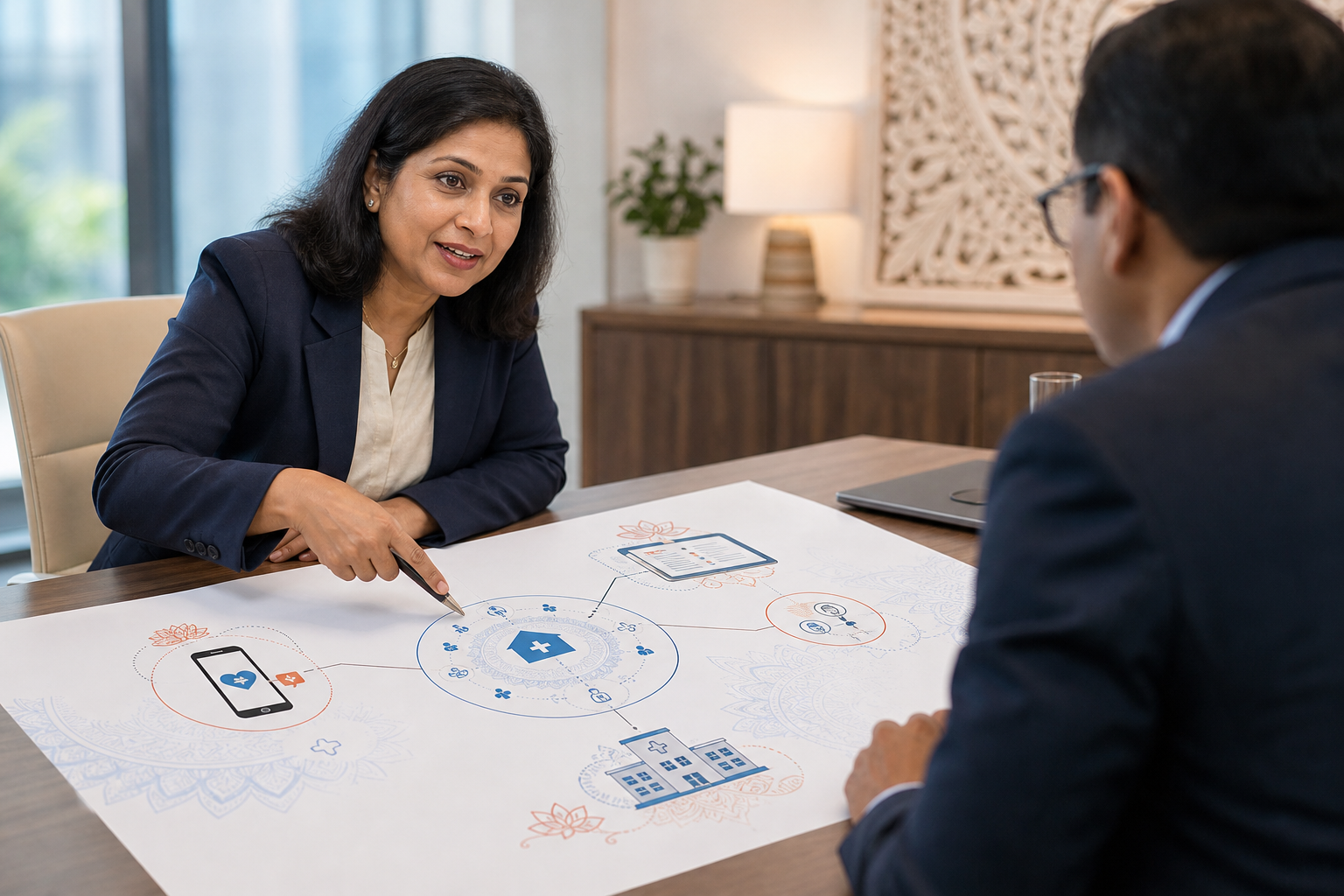
First, audit your data silos. Make a one-page map of where patient data lives: EHR, lab, pharmacy, billing, imaging, WhatsApp. Then, draw arrows where data should move. If an arrow relies on “ask Ramesh to export,” you found a gap.
Second, map patient touchpoints beyond the clinic. Include appointment booking, transit, wait room, consult, lab, pharmacy, and home. As a result, you’ll see where a mobile app can remove a queue or a WhatsApp nudge can prevent a missed report.
Third, pilot a patient-facing app or portal with 100 OPD patients. Publish live tokens, prescription QR, and bills. Moreover, turn on a real-time OPD queue with token displays and vulnerability flagging so staff can prioritize seniors or high-risk patients.
Fourth, set up automated follow-up workflows. Start with three: post-op day 2 check, abnormal lab callback, and chronic-care med start. Therefore, your nurses shift from chasing phone numbers to resolving issues.
Fifth, measure continuity-of-care metrics. Track: lab follow-through in 7 days, no-show rate, discharge call reach rate, and duplicate-chart rate. If each trend improves 10–20% over eight weeks, you’re on track.

**See transparent pricing today →
For your guide care everywhere to last, standardize onboarding for new hires, review audit trails weekly, and keep ABHA capture above 90%. With a self-serve onboarding wizard, you can be live in days, not quarters, and keep momentum while the team sees results.
Key Takeaways
- Care Everywhere means one record across places and time, built on FHIR R4, HL7 v2, and ABHA.
- A single tenant-scoped EHR with shared state beats “export-import” every time.
- Patient apps with live tokens, lab reports, and bill pay cut front-desk calls and missed visits.
- AI triage in 8 Indian languages and an outbound follow-up agent close the loop after discharge.
- Fix the five traps: silos, language gaps, no follow-up, department walls, and in-person-only care.
What to Do This Week
Pick one OPD and one discharge pathway. Turn on ABHA capture, publish live tokens to a patient app, and set a day-2 follow-up call workflow. Then, review results in seven days and expand. That’s how your guide care everywhere moves from plan to practice, one tight loop at a time.