80% of facilities still run on fragmented workflows, and 75% of the market is underserved by existing tech (Source: MedCore market stats). That gap is why your guide nursing informatics matters in 2026. If you want the short answer: pair your bedside wins with EHR and data skills, add a recognized informatics credential, then target roles across hospitals, vendors, consulting, and government with a resume that shows measurable results.
As a senior informatics nurse, I’ll be candid. You don’t need to “be a coder.” You do need to be the translator: turn clinical needs into data requirements, test changes safely, and show how a workflow improves quality, safety, and cost. This article is your guide nursing informatics map, education-first, product-second, so you can pivot with confidence and get hired.
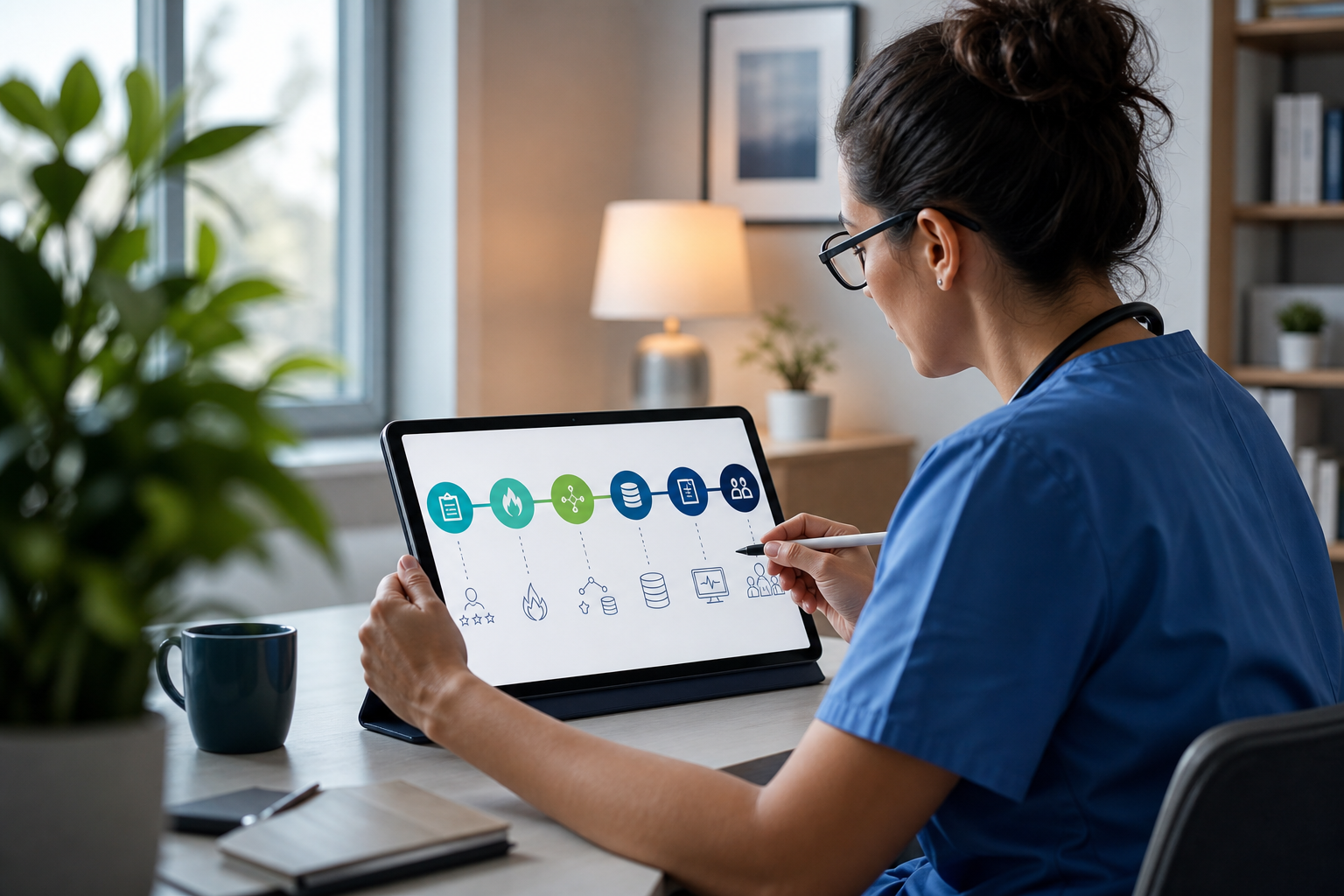
 , with icons for hospital, vendor, consulting, and government settings; clean colors, modern style)
What Are Nursing Informatics Jobs and Why Is Demand Growing?
Nursing informatics sits at the intersection of clinical care, data standards, and health IT. In practice, you connect how nurses work to how systems store and share data. You review workflows, design documentation screens, map codes like SNOMED CT and ICD-10, test EHR changes, train teams, and measure impact. The job is part clinician, part analyst, part change agent, with patient safety and nurse usability at the core.
Demand keeps rising because health systems are moving to AI-native tools and FHIR R4/HL7-based data exchange. As a result, leaders need clinicians who can speak both languages: the bedside and the database. In 2026 and beyond, that mix is gold. For a macro view, the U.S. Bureau of Labor Statistics overview of related roles shows continued growth across health management and IT-aligned paths that informatics nurses often step into. AMIA has echoed that clinical informatics will keep expanding as digital health matures and interoperability deepens.
You’ll find roles in several settings:
- Hospitals and health systems: EHR optimization, quality and safety analytics, nursing documentation design, device integration.
- Vendors and startups: product design, workflow research, clinical safety, training, and customer success for EHRs and AI tools.
- Consulting firms: EHR implementations, upgrades, go-lives, build governance, and process redesign.
- Government and public health: data standards adoption, registries, and population health programs.
Moreover, newer AI-native platforms with unified EHRs create informatics-adjacent jobs even at smaller facilities. Tools like MedCore, designed for healthcare facilities excluding corporate hospitals, advertise FHIR R4 and HL7 v2 support and integrated workflows. You don’t need to be a developer to thrive here. However, you do need to understand how the tech works, how nurses use it, and how standards affect data quality and care.
Typical job titles you’ll see
- Nursing Informatics Specialist
- Clinical Informatics Analyst (RN)
- CNIO or Associate CNIO
- EHR Clinical Analyst (RN)
- Clinical Systems Educator (Informatics)
- Health Data/Interoperability Analyst (RN)
“AI-native healthcare systems + FHIR R4 interoperability = more demand for clinical informaticists who can make tech usable for nurses.”
Step-by-Step: How to Land a Nursing Informatics Job
Here’s a simple, practical route many of us took. Follow each step in order. Each one builds your credibility.
1) Earn your BSN and build 2–3 years of bedside experience
Your clinical judgment is your edge. Choose a unit with complex workflows (ED, ICU, peri-op, oncology). Track measurable wins you can quote later: falls reduced, time saved, errors prevented, handoff quality improved. Keep a log with dates and metrics.
2) Add formal informatics education
Second, complete either an MSN in Informatics or a graduate certificate. If you prefer short, focused training, a 12–18 credit certificate can work while you keep your RN role. Look for faculty who teach FHIR R4, HL7 v2, SQL basics, and clinical decision support. Ask programs how they mentor students into projects tied to safety and quality.
3) Pursue ANCC Informatics Nursing certification
Third, plan your ANCC exam. Build a study map: 8–10 weeks, 6–8 hours per week. Use a structured Q-bank, and tie each weak area to a short action (e.g., “re-read CDS five rights; practice 20 questions”). The credential signals you can work across people, process, and tech. If your interests skew toward coding and data governance, AHIMA credentials can complement your ANCC.
4) Build EHR and data skills that show outcomes
Fourth, get hands-on with an EHR. Ask your manager to lead a small build or optimization task.
- Create a nursing flowsheet row set that reduces clicks during triage.
- Pilot a barcode med admin rule that catches look-alike/sound-alike meds.
- Draft a CDS alert and then tune it to cut alert fatigue by measuring overrides.
In addition, learn the basics: SQL SELECT/JOIN, FHIR R4 resources (Patient, Observation, MedicationRequest), SNOMED vs. ICD-10 vs. LOINC. You don’t need depth in all of them. However, you should know what each is for and how to ask the right question when data looks “off.
5) Target job boards and network with intent
Fifth, set alerts on Indeed, Health eCareers, and AMIA’s Career Center. Search for “informatics RN”, “clinical informatics analyst”, and “EHR analyst (RN)”. Message 2–3 informatics leaders per week on LinkedIn. Ask one sharp question and propose a 15-minute call. Then, follow up with a short thank-you and one way you applied their tip.
6) Tailor your resume for informatics keywords
Sixth, mirror the posting. Use clear, scannable bullets with outcomes.
- “Reduced ED triage documentation time by 22% by co-designing a structured note; trained 14 RNs; defects dropped to zero in two weeks.
- “Mapped local problem list terms to SNOMED CT concepts; improved care gap reports used by quality teams.
- “Partnered with pharmacy to add drug-safety checks; near-miss rate fell across 150+ OPD patients per day.
Finally, match the tech stack where you can: Epic, Cerner, FHIR, HL7 v2, SQL, SNOMED CT, LOINC. If you lack a tool, show a parallel skill and how fast you learn.
Also Read!
How to Set Up OPD Queue Management and Appointment Scheduling for Your Small Clinic in India
How to Set Up OPD Queue Management and Appointment Scheduling for Medical Tourism Hospitals in India
Common Mistakes That Keep Nurses Out of Informatics Roles
Undervaluing clinical experience
You might think your bedside years “don’t count” for IT. They do. Translate them. For instance, “Led a CAUTI reduction huddle that cut infections by 30%” shows process change, measurement, and team coaching, all core to informatics.
Skipping credentials
Without ANCC or a focused grad cert, you’re harder to screen in. Hiring teams need proof you get governance, safety, and change control. Therefore, pick one credential and pursue it with a firm timeline.
Ignoring vendor-specific EHR training
Epic’s analyst modules or Cerner’s build courses matter. Even if you can’t get full access, watch vendor-led webinars or complete sandbox tasks. Then, showcase a short project. Recruiters trust hands-on examples more than broad claims.
Applying only to hospitals
Vendors, startups, and consulting firms hire nurses for configuration, testing, and clinical safety review. Moreover, government agencies and public health programs need nursing informatics talent for registries and data exchange. Casting a wider net can double your interview rate.
Not learning standards like FHIR or SNOMED
If you can explain why a FHIR-native workflow failed (wrong code system, missing value set, or invalid profile) and fix it, teams will trust you with bigger projects. In the same way, knowing how SNOMED-anchored routing affects triage outcomes helps you tune alerts and referrals without guesswork.
Quick fixes you can apply this month
- Add one outcome metric to each resume bullet.
- Complete a short FHIR R4 tutorial; read 5 core resources.
- Shadow your hospital’s change advisory board once.
- Ask for a small build ticket; document your test plan and results.
“Learn one standard at a time. Explain it in plain words to a nurse peer. If they get it, you’re ready to explain it to IT.”
Tools, Platforms, and Resources for Aspiring Informatics Nurses
You don’t need every tool. However, a smart mix speeds hiring.
Job boards and communities
- Indeed and Health eCareers: set alerts for “informatics RN” and “clinical analyst (RN)”.
- AMIA Career Center: roles across hospitals, vendors, and research.
- HIMSS and AMIA events: attend one virtual session per month and ask one question live.
Certifications and education
- ANCC Informatics Nursing: the gold standard for many teams.
- AHIMA data and coding credentials: useful for governance and analytics paths.
- University grad certs in informatics: target ones with FHIR R4 and HL7 v2 content.
EHR platforms to know by name
- Epic and Cerner: dominate large systems; learn basic build, flowsheets, and reporting.
- AI-native platforms with integrated workflows and unified EHRs are creating informatics-adjacent roles at smaller facilities. MedCore is one such option, designed for healthcare facilities excluding corporate hospitals, built with 45 modules developed with input of doctors, nurses, and administrators.
Practical learning resources
- Standards primers on FHIR R4 resources, HL7 v2 messaging, SNOMED CT basics, and LOINC for labs.
- SQL practice: write 10 queries that join patients, encounters, orders, and results.
- Change management: draft a 1-page test plan and go-live checklist for a small build.
Security and compliance matter in hiring. In India, DPDP Act 2023 compliance, India data residency, and ABDM/ABHA linking signal maturity to leaders and regulators. Therefore, when you speak to recruiters, mention how you design with privacy and audit trails in mind.
**See pricing in minutes →
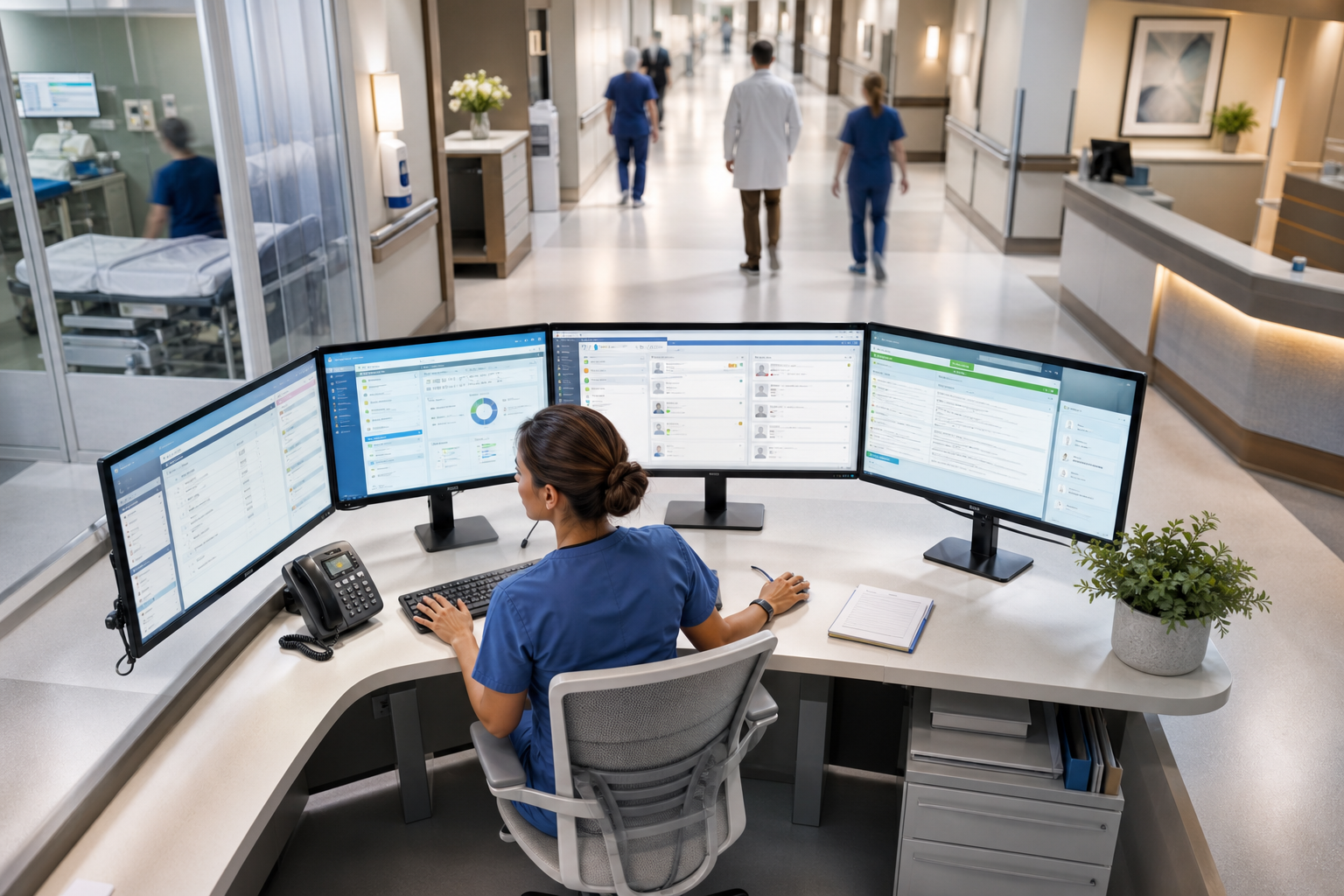 , standards (FHIR, HL7, SNOMED), certifications (ANCC, AHIMA), and job boards (Indeed, Health eCareers, AMIA), laid out clearly for quick scanning)
Key Takeaways and What to Do This Week
- Nursing + data + IT is the blend. Your bedside wins power your informatics story, and your fluency with FHIR/HL7/SNOMED turns that story into impact. This is your guide nursing informatics bottom line.
- Demand is growing as AI-native systems and FHIR R4 interoperability spread. Show you can make tech usable, safe, and measurable.
- A clear path works: BSN and bedside → informatics education → ANCC → EHR/data projects → targeted search → keyword-aligned resume.
- Avoid common traps: skipping credentials, ignoring vendor training, applying only to hospitals, and writing vague resumes without metrics.
- Security and compliance (e.g., DPDP Act 2023) and real-world results (e.g., serving 150+ OPD patients per day with integrated workflows) are strong talking points.
What to do this week (no fluff — do this)
- Monday: Draft 5 resume bullets with outcomes. Add one metric to each (time saved, errors prevented, satisfaction improved).
- Tuesday: Spend 60 minutes on a FHIR R4 primer. Write down the Patient, Observation, and MedicationRequest fields you’d need for a simple report.
- Wednesday: Ask your manager for one small EHR optimization ticket. Propose a 1-page test plan and success metric.
- Thursday: Set alerts on Indeed, Health eCareers, and AMIA. Message two informatics leaders with one question and a 15-minute call ask.
- Friday: Block 90 minutes to map your bedside project to ANCC domains. Pick an ANCC exam window and outline an 8-week plan.
- Weekend: Practice a quick story: “Problem → Action → Result → Data.” Record yourself. Keep it under 75 seconds.
As you work this plan, track your wins. Your next manager cares less about buzzwords and more about results tied to safety, quality, and nurse time. In 2026, that’s how you stand out, by showing exactly how your clinical lens and data fluency make care better and tech lighter for the team.