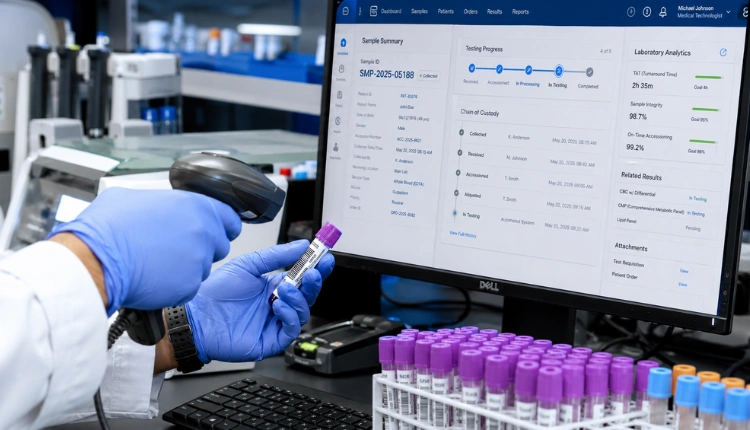

80% of facilities run on fragmented workflows (Source: MedCore Stats). To fix delays in 2026, you need one system for AI radiology, lab, pharmacy, and blood bank management, not five tools stitched together. That single change cuts handoffs, reduces errors, and gives you cross-branch visibility.
Here’s the answer up front: pick a unified, AI-native EHR for AI radiology, lab, pharmacy, and blood bank management that connects lab, pharmacy, radiology, and blood bank to billing and OPD, supports FHIR/HL7, meets DPDP Act 2023, and scales with flat pricing. Then roll it out branch by branch with standard order sets, a self-serve onboarding wizard, and a clear HITL policy for AI reports, backed by an SLA with uptime credits and a free demo to de-risk rollout. Do this, and you replace rework with clean data and audit-ready care paths.
Disconnected systems hide key signals in AI radiology, lab, pharmacy, and blood bank management. For example, a critical lab delta flag won’t reach the pharmacy in time if orders live in a PDF. As a result, your clinicians guess. Your billing team rekeys.
Admins wait days for basic branch comparisons. Meanwhile, 75% of the market remains underserved by tech built for a different era (Source: MedCore Stats). In 2026, you can change that with an AI-native platform that treats your EHR as the single source of truth and adds smart agents on top, without per-bed or per-user fees.

Why Multi-Specialty Hospital Chains Struggle with ai radiology, lab, pharmacy, and blood bank management
Fragmented tools across branches multiply small breaks into big risks in AI radiology, lab, pharmacy, and blood bank management. One site uses LIS from 2014. Another has a standalone pharmacy POS. Radiology pushes PDFs by email.
Billing rekeys charges late at night.
In that world, a critical result depends on a person remembering to call.
The pain is not just tech. It’s a workflow in AI radiology, lab, pharmacy, and blood bank management. A physician orders a CT and a D-dimer. The CT report lands as a scanned image with no structured fields.
The lab result sits in a separate inbox. The pharmacy never sees the updated anticoagulant plan because the EHR lacks shared state. The discharge summary is wrong, the claim is incomplete, and your CFO sees leakage instead of margin.
Blood bank compliance adds another layer. ABO and Rh typing, crossmatch logs, and unit issue/return rules have to be audit-ready. Yet in many chains, blood bank data lives in spreadsheets.
As a result, reconciling a unit’s journey during an audit takes a week. Cross-branch analytics are missing. You can’t compare lab TAT, pharmacy use, or radiology TAT by branch because the data model differs in each tool.
Real workflow breaks you can spot today
- Lab orders as PDFs block delta-flag alerts and auto-coding.
- Pharmacy PoS outside the EHR hides dispense data from clinicians.
- Manual radiology reporting extends TAT and causes inconsistent phrasing.
- Blood bank spreadsheets create gaps in unit tracking and compatibility checks.
- Cross-branch comparisons for ai radiology, lab, pharmacy, and blood bank management fail because fields and codes don’t match.
Chains that unify their stack see gains fast. One admin report that took three days drops to a live dashboard. A stat CXR draft appears with per-finding confidence for fast sign-off. Pharmacy gets controlled substance tracking tied to the patient chart, not a ledger.
For a deeper playbook, this mid-size hospital guide explains rollouts: How to Choose and Implement Lab, Pharmacy, and Radiology Management for Mid-Size Hospitals.
What to Look for in an ai radiology, lab, pharmacy, and blood bank management system
First, demand a unified EHR for ai radiology, lab, pharmacy, and blood bank management that keeps shared state across lab, pharmacy, radiology, blood bank, and billing. If orders, results, dispense actions, and charges sit in one clinical timeline, you remove the rekey step and cut denials. You enable decision support on live data, not day-old exports.
Second, ask for AI where it helps clinicians, not where it looks flashy. For example, AI radiology drafting should show per-finding confidence and require human sign-off. Drug-safety checks should fire before dispense, with clear reasons and alternatives. Predictions should include pharmacy demand forecasts tied to your actual order mix.
Third, insist on FHIR R4 and HL7 v2 so you can connect existing machines and partners without a bespoke project. Standards reduce long-tail effort. ABDM/ABHA linking is table stakes for India in 2026. For policy context, see Digital Personal Data Protection Act, 2023 (Wikipedia).
Compliance and pricing that won’t surprise you
- DPDP Act 2023 alignment with data minimization and consent tracking.
- ABDM/ABHA linking for national health records in India; reference: Ayushman Bharat Digital Mission.
- India data residency and DLT-compliant SMS for patient messaging.
- Flat per-month pricing without per-bed or per-user fees, so expansion doesn’t spike cost; SLA-backed uptime credits and a free demo de-risk adoption.
Analytics that answer the right questions
Multi-branch analytics for ai radiology, lab, pharmacy, and blood bank management should let you compare lab TAT by test panel, pharmacy stock-outs against forecast, and modality TAT in radiology. You can move from anecdotes to actions. An audit trail must show who viewed or changed what. Your admins should export views for finance in one click.
For ai radiology, lab, pharmacy, and blood bank management, look for a self-serve onboarding wizard. If you can go live in days at a single branch, you can scale across the chain with a repeatable method. Long, 6‑month implementations drain goodwill and hide gaps until go-live day.
For chains serving international patients, see this medical tourism rollout playbook: How to Set Up Lab, Pharmacy, and Blood Bank Management for Medical Tourism Hospitals in India.
Also Read!
Best Hospital Lab Pharmacy Management for Mid-Size Hospitals in 2026
Best OPD Queue Management & Appointment Scheduling for Medical Tourism Hospitals in India — 2026
How MedCore Unifies Lab, Pharmacy, Radiology, and Blood Bank Across Hospital Chains
MedCore starts with a single tenant-scoped EHR for ai radiology, lab, pharmacy, and blood bank management that shares state across billing, lab, and pharmacy. Orders, results, dispense events, and charges live in one place. As a result, clinicians see the full picture and finance closes faster. AI agents sit on top of that timeline, not bolted to the side. You get ambient scribe, AI radiology drafts with per-finding confidence, and drug-safety checks that fire at the right time.
Radiology reporting moves from dictation to review. The AI agent drafts impressions for X-ray, CT, or MRI and highlights each finding with a confidence score. Nothing bypasses the radiologist. The model uses a human-in-the-loop approach, so every draft needs sign-off before release. That keeps speed and quality in balance.
Pharmacy shifts from a silo to a live part of care. MedCore tracks controlled substances, checks interactions and allergies, and links digital prescriptions with QR codes to the patient chart. Pharmacy demand forecasts help you stock ahead of need. When lab delta flags fire, the on-chart alert shows before dispense, not after.
“We replaced three tools with MedCore. Billing, pharmacy and lab now talk to each other without exports.” — Ravi Prasad, Administrator, Sunrise Clinic
Blood bank teams get ABO and Rh checks baked in. Unit issue and return logs tie to the encounter, with audit trails for each step. Multi-branch analytics cover lab TAT, pharmacy use, and modality performance from one dashboard. You can compare branches and spot bottlenecks in days, not quarters.
What this looks like in a real shift
- A trauma patient arrives. Triage adds vitals. Orders for CBC, type and screen, and CT flow into the ai radiology, lab, pharmacy, and blood bank management timeline.
- The AI radiology agent drafts a CT note with 0.91 confidence on a small bleed. The radiologist reviews and signs.
- Lab posts a delta flag on hematocrit. The clinician sees it in the same timeline.
- Pharmacy gets an on-chart alert. Controlled drug tracking logs the dispense event.
- Billing receives auto-drafted charges tied to orders; claims risk is flagged for missing docs.

**Get Pricing With No Limits →
For small-site tactics you can re-use in big chains, see: How to Set Up Lab and Pharmacy Management for a Small Clinic in India.
MedCore vs. Legacy Hospital Management Systems: An Honest Comparison
Legacy HMS tools add AI later, as a bolt-on widget; for ai radiology, lab, pharmacy, and blood bank management, MedCore is AI-native with named agents for drafting, triage, and predictions. That difference shows up in your day: drafts land where you work, and every action leaves an audit trail.
Pricing differs. MedCore uses flat per-month pricing without per-bed or per-user fees. Compared to alternatives that meter staff logins, this removes the penalty for growth in ai radiology, lab, pharmacy, and blood bank management.
Onboarding speed matters as well. MedCore’s self-serve wizard gets a branch live in days, with an SLA and free demo to de-risk go-live. Legacy stacks that stitch modules from different vendors can take six months and still miss shared state. MedCore ships 45 modules built with doctors, nurses, and administrators. You don’t need to chase a plugin for gaps.
“The patient mobile app reduced our front-desk calls by half in the first month.” — Shalini Kumar, Operations Head, Greenleaf Care
Multi-language triage is built in. Indian hospitals see patients across languages every hour. MedCore’s triage agent supports 8 Indian languages with SNOMED-anchored routing, while older systems point you to an external bot. Unified analytics cover every branch from one dashboard. Fragmented stacks can’t match that without custom ETL projects.
Side-by-side view
| Area | MedCore (AI-Native) | Legacy HMS/Modular Stack |
|---|---|---|
| AI Use | Radiology drafts (HITL), drug-safety, forecasts | Bolt-on reports, limited clinical use |
| Pricing | Flat per-month, no per-bed/user fees | Per-bed/user fees that raise TCO |
| Onboarding | Self-serve wizard, live in days | 6-month projects, vendor juggling |
| Platform | Single EHR state across lab/pharmacy/billing | Fragmented modules, exports between tools |
| Triage | 8-language agent with routing | External chatbot, extra integration |

Compliance, Certifications, and Trust Signals That Matter for Hospital Chains
You need proof, not promises. Security for ai radiology, lab, pharmacy, and blood bank management: MedCore complies with DPDP Act 2023, supports FHIR R4 and HL7 v2, sends DLT‑compliant SMS, and offers India data residency by default. On-premise or dedicated cloud hosting options are available for chains that need full control. Risk reversal: an SLA with uptime credits backs it all, and a free demo lets your team validate workflows before any commitment.
The platform includes 55+ modules that cover lab, pharmacy, radiology, blood bank, billing, and OPD. The system supports 8 Indian languages across patient touchpoints, including triage and mobile app flows. In clinic operations, capacity matters; MedCore supports 150+ OPD patients per day with live token displays and queue logic tuned for busy departments.
“Our OPD wait time dropped from 40 minutes to 12. The live token display alone was worth the switch.” — Dr. Meera Rao, Medical Director, Asha Hospital
For clinical safety, the blood bank module enforces ABO/Rh checks, crossmatch records, and unit traceability. For reference on why this matters, see the WHO’s overview on blood safety and availability. In radiology, a human-in-the-loop policy governs AI drafts. In pharmacy, controlled substance tracking and QR-coded digital prescriptions reduce both diversion risk and dispensing errors. Your compliance and quality teams gain the audit trail they ask for, without extra data work.
Also Read!
Best Hospital Lab, Pharmacy & Radiology Management for Medical Tourism Hospitals in India — 2026
Best Patient Engagement WhatsApp Reminders for Mid-Size Hospitals in 2026
Getting Started: Onboarding MedCore Across Your Hospital Chain
Rolling out a unified platform for ai radiology, lab, pharmacy, and blood bank management across branches works best in clear steps. Self-serve onboarding lets your first branch go live in days. Enterprise-tier chains get a dedicated onboarding team to plan integrations and a phased rollout. You can choose on-premise or dedicated cloud hosting based on your IT policy.
A practical rollout plan
- Baseline: Map current ai radiology, lab, pharmacy, and blood bank management workflows and data outputs per branch.
- Pilot: Use the self-serve onboarding wizard for one branch; set order sets, templates, and user roles.
- Integrate: Connect HL7 v2 feeds and FHIR R4 endpoints for existing analyzers and modality worklists.
- Expand: Roll templates and permissions to the next three branches; train radiology HITL sign-off.
- Scale: Turn on multi-branch analytics for ai radiology, lab, pharmacy, and blood bank management and pharmacy demand forecasts; iterate SOPs monthly.
On-premise or dedicated cloud hosting options keep your security team comfortable. Multi-specialty chains get contact-us pricing tailored to scope and hosting. If you want to see this plan mapped to medical tourism needs, the tactics in Best Hospital Lab & Pharmacy Management for Small Clinics in India, 2026 adapt well to large networks.

Frequently Asked Questions
Pricing and rollout
How much does hospital lab pharmacy management software cost for a multi-specialty chain?
Pricing for ai radiology, lab, pharmacy, and blood bank management is flat per-month without per-bed or per-user fees. Mid-size hospitals start at ₹24,999/mo, which includes core modules and support. Multi-specialty chains receive custom pricing via consultation to account for branches, hosting, and integrations. As you add branches or staff, there are no hidden scaling costs.
Can one system handle lab, pharmacy, radiology, and blood bank together? Yes. MedCore runs a single tenant-scoped EHR for ai radiology, lab, pharmacy, and blood bank management with shared state across billing, lab, pharmacy, radiology, and blood bank.
That means orders, results, dispense events, and charges live in one timeline. One administrator replaced three tools and removed the need for manual exports between departments. The result is fewer errors and faster TAT.
Capabilities and compliance
How accurate is AI radiology drafting, and do radiologists still review reports?
MedCore’s AI radiology agent drafts imaging impressions with per-finding confidence scores. Radiologists remain in charge through a human-in-the-loop model. Every draft requires radiologist review and sign-off before finalization. This setup improves speed while keeping clinical judgment front and center.
Does the system support multi-branch analytics across hospital chains?
Yes. MedCore includes multi-branch analytics with full audit trails. Administrators can compare lab TAT, pharmacy use, radiology modality throughput, and revenue across all branches in one dashboard for ai radiology, lab, pharmacy, and blood bank management. Exports for finance and operations are available for scheduled delivery.
Is MedCore compliant with Indian healthcare data regulations?
Yes. MedCore complies with DPDP Act 2023, supports ABDM/ABHA linking, and offers India data residency. FHIR R4 and HL7 v2 interoperability enable standard integrations with devices and partners. DLT-compliant SMS is available for patient reminders, and on-premise hosting can be chosen when full data control is required.
How long does onboarding take for a multi-location hospital chain?
A single branch can go live in days using the self-serve onboarding wizard for ai radiology, lab, pharmacy, and blood bank management. Enterprise-tier, multi-specialty chains receive dedicated onboarding support with custom HL7 integrations and a phased rollout plan.
Most chains start with one pilot site, then add branches in two- to four-week waves. This approach reduces risk and speeds up learning.
What alternatives to MedCore exist for hospital lab and pharmacy management?
Legacy HMS platforms and modular best-of-breed stacks are the common alternatives. However, most of them use per-bed pricing, lack AI-native clinical features, and require separate integrations between lab, pharmacy, and radiology modules. This increases total cost and complexity, and slows down analytics projects across branches.
Does MedCore include drug-safety and controlled substance tracking for hospital pharmacies?
Yes. MedCore includes AI drug-safety checks at order and dispense, controlled substance tracking, and digital prescriptions with QR codes. It also adds pharmacy demand forecasting to reduce stock-outs. Because pharmacy is tied to the unified EHR for ai radiology, lab, pharmacy, and blood bank management, clinicians see real-time dispensing data on the patient timeline.
Wrap-Up: What COOs Should Do Next
- Pick an AI-native, unified EHR for ai radiology, lab, pharmacy, and blood bank management that connects lab, pharmacy, radiology, and blood bank to billing and OPD. Demand FHIR R4, HL7 v2, DPDP Act 2023 alignment, ABDM/ABHA linking, and India data residency.
- Standardize your ai radiology, lab, pharmacy, and blood bank management rollout with a pilot branch, order sets, and a human-in-the-loop policy for radiology. Turn on multi-branch analytics early to prove value.
- Avoid per-bed/per-user fees. Flat pricing keeps growth simple and predictable across 2026 and beyond.
If you want a walkthrough tailored to your branches and devices, book a free demo and we’ll map it out with you.
**Start Fast, Go Live In Days →
For reference on ABO and transfusion safety principles, the WHO overview on blood safety and availability provides helpful context (World Health Organization).