Every hospital and clinic runs on cash flow, and that cash flow depends on reliable healthcare billing systems. When claims get delayed, codes get rejected, or your front desk spends hours chasing payments, it usually means your current setup can no longer keep pace with patient volume.
Good healthcare billing systems are supposed to save time, cut errors, and get you paid faster, not create more work for your team. In this blog, we’ll walk through seven clear signs that tell you it’s time to move on from an outdated setup, and how modern healthcare billing systems can turn your billing department into a fast, accurate, and stress-free operation for both staff and patients.
1. Claim Denials Keep Piling Up:
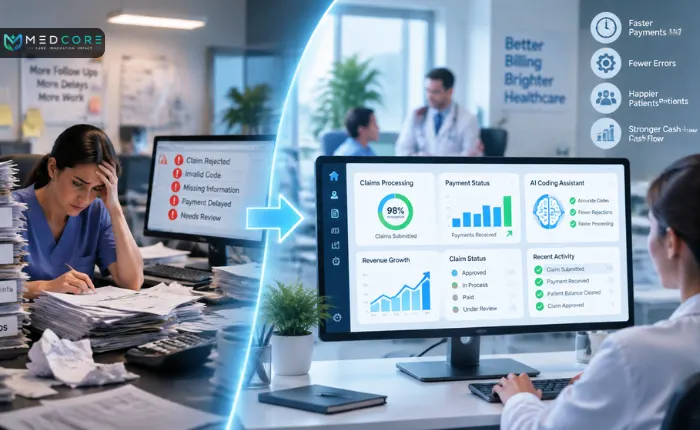
If your team is spending more time resubmitting claims than filing new ones, that’s a red flag. Outdated healthcare billing systems often rely on manual code entry, which leads to typos, mismatched procedure codes, and missing documentation all common reasons insurers reject claims.
Every denial means delayed revenue and extra administrative hours spent on appeals. Modern healthcare billing systems flag errors before submission, cross-check codes against payer rules, and reduce denials significantly. If your denial rate is creeping past the industry average of 5-10%, it’s a strong sign your current system needs replacing rather than patching.
2. Your Staff Is Buried in Manual Work:
Billing teams shouldn’t be manually entering the same patient data into multiple screens or reconciling spreadsheets by hand. This is one of the most common reasons practices turn to medical billing services or newer platforms altogether. Legacy healthcare billing systems rarely automate repetitive tasks like eligibility checks, payment posting, or follow-up reminders, leaving staff overworked and prone to mistakes.
If your team constantly says there aren’t enough hours in the day, it’s not a staffing problem; it’s a technology problem that a modern billing system can solve. Investing in automated healthcare billing systems frees staff to focus on patient-facing work instead of repetitive data entry, which also lowers burnout and turnover in the billing department over time.
3. It Doesn’t Talk to Your Other Software:
Billing shouldn’t live on an island. If your scheduling, EHR, and pharmacy tools can’t share data with your billing platform, staff end up re-keying information across systems, which invites errors and wastes time. Healthcare billing systems that aren’t integrated with your broader medical software stack create silos that slow down every step, from patient check-in to final payment.
A well-integrated system pulls patient and clinical data automatically, so bills go out faster and with fewer mistakes, and your entire facility operates as one connected unit instead of scattered tools. Before switching platforms, ask vendors directly how their systems connect with your existing tools; the answer often reveals a lot about how much manual work you’ll still be doing.
4. Reporting Feels Like Guesswork:
Can you pull up your monthly collections, outstanding claims, or aging accounts receivable in a few clicks? If not, your reporting tools are holding you back. Outdated healthcare billing systems often generate static, hard-to-read reports that don’t reflect real-time data, making it difficult to spot revenue leaks early.
Practices that can’t track key metrics tend to discover cash flow problems only after they’ve become serious. Upgraded healthcare billing systems offer live dashboards and customizable reports, giving administrators the visibility needed to make faster, better-informed financial decisions. Real-time insight into denial trends, payer performance, and collection rates also makes it far easier to plan staffing and budgets months rather than reacting after problems surface.
5. Compliance and Security Are a Constant Worry:
Healthcare data is a top target for cyberattacks, and regulations around patient billing information keep tightening. If your current setup hasn’t been updated in years, it may lack essential safeguards like encrypted data storage, audit trails, or role-based access controls.
Many older healthcare billing systems simply weren’t built for today’s compliance standards, leaving practices exposed to penalties and data breaches. A modern, well-maintained system builds compliance into its architecture, so your team isn’t left worrying about outdated security every time a new regulation comes into effect. Choosing healthcare billing systems with audit-logged access and regular security updates protects both patient trust and your practice’s reputation over the long run.
6. Reimbursements Take Too Long:

Slow payments strain every part of your practice, from payroll to purchasing supplies. If reimbursements routinely take weeks longer than they should, your healthcare billing systems may be the bottleneck, especially if claims submission, tracking, and follow-up are still handled manually.
Faster systems automate claim scrubbing, submission, and status tracking, shortening the payment cycle considerably. When cash flow becomes unpredictable, and staff can’t explain where the delays are coming from, it’s a clear signal that your billing technology is due for a serious upgrade. Practices that make this switch often notice reimbursement timelines shrink from weeks to just a few days, which makes budgeting and planning far more predictable.
7. Patients Struggle to Pay You:
Today’s patients expect the same convenience from healthcare payments as they get from online shopping, text reminders, online portals, and flexible payment plans. If your billing setup only supports paper statements and phone payments, you’re likely losing revenue to missed or delayed payments.
Modern healthcare billing systems offer self-service patient portals, automated reminders, and multiple payment options, which improve collection rates and patient satisfaction at the same time. A frustrating payment experience doesn’t just cost you money; it affects how patients view your practice as a whole. Practices that upgrade to patient-friendly billing tools often see fewer overdue accounts and noticeably higher satisfaction scores within just a few months.
How MedCore Makes Billing Effortless:
If these signs sound familiar, MedCore is built to fix exactly these gaps. It’s an AI-native hospital management platform where billing isn’t a bolt-on tool; it’s connected directly to your clinical and operational workflows, so money moves the same day care happens.
Here’s what MedCore brings to your billing process:
- GST-aware invoicing with automatic CGST/SGST/IGST split
- Razorpay and UPI payments built in for faster patient collections
- TPA insurance claims auto-drafted straight from AI-generated SOAP notes, cutting reception review to seconds
- Refund workflows with fraud guards for secure, accurate processing
- Packages and flexible payment plans for patients
- FHIR R4 and HL7 v2 support for smooth interoperability with existing hospital tools
- DPDP-compliant, India-hosted data for security and compliance peace of mind
Instead of juggling disconnected tools, hospitals using MedCore get billing, clinical records, and payments working from one unified system.
Conclusion:
Recognizing these seven signs early can save your practice from denied claims, slow reimbursements, and frustrated patients. Upgrading isn’t just about new software; it’s about giving your team the tools to work faster and get paid on time.
FAQs:
Q1. What are some healthcare billing systems?
Popular options include cloud-based platforms like Kareo, AdvancedMD, athenahealth, and integrated hospital platforms like MedCore, which combine billing with clinical and operational tools.
Q2. How often should a practice upgrade its billing system?
Most practices should review their system every 3-5 years, or sooner if denials, delays, or compliance issues become frequent.
Q3. Is switching billing systems disruptive?
With proper data migration and staff training, most practices transition smoothly within a few weeks.